Nationwide prospective cohort study in China: the impact of cumulative modified cardiometabolic index on cardiovascular disease incidence - Report - MDSpire
Advertisement
Nationwide prospective cohort study in China: the impact of cumulative modified cardiometabolic index on cardiovascular disease incidence
Clinical Report: Relationship Between Cumulative Modified Cardiometabolic Index and CVD
Overview
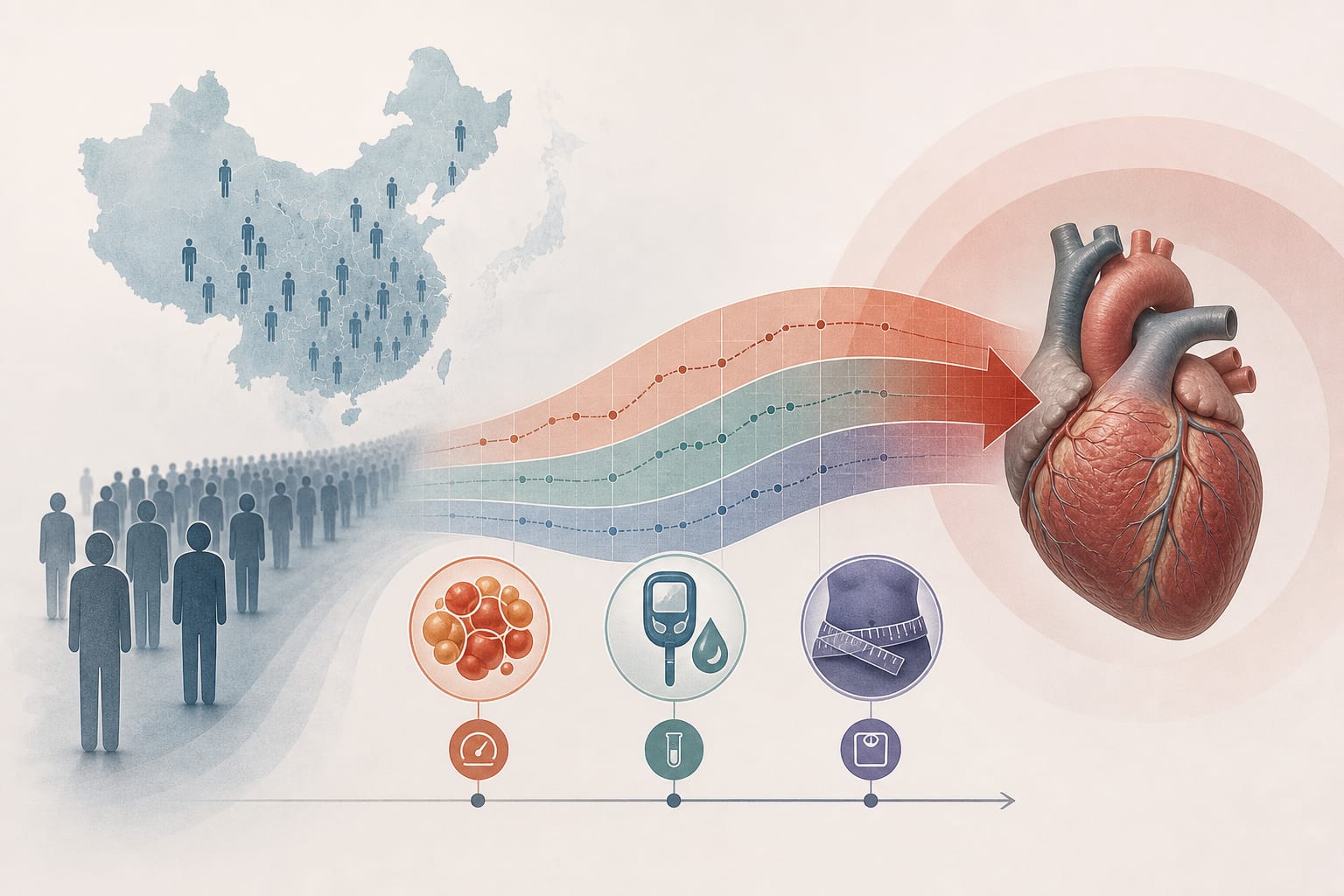
This study investigates the association between cumulative modified cardiometabolic index (cumMCMI) and cardiovascular disease (CVD) incidence in a Chinese cohort. Findings indicate that higher cumMCMI correlates with increased CVD risk, particularly among individuals with lower education and married status.
Background
Cardiovascular disease (CVD) is a leading global health concern, with its prevalence and mortality rates rising significantly. Traditional risk assessments often overlook the cumulative impact of metabolic factors such as dyslipidemia, impaired glucose tolerance, and obesity. Understanding the long-term exposure to these factors through cumMCMI could enhance early detection and prevention strategies for CVD.
Data Highlights
Group
Hazard Ratio (HR)
95% Confidence Interval (95% CI)
P-value
Q4
1.51
1.13–2.00
0.005
Key Findings
Higher cumMCMI is associated with increased CVD risk (HR 1.51, P = 0.005).
Linear positive correlation between cumMCMI and CVD incidence (P for overall = 0.015).
Subgroup analyses indicate higher risks for individuals with lower education levels.
Married individuals also show a significant association with increased CVD risk.
Results were consistent across various sensitivity analyses.
Clinical Implications
Healthcare professionals should consider cumMCMI as a valuable tool for CVD risk stratification. Special attention should be given to individuals with lower education and marital status, as they may represent higher-risk groups requiring targeted interventions.
Conclusion
The study establishes a significant link between cumMCMI and CVD incidence, suggesting its potential role in early warning systems for cardiovascular health. Further research is warranted to validate these findings across diverse populations.