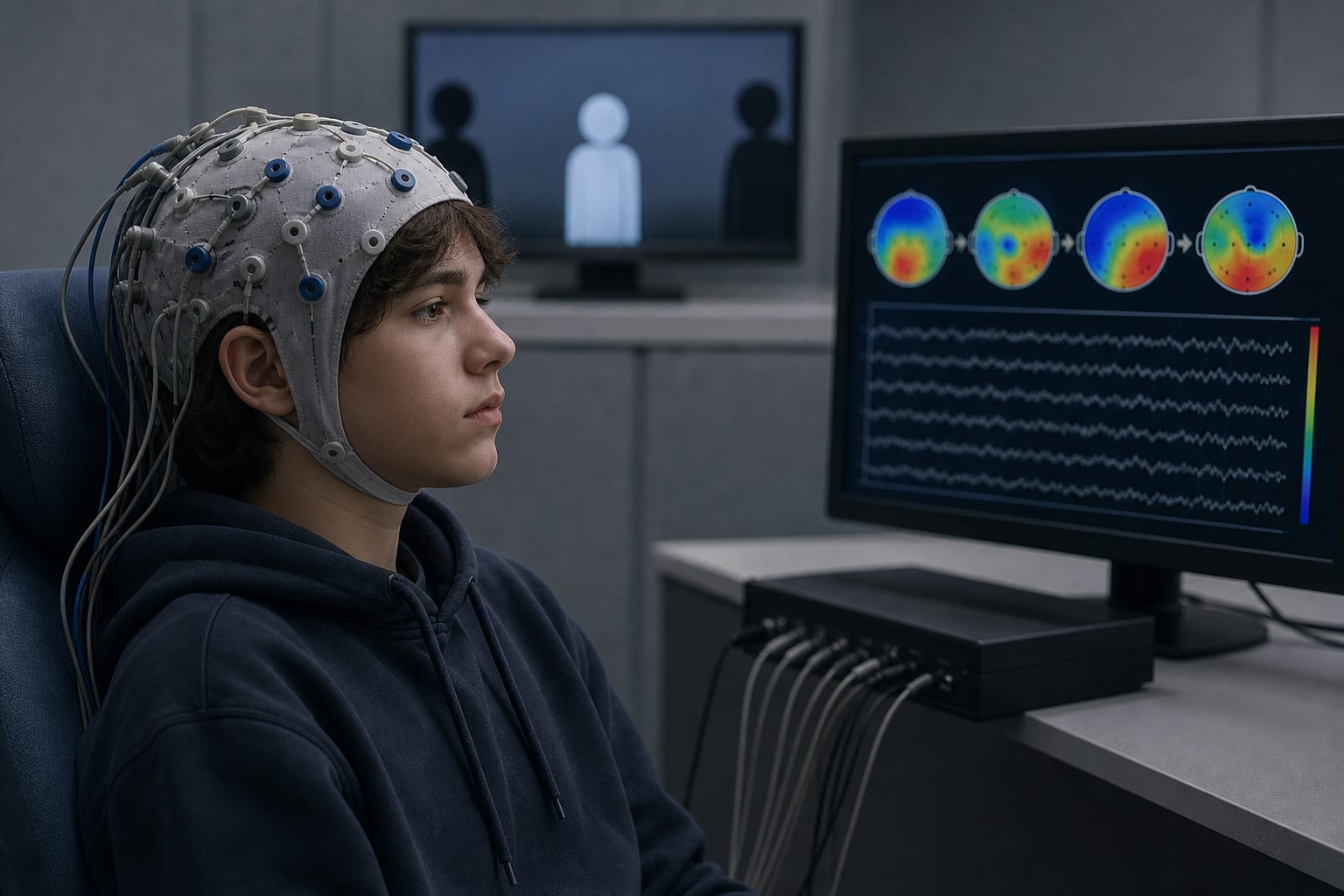
Developing a Combined Evaluation Model for Adolescent Borderline Personality Disorder: A Brief Review of Personality Functioning, Digital Indicators, and AI-Enhanced Assessment Tools
-
By
-
Sara Močnik
-
Hojka Gregorič Kumperščak
-
July 8, 2026
Clinical Report: Developing a Combined Evaluation Model for Adolescent BPD
Background
Borderline personality disorder (BPD) is increasingly recognized in adolescents, yet it remains underdetected and undertreated due to diagnostic uncertainties and stigma. Early identification is crucial as it can significantly improve long-term outcomes. Current assessment tools often fail to capture the dynamic nature of adolescent BPD, necessitating the exploration of innovative approaches.
Data Highlights
No numerical data available in the source material.
Key Findings
- Adolescent BPD prevalence is estimated at 1-3% in the community and 33-49% in inpatient settings.
- Diagnostic delays of five to seven years are common due to stigma and clinical hesitancy.
- Dimensional frameworks like DSM-5 AMPD and ICD-11 focus on impairments in levels of personality functioning (LPF).
- Validated tools such as LoPF-Q 12–18 and AIDA assess LPF but are limited by their static nature.
- Digital phenotyping and AI can provide continuous, ecologically valid indicators of personality functioning.
- A hybrid assessment model integrating LPF tools and digital data is proposed for better capturing adolescent BPD dynamics.
Clinical Implications
Clinicians should consider the integration of digital tools and AI in the assessment of adolescent BPD to enhance diagnostic accuracy. Utilizing a hybrid model may provide a more comprehensive understanding of the patient's functioning over time.
Conclusion
The proposed hybrid assessment model aims to address the limitations of current tools in evaluating adolescent BPD, emphasizing the need for innovative approaches in clinical practice.
Related Resources & Content
- Frontiers in Psychiatry, 2026 -- Efficacy of psychological interventions for adolescents with borderline personality disorder: a systematic review and meta-analysis
- Frontiers in Psychiatry, 2026 -- Borderline personality disorder in East Asian adolescents: a comprehensive review of research on assessment, etiology, and treatment
- BMC Psychiatry (Springer), 2026 -- Outcomes and Implementation of a Short-Term Crisis Intervention for Adolescents Exhibiting Borderline Personality Traits: A Pre-Post Observational Analysis
- npj Digital Medicine, 2026 -- Assessing Youth Mental Health Needs Through an Adaptive Digital Tool: Findings from a Cross-Sectional Analysis
- The British Journal of Psychiatry, 2026 -- ICD-11 classification of personality disorder: there is no other way forward
- PubMed, 2026 -- Efficacy of psychological interventions for adolescents with borderline personality disorder: a systematic review and meta-analysis
- PLOS Digital Health, 2026 -- Design and feasibility of smartphone-based digital phenotyping for long-term mental health monitoring in adolescents
- ICD-11 classification of personality disorder: there is no other way forward | The British Journal of Psychiatry | Cambridge Core
- Efficacy of psychological interventions for adolescents with borderline personality disorder: a systematic review and meta-analysis - PubMed
- Design and feasibility of smartphone-based digital phenotyping for long-term mental health monitoring in adolescents | PLOS Digital Health
Based on findings from:
Toward a hybrid assessment framework for adolescent borderline personality disorder: a mini review of personality functioning, digital biomarkers, and AI-supported assessment
Sara Močnik, Hojka Gregorič Kumperščak. Frontiers In Psychiatry, 2026.
https://www.frontiersin.org/journals/psychiatry/articles/10.3389/fpsyt.2026.1758535/full
This content is an AI-generated, fully rewritten summary based on a published scholarly article. It does not reproduce the original text and is not a substitute for the original publication. Readers are encouraged to consult the source for full context, data, and methodology.