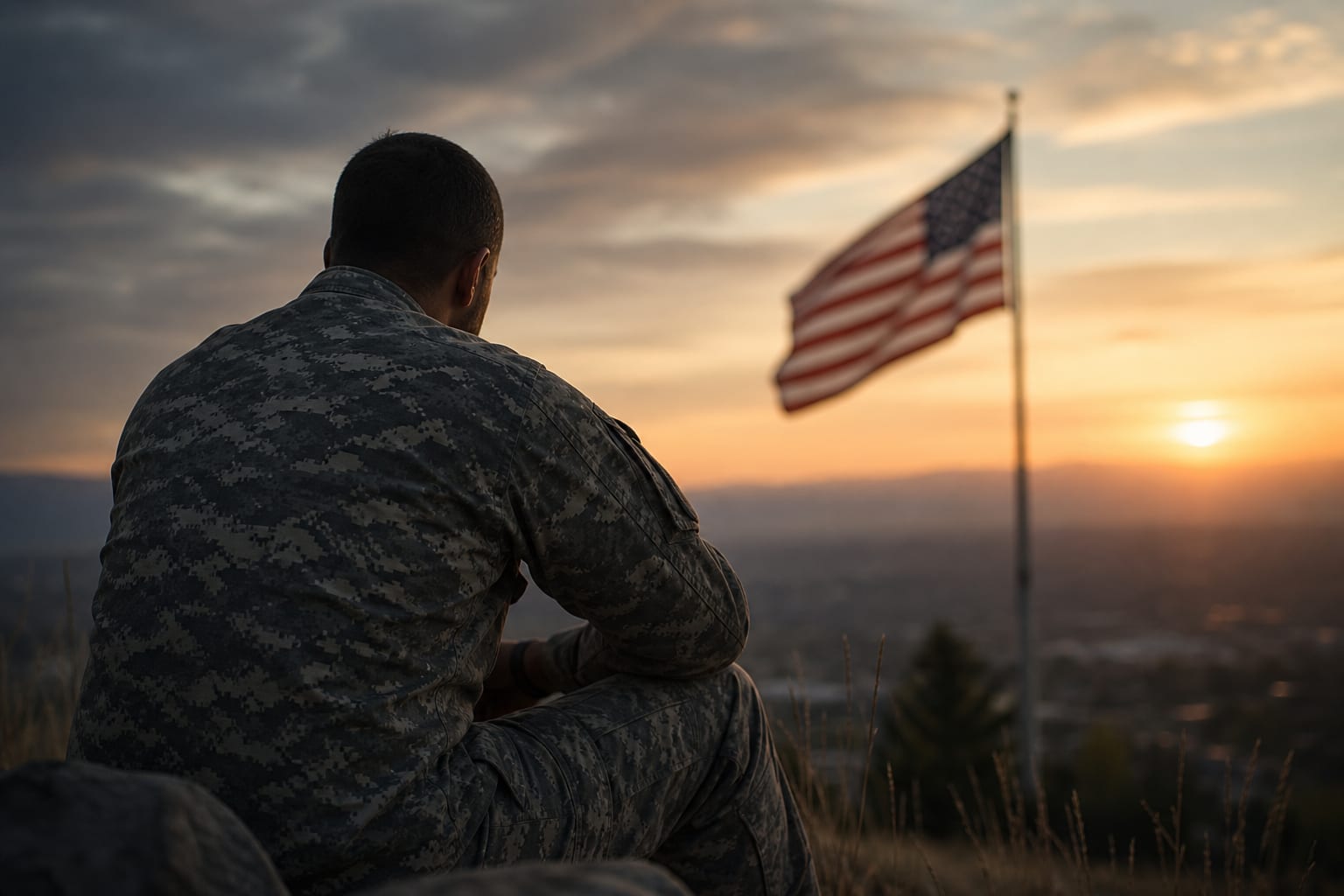
Mental Health Treatment Utilization and Incidence of Suicidal Thoughts in Veterans
Overview
This study analyzes the prevalence of suicidal thoughts and behaviors (STBs) among US military veterans, revealing that 13.4% reported past 2-week suicidal ideation in 2025-2026, according to the National Health and Resilience in Veterans Study (NHRVS). It also highlights the low engagement in mental health treatment among veterans experiencing STBs, with only 35.5% receiving care.
Background
Suicide is a significant public health issue among US military veterans, with rates substantially higher than nonveterans, as indicated by the 2025 National Veteran Suicide Prevention Annual Report. Understanding the prevalence of suicidal thoughts and behaviors, as well as the factors influencing mental health treatment utilization, is crucial for effective intervention strategies.
Data Highlights
Measure
Percentage
Past 2-week suicidal ideation
13.4%
Lifetime suicide planning
7.3%
Lifetime suicide attempts
3.9%
Current mental health treatment engagement
35.5%
VA users receiving treatment
54.7%
Non-VA users receiving treatment
23.8%
Key Findings
13.4% of veterans reported past 2-week suicidal ideation in 2025-2026, according to the NHRVS.
Major depressive disorder (MDD) and posttraumatic stress disorder (PTSD) are significant predictors of suicidal ideation, as reported in the 2025 National Veteran Suicide Prevention Annual Report.
Only 35.5% of veterans with suicidal ideation were engaged in mental health treatment.
Veterans using VA healthcare were more likely to receive mental health treatment compared to non-VA users (54.7% vs 23.8%).
Lifetime suicide planning was reported by 7.3% and lifetime suicide attempts by 3.9% of veterans.
Clinical Implications
The findings indicate a critical need for improved mental health treatment engagement among veterans experiencing suicidal thoughts. Targeted interventions may be necessary to increase treatment utilization, particularly among those not using VA services.
Conclusion
The study highlights the ongoing challenge of addressing suicidal thoughts and behaviors in the veteran population, emphasizing the importance of enhancing mental health treatment access and utilization.