Development and feasibility testing of a dynamic image-derived simulation framework for assessing left atrioventricular valve repair strategies - Report - MDSpire
Advertisement
Development and feasibility testing of a dynamic image-derived simulation framework for assessing left atrioventricular valve repair strategies
Clinical Report: Creation and evaluation of a dynamic simulation framework
Overview
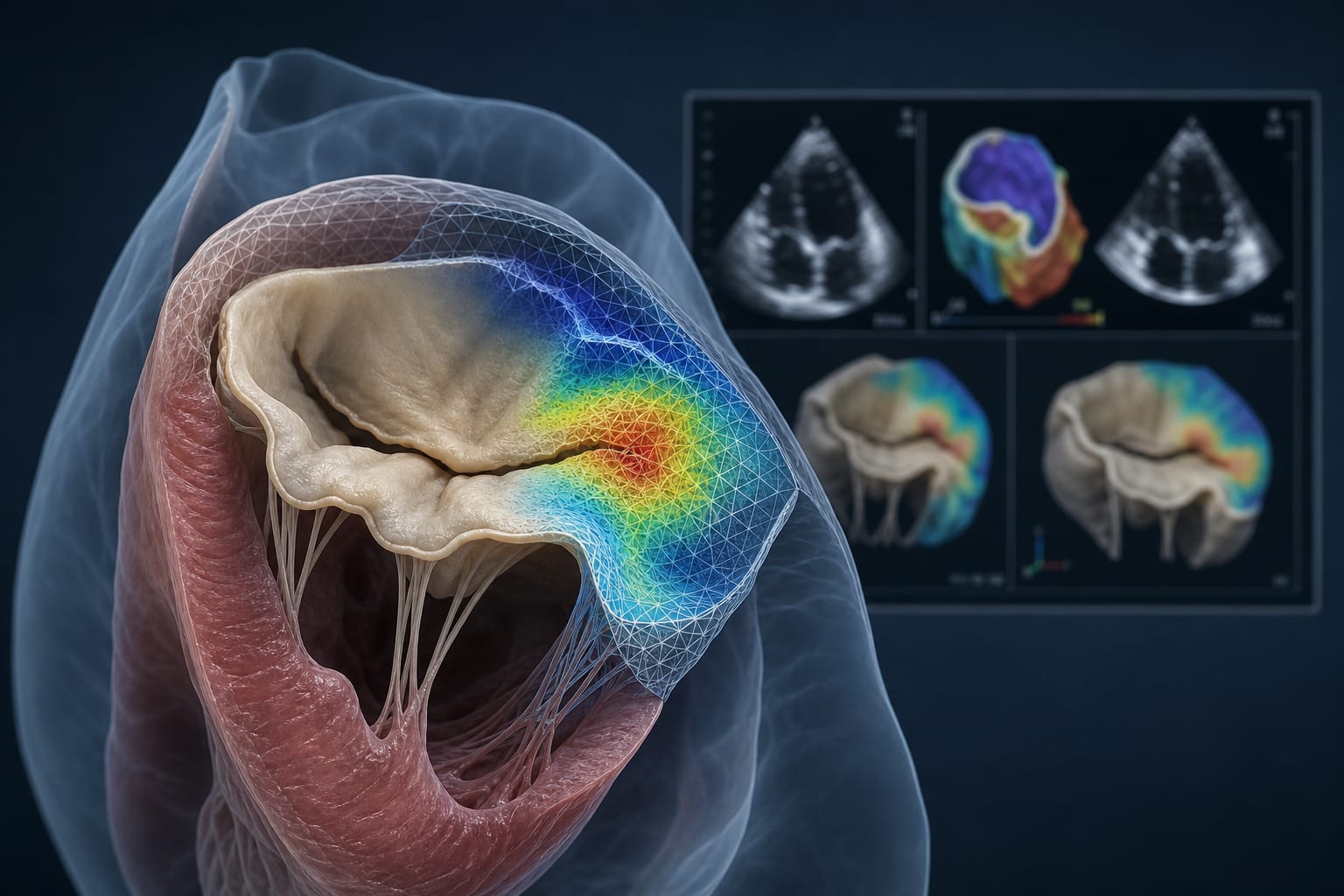
This study presents a dynamic simulation framework for analyzing surgical strategies in left atrioventricular valve repair, addressing the unique anatomical features of pediatric patients.
Background
Atrioventricular canal defects are prevalent in children, particularly those with Down Syndrome, leading to significant surgical challenges. The left atrioventricular valve (LAVV) repair often requires reintervention due to complications such as regurgitation.
Data Highlights
No numerical data was provided in the source material.
Key Findings
['The dynamic simulation framework is designed to address the anatomical variability of the LAVV in pediatric patients.', 'Current repair techniques often do not achieve durable valve function, necessitating further interventions.', 'Leaflet tenting and billow are important predictors of surgical outcomes.', 'Existing simulation models are primarily static and do not replicate dynamic valve mechanics.']
Clinical Implications
The introduction of a dynamic simulation framework may provide surgeons with insights into valve mechanics.
Conclusion
The development of this dynamic simulation framework represents a significant advancement in evaluating surgical techniques for LAVV repair.
by Stephen Ching, Christopher Zelonis, Christian Herz, Patricia Sabin, Matthew Daemer, Muhammad Nuri, Yan Wang, Devin W. Laurence, Jonathan M. Chen, Lindsay S. Rogers, Michael D. Quartermain, John Moore, Terry Peters, Elvis Chen, Matthew A. Jolley