Lymphatic dysfunction and impaired interstitial clearance in sarcopenic obesity: a hypothesis-generating review - Report - MDSpire

Lymphatic dysfunction and impaired interstitial clearance in sarcopenic obesity: a hypothesis-generating review

  • By

  • Chunli Yu

  • Xinyu Zou

  • Rongli Dai

  • Yan Yang

  • July 2, 2026

  • 0 min

Share

Impaired Interstitial Clearance and Lymphatic Dysfunction in Sarcopenic Obesity

Overview

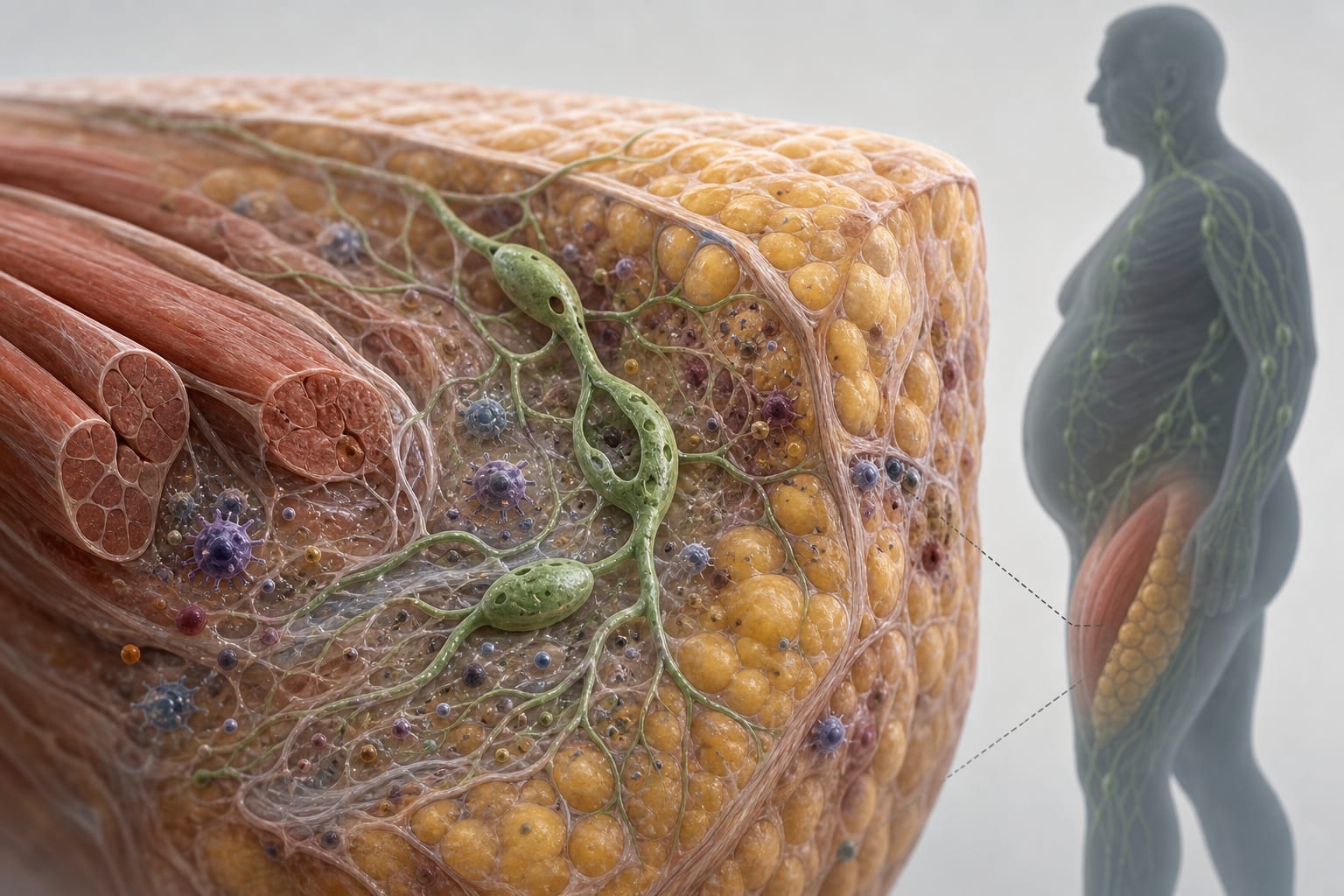
This review discusses the interplay between lymphatic dysfunction and sarcopenic obesity (SO), noting that impaired interstitial clearance may exacerbate local inflammation and metabolic stress.

Background

Sarcopenic obesity is a significant public health issue, particularly among the aging population, characterized by excess fat and reduced muscle mass. It is associated with adverse health outcomes, including increased mortality risk and reduced physical performance.

Data Highlights

No numerical data or trial data presented in the article.

Key Findings

  • Sarcopenic obesity involves chronic low-grade inflammation and insulin resistance.
  • The lymphatic system plays a critical role in maintaining interstitial homeostasis.
  • Obesity and aging can impair lymphatic function, leading to structural and functional abnormalities.
  • Impaired lymphatic clearance may sustain a pro-inflammatory and pro-lipotoxic environment.
  • There is a bidirectional relationship between lymphatic dysfunction and skeletal muscle deterioration.

Clinical Implications

Understanding the role of lymphatic dysfunction in sarcopenic obesity may inform future therapeutic strategies aimed at improving muscle function and reducing inflammation in affected individuals.

Conclusion

This review links lymphatic dysfunction to the pathogenesis of sarcopenic obesity, suggesting that impaired clearance mechanisms may contribute to the persistence of inflammatory and metabolic stress.

Related Resources & Content

  1. Response from the Author: Impact of Visceral Fat, Muscle Loss, and Combined Sarcopenic Obesity on Surgical Results Following Liver Resection for Colorectal Metastases
  2. Understanding Sarcopenia in Cirrhosis: Mechanisms and Treatment Approaches
  3. A Comprehensive and Multidisciplinary Strategy for Addressing Sarcopenia in Cytoreductive Surgery Combined with Hyperthermic Intraperitoneal Chemotherapy
  4. Impact of Sarcopenia on Major Postoperative Complications Following Cytoreductive Surgery and Hyperthermic Intraperitoneal Chemotherapy in Patients with Peritoneal Surface Malignancies: A Retrospective Cohort Analysis
  5. Definition and Diagnostic Criteria for Sarcopenic Obesity: ESPEN and EASO Consensus Statement
  6. Comparative effectiveness of exercise modalities and nutritional supplementation for sarcopenic obesity in older adults: a network meta-analysis based on randomized controlled trials
  7. Dysfunctional adipose tissue–lymphatic crosstalk in obesity
  8. Definition and Diagnostic Criteria for Sarcopenic Obesity: ESPEN and EASO Consensus Statement - PMC
  9. Frontiers | Comparative effectiveness of exercise modalities and nutritional supplementation for sarcopenic obesity in older adults: a network meta-analysis based on randomized controlled trials
  10. Dysfunctional adipose tissue–lymphatic crosstalk in obesity | Nature Reviews Endocrinology

Original Source(s)

Related Content