Ambiguous Timing of Acetaminophen Intake in a Case of Adolescent Analgesic Overdose: A Clinical Report
-
By
-
Wael A. Alghamdi
-
July 8, 2026
Clinical Report: Ambiguous Timing of Acetaminophen Intake in a Case of Adolescent Analgesic Overdose
Background
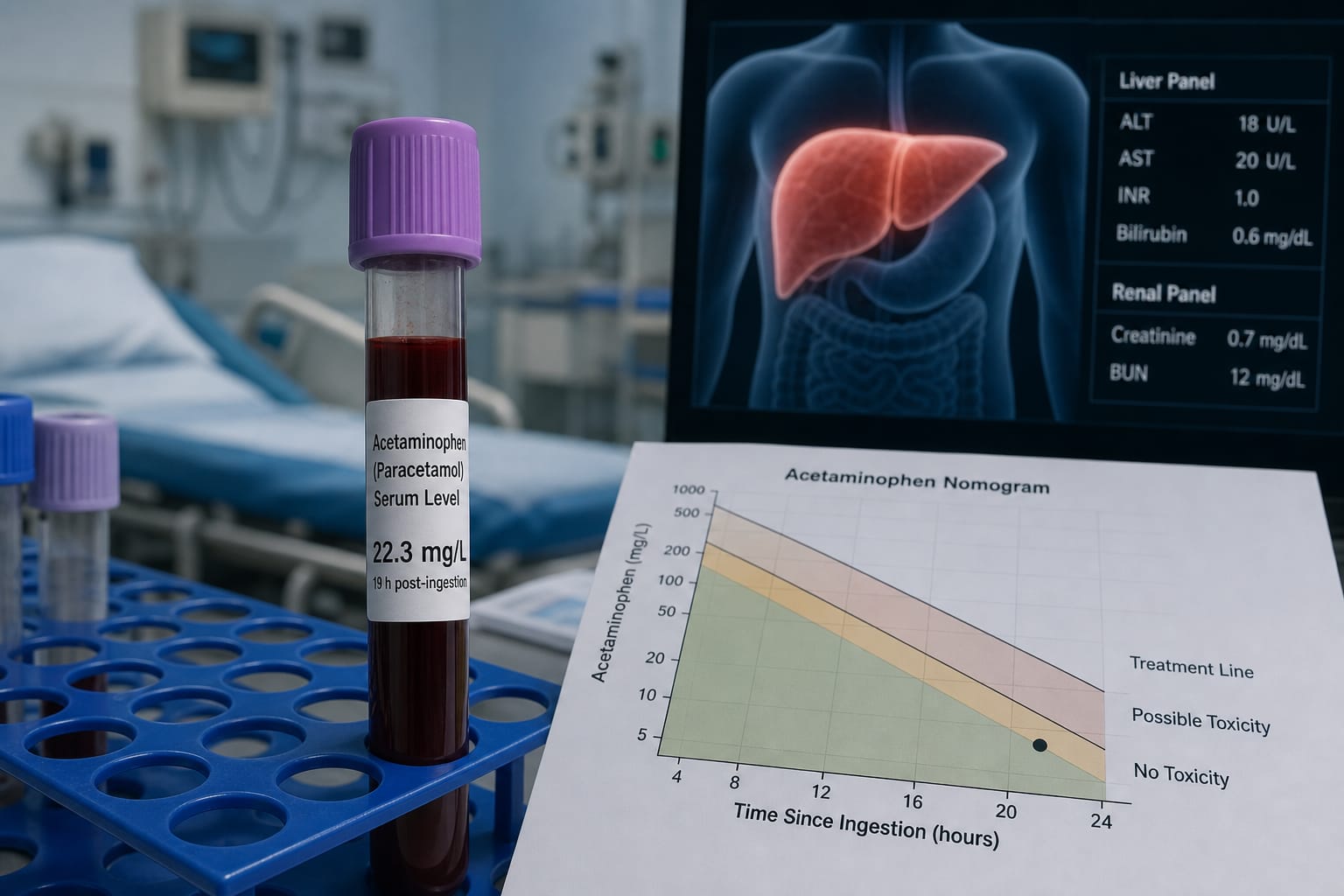
Acetaminophen toxicity is a leading cause of drug-induced liver injury and a common reason for liver transplantation. The Rumack–Matthew nomogram is the standard for managing acute acetaminophen overdoses, but its reliability diminishes with staggered or uncertain ingestion timing.
Data Highlights
| Parameter | Value |
|---|---|
| Acetaminophen concentration | 22.3 mg/L |
| Prothrombin time | 20.9 s |
| INR | 1.55 |
| Alkaline phosphatase | 309 U/L |
| Total bilirubin | 9.5 mg/dL |
| Alanine aminotransferase | 6.1 U/L |
| Aspartate aminotransferase | 24.1 U/L |
Key Findings
- A 16-year-old male ingested 6,000 mg of acetaminophen and multiple NSAIDs.
- Measured acetaminophen concentration was 22.3 mg/L, higher than expected based on reported dose.
- Normal aminotransferases indicated no immediate liver injury at presentation.
- N-acetylcysteine was initiated due to the clinically relevant acetaminophen concentration.
Clinical Implications
Clinicians should prioritize measured acetaminophen concentrations and laboratory evaluations in cases of suspected overdose, particularly when ingestion timing is uncertain. This approach may lead to timely and appropriate management, including the use of N-acetylcysteine.
Conclusion
This case illustrates the complexities of acetaminophen overdose management, highlighting the need for careful assessment of both reported and measured values in clinical decision-making.
Related Resources & Content
- Drugs - Real World Outcomes, 2025 -- Impact of Over-the-Counter Acetaminophen Availability on Self-Poisoning Incidents Among Adolescents in South Korea
- Frontiers in Pediatrics, 2026 -- Seeking a viable perioperative preemptive analgesia regimen: a prospective, randomized, controlled, double-blind superiority study of intravenous acetaminophen in children undergoing adenotonsillectomy
- Drugs - Real World Outcomes, 2024 -- Pediatric Liver Injury Linked to Medications in Taiwan: A Review of Spontaneous Adverse Drug Reaction Reports from 1998 to 2017
- Acetaminophen Poisoning - Injuries; Poisoning - Merck Manual Professional Edition
- ACMT Practice Statement: Duration of Intravenous Acetylcysteine Therapy following Acetaminophen Overdose (2026 update) - ACMT
- Drug Safety — Analysis of Opioid Overdose Incidents in Patients Administered Extended-Release Naltrexone: Insights from Postmarketing Surveillance (2006-2018)
- Acetaminophen Poisoning - Injuries; Poisoning - MSD Manual Professional Edition
- Acetaminophen Poisoning - Injuries; Poisoning - Merck Manual Professional Edition
- ACMT Practice Statement: Duration of Intravenous Acetylcysteine Therapy following Acetaminophen Overdose (2026 update) - ACMT
Based on findings from:
Uncertain timing of reported acetaminophen ingestion in an adolescent analgesic overdose: a case report
Wael A. Alghamdi. Frontiers In Pediatrics, 2026.
https://www.frontiersin.org/journals/pediatrics/articles/10.3389/fped.2026.1872986/full
This content is an AI-generated, fully rewritten summary based on a published scholarly article. It does not reproduce the original text and is not a substitute for the original publication. Readers are encouraged to consult the source for full context, data, and methodology.