Clinical Report: Efficacy of Zolbetuximab for Advanced Gastric and Gastroesophageal Junction Adenocarcinoma
Overview
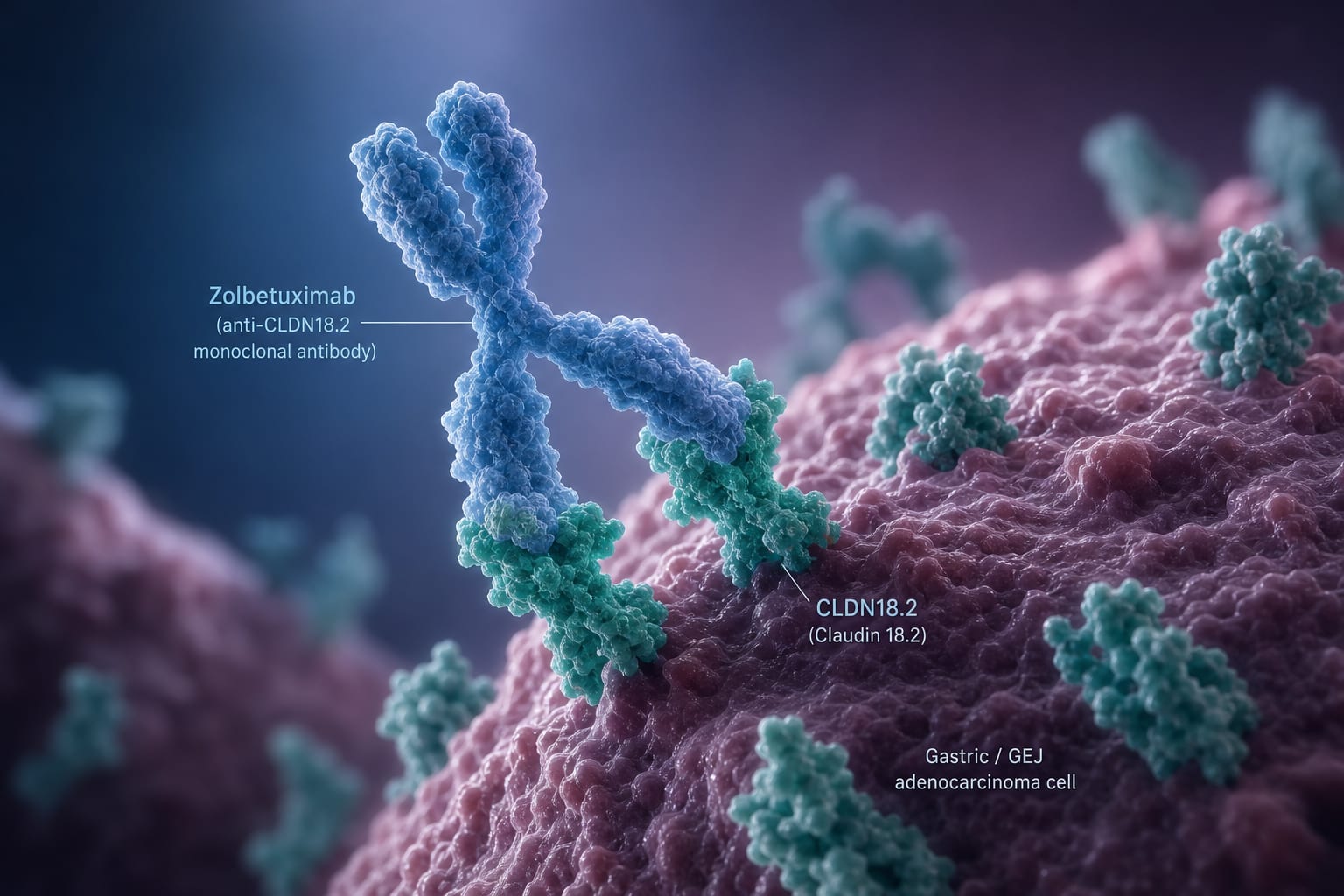
Zolbetuximab, a monoclonal antibody targeting CLDN18.2, has been evaluated in clinical trials for advanced gastric and gastroesophageal junction adenocarcinoma. Clinical trials indicate improved overall survival and progression-free survival when zolbetuximab is combined with chemotherapy in HER2-negative patients expressing CLDN18.2.
Background
Advanced gastric and gastroesophageal junction adenocarcinomas are associated with poor prognosis and limited treatment options, particularly for HER2-negative tumors. The introduction of zolbetuximab addresses a critical need for effective therapies targeting CLDN18.2, which is overexpressed in a significant proportion of these cancers.
Data Highlights
Study
Outcome
Result
FAST
PFS
HR 0.44; p=0.0005
FAST
OS
HR 0.55; p=0.0001
SPOTLIGHT
Median OS
18.23 vs. 15.54 months
GLOW
Median OS
14.39 vs. 12.16 months
Key Findings
Zolbetuximab targets the CLDN18.2 protein, overexpressed in 50-80% of gastric cancers.
The addition of zolbetuximab to EOX chemotherapy significantly improved PFS and OS in the FAST study.
In the SPOTLIGHT trial, zolbetuximab reduced the risk of death by 25% compared to chemotherapy alone.
In the GLOW trial, zolbetuximab reduced the risk of death by almost 23% when added to CAPOX chemotherapy.
Common adverse events included nausea and vomiting, primarily during the first treatment cycle.
Clinical Implications
The findings indicate the use of zolbetuximab in combination with chemotherapy for patients with advanced G/GEJ adenocarcinoma who are CLDN18.2-positive. Common adverse events included nausea and vomiting, primarily during the first treatment cycle.
Conclusion
Ongoing research is needed to optimize treatment protocols and address challenges related to biomarker thresholds.