Clinical Report: An Uncommon Instance of Unicentric Castleman Disease
Overview
This report details a case of retroperitoneal mixed type unicentric Castleman disease in a 52-year-old woman, highlighting the clinical presentation, diagnosis, and treatment outcomes. The case emphasizes the need for increased awareness and understanding of this rare condition.
Background
Unicentric Castleman disease (UCD) is a rare benign lymphoproliferative disorder that can often be misdiagnosed due to its nonspecific clinical presentations. The retroperitoneal location of UCD is particularly uncommon, making accurate diagnosis and management challenging. Understanding the clinical characteristics and treatment options for UCD is essential for improving patient outcomes.
Data Highlights
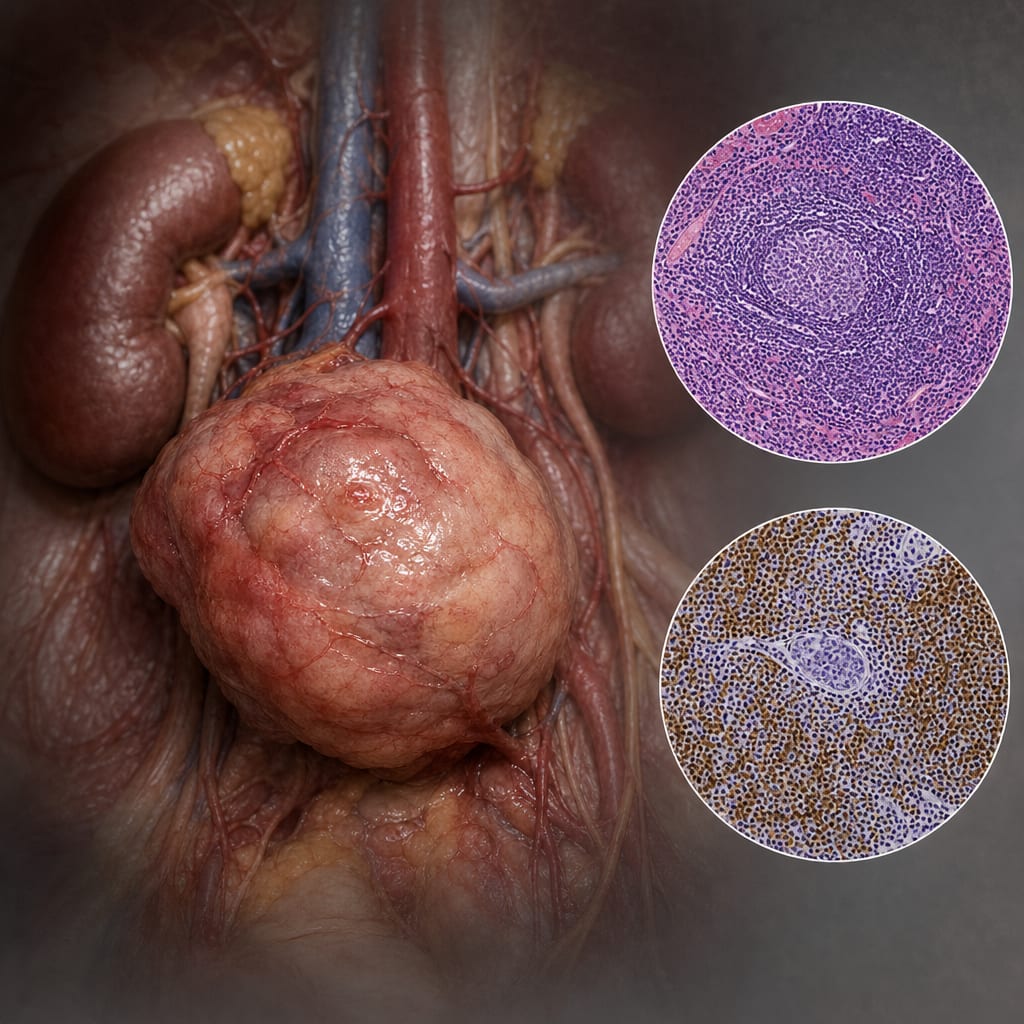
The patient underwent laparoscopic resection of a retroperitoneal tumor measuring approximately 47 × 46 × 51 mm, which was later confirmed to be mixed type unicentric Castleman disease through histopathological examination.
Key Findings
A 52-year-old woman presented with increased urination and was found to have a retroperitoneal mass.
Imaging studies revealed a mass with distinct characteristics, leading to a preliminary diagnosis of a retroperitoneal tumor.
Histopathological analysis confirmed mixed type unicentric Castleman disease with specific immunohistochemical findings.
The patient had an uncomplicated postoperative recovery and continues to be monitored.
Recognition of retroperitoneal mixed type unicentric Castleman disease is crucial due to its rarity and potential for misdiagnosis.
Clinical Implications
Healthcare professionals should maintain a high index of suspicion for unicentric Castleman disease in patients presenting with atypical lymphoproliferative symptoms, especially in the retroperitoneum. Early diagnosis and complete surgical excision are critical for favorable outcomes.
Conclusion
This case underscores the importance of recognizing the unique characteristics of retroperitoneal mixed type unicentric Castleman disease, which can significantly impact diagnosis and treatment strategies.