Clinical Report: Evaluation of strictureplasty in proximal duodenal Crohn’s disease
Overview
This study evaluates the safety and mid-term outcomes of strictureplasty for primary proximal duodenal Crohn’s disease.
Background
Crohn's disease can affect any part of the gastrointestinal tract, with duodenal involvement being rare but increasingly recognized. Management of proximal duodenal Crohn's disease is challenging due to high recurrence rates and the need for surgical intervention when medical therapies fail. Strictureplasty is a bowel-sparing surgical technique that may offer a solution for patients with symptomatic strictures.
Data Highlights
No numerical data was provided in the source material.
Key Findings
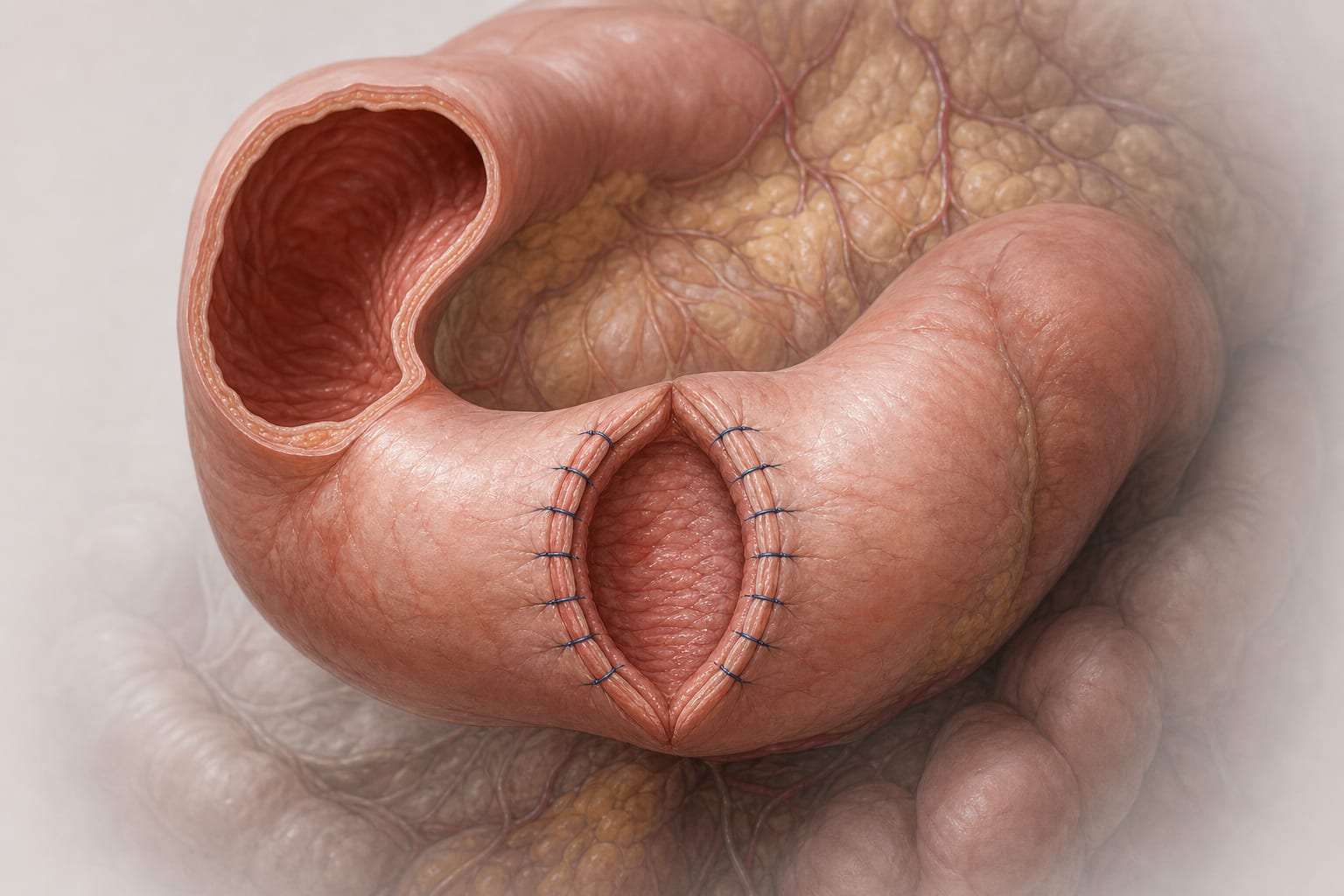
Strictureplasty is a bowel-sparing procedure used for treating fibrotic strictures in Crohn's disease.
Duodenal Crohn's disease is characterized by fibrotic strictures leading to obstruction.
Strictureplasty techniques include Heineke-Mikulicz, Finney, and Jaboulay, chosen based on stricture characteristics.
The study was conducted at Sir Run Run Shaw Hospital, reviewing cases from January 2014 to December 2024.
Patients included were aged 16–65 years with confirmed primary proximal duodenal lesions.
Clinical Implications
Strictureplasty may be considered for patients with primary proximal duodenal Crohn's disease, particularly when medical management is insufficient. The choice of surgical technique should be tailored to the specific characteristics of the stricture.
Conclusion
Strictureplasty presents a potential surgical option for managing primary proximal duodenal Crohn's disease, warranting further investigation into its long-term outcomes.