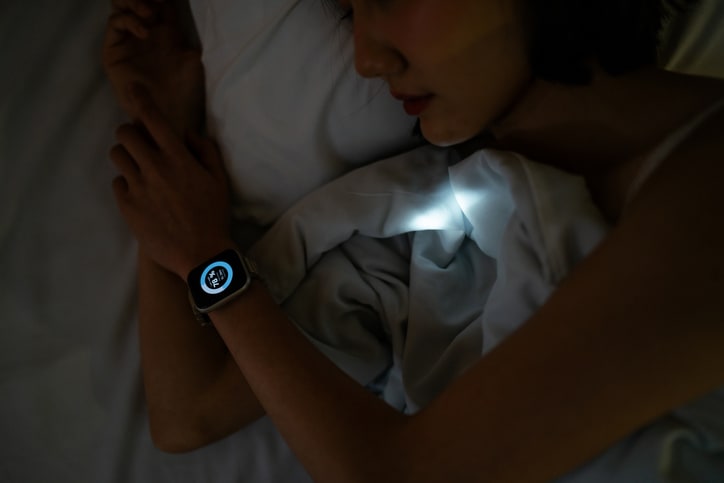
Clinical Report: Smartwatch May Track AD Status in Children
Overview
A prospective study suggests that smartwatch-measured nighttime scratching is moderately associated with disease severity and clinical improvement in pediatric atopic dermatitis. The study involved 50 children aged 4 to 15 years and highlighted the potential of wearable technology as an objective measure of disease activity.
Background
Atopic dermatitis (AD) is a common chronic skin condition in children that significantly impacts quality of life. Monitoring disease severity and treatment response is crucial for effective management. Wearable technology, such as smartwatches, offers a novel approach to objectively assess disease activity through metrics like scratching behavior.
Data Highlights
Metric
Correlation with EASI
Correlation with TARC
Scratch Count Rate
0.60 - 0.64
0.58 - 0.60
Scratch Duration Ratio
0.60 - 0.64
0.58 - 0.60
Scratch Burden Index (SBI)
0.67 - 0.71
Not applicable
Key Findings
Nighttime scratching metrics showed moderate correlations with baseline EASI (0.60 to 0.64).
Correlations between scratching metrics and clinical improvement were observed (0.67 to 0.71).
Associations with serum TARC levels were consistent with clinical severity (0.58 to 0.60).
The SBI-based model distinguished patients achieving clinically meaningful improvement with an AUC of 0.78.
Weak correlations were noted between numerical rating scale itch scores and clinical measures.
Clinical Implications
Wearable-derived scratching metrics may serve as objective indicators of disease activity in pediatric atopic dermatitis. Clinicians should consider integrating these metrics into routine assessments, while remaining cautious about their current limitations and the need for further validation.
Conclusion
The study indicates that smartwatch technology may provide valuable insights into the management of atopic dermatitis in children, but further research is necessary to confirm its clinical utility.