Clinical Report: The Evolving Functions of Eosinophils in Immune Modulation
Overview
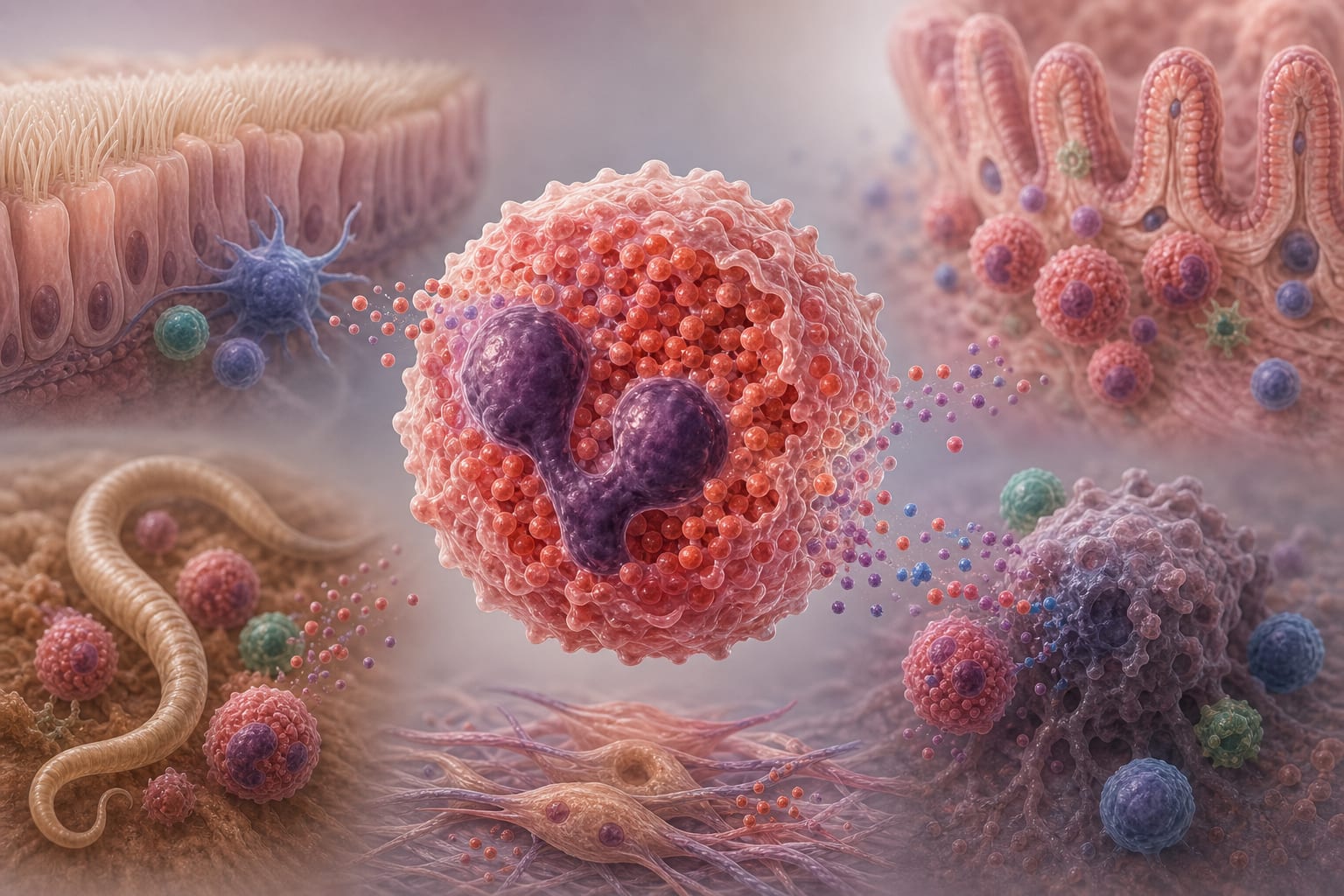
Eosinophils play diverse roles in immune modulation, extending beyond traditional Th2 responses. Their involvement spans various health conditions, including cancer, tissue regeneration, and gastrointestinal disorders.
Background
Eosinophils are a type of innate immune cell historically linked to allergic responses and parasitic infections. Recent research highlights their dual roles as pro- and anti-inflammatory mediators in various diseases.
Data Highlights
No numerical data or trial data provided in the source material.
Key Findings
Eosinophils are involved in both pro- and anti-inflammatory responses depending on the disease context.
They play a role in cancer, acting as both anti-tumorigenic and pro-tumorigenic agents based on their microenvironment.
Eosinophils contribute to tissue repair and regeneration following injury.
Emerging associations include eosinophilic gastrointestinal disorders and reproductive homeostasis.
High blood eosinophil counts are linked to clinical concerns.
Clinical Implications
Clinicians should consider the evolving roles of eosinophils in various diseases when evaluating patients with high eosinophil counts.
Conclusion
Eosinophils are integral to immune regulation, and their diverse functions warrant further investigation.
A cross-sectional metagenomic study found greater oral microbiome richness among adults with chronic rhinosinusitis, particularly nonallergic chronic rhinosinusitis, while associations with asthma, airway inflammation, and most lung-function measures were inconsistent.