Neuroanatomical Subtypes of Primary Progressive Aphasia Identified Through Data Analysis
Overview
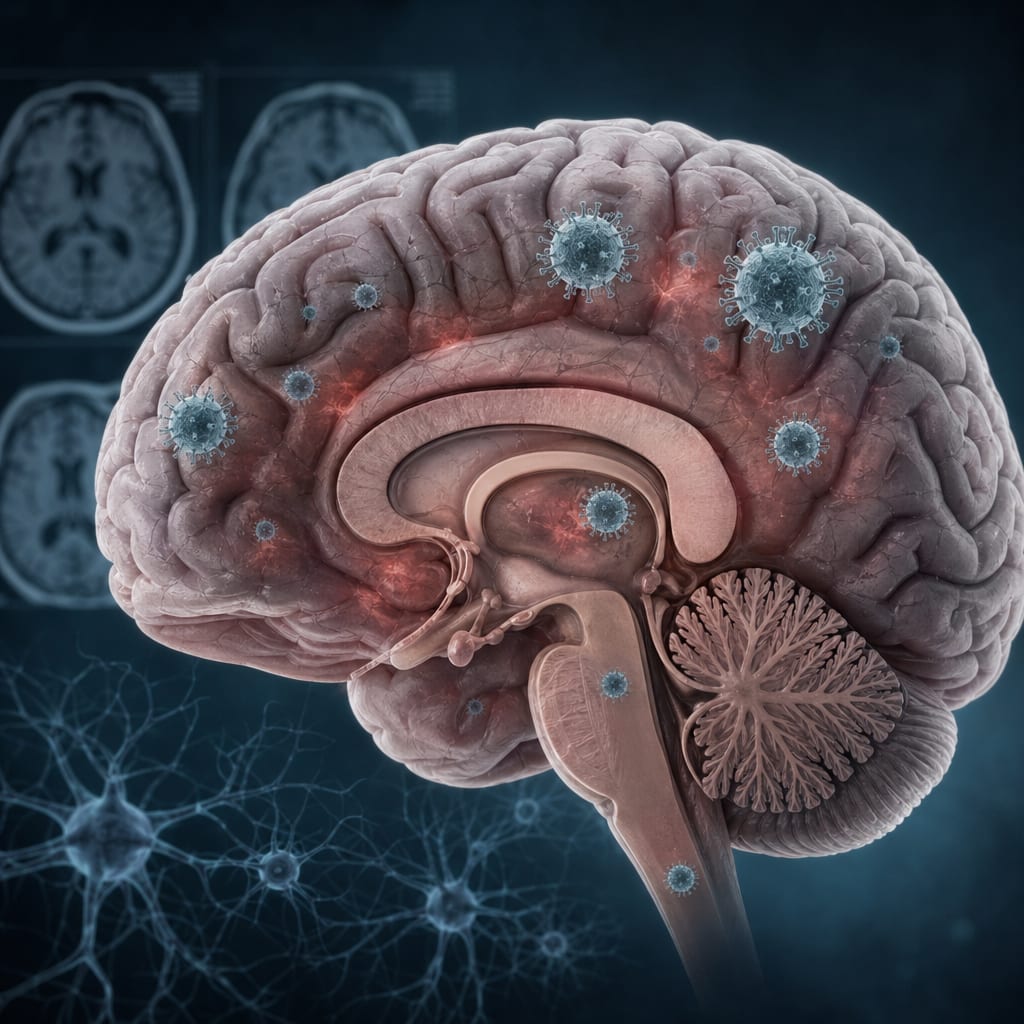
This study used machine learning to identify four distinct neuroanatomical subtypes of primary progressive aphasia (PPA) from MRI data, revealing heterogeneity especially within the non-fluent/agrammatic and logopenic variants. The findings challenge traditional clinico-anatomical correlations and highlight the complexity of PPA phenotypes.
Background
Primary progressive aphasia (PPA) is a group of rare dementias characterized by progressive language impairment, with three main variants: semantic (svPPA), non-fluent/agrammatic (nfvPPA), and logopenic (lvPPA). While svPPA has a well-defined neuroanatomical profile involving left anterior temporal lobe atrophy, nfvPPA and lvPPA show overlapping and variable imaging features, complicating diagnosis. PPA is linked to underlying pathologies such as frontotemporal lobar degeneration and Alzheimer's disease. Accurate neuroanatomical characterization is crucial for diagnosis, prognosis, and understanding disease mechanisms.
Data Highlights
Subtype
Neuroanatomical Profile
Associated PPA Variant(s)
Number of Participants
Subtype Stability at Follow-up
S1 (Left Temporal)
Left temporal lobe atrophy
Strongly semantic variant (svPPA)
94 svPPA cases
Stable in 84% of patients
S2 (Insula)
Insular atrophy
Mixed non-fluent/agrammatic and logopenic
109 nfvPPA, 51 lvPPA
Stable in 84% of patients
S3 (Temporoparietal)
Temporoparietal atrophy
Predominantly logopenic (lvPPA)
51 lvPPA cases
Stable in 84% of patients
S4 (Frontoparietal)
Frontoparietal atrophy
Mixed non-fluent/agrammatic and logopenic
109 nfvPPA, 51 lvPPA
Stable in 84% of patients
Key Findings
Four neuroanatomical subtypes of PPA were identified: S1 (left temporal), S2 (insula), S3 (temporoparietal), and S4 (frontoparietal).
S1 subtype strongly correlates with the semantic variant of PPA, confirming known neuroanatomical patterns.
S2, S3, and S4 subtypes show mixed associations with non-fluent/agrammatic and logopenic variants, indicating heterogeneity.
Subtype assignment was stable over time, with 84% of patients retaining the same subtype at follow-up.
Stage assignment was even more stable, with 91.9% consistency at follow-up scans.
Findings were partially validated in an independent dataset, supporting the robustness of the identified subtypes.
Clinical Implications
These findings suggest that PPA variants, particularly non-fluent/agrammatic and logopenic, encompass multiple neuroanatomical phenotypes, which may not align neatly with clinical diagnoses. Incorporating data-driven neuroanatomical subtyping could improve diagnostic accuracy and personalized management. Longitudinal stability of subtypes supports their potential utility in monitoring disease progression and tailoring interventions.
Conclusion
Machine learning analysis of MRI data reveals four distinct neuroanatomical subtypes within PPA, highlighting the complexity and heterogeneity of the disease beyond traditional clinical classifications. Recognizing these subtypes may enhance understanding and clinical care of PPA.
References
Original Article -- Neuroanatomical Subtypes of Primary Progressive Aphasia Identified Through Data Analysis
by Beatrice Taylor, Martina Bocchetta, Cameron Shand, Emily G Todd, Anthipa Chokesuwattanaskul, Sebastian J Crutch, Jason D Warren, Jonathan D Rohrer, Chris J D Hardy, Neil P Oxtoby