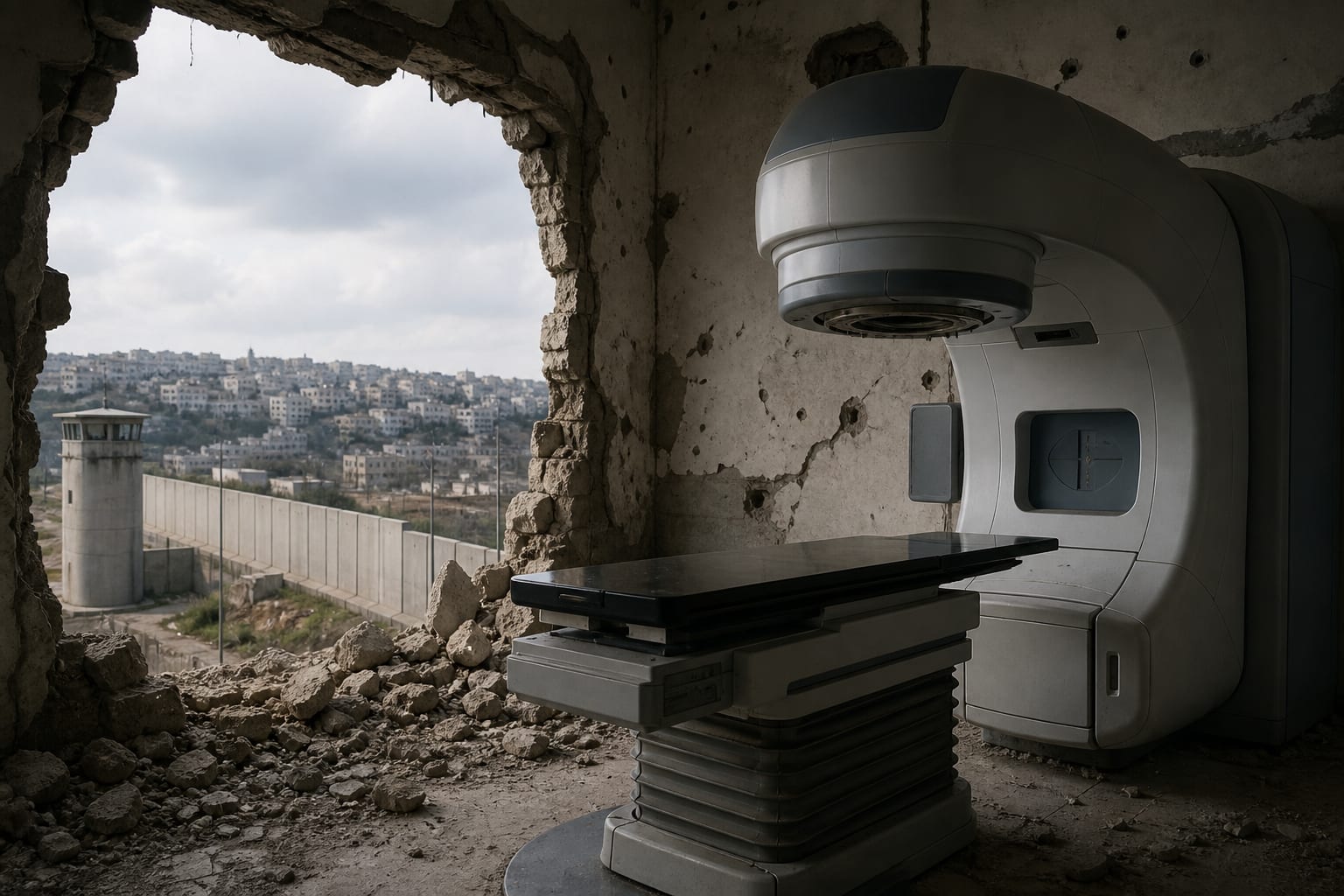
Clinical Report: Cancer Management in Palestine: The Impact of Occupation on Oncology Care
Background
Cancer represents a significant global health burden, with nearly 20 million new cases reported in 2022. In fragile and conflict-affected regions like Palestine, the provision of cancer care is particularly vulnerable to disruptions. The unique challenges faced by Palestine, including prolonged occupation and limited health sovereignty, exacerbate the difficulties in delivering comprehensive oncology services.
Data Highlights
No numerical data or trial data provided in the source material.
Key Findings
Occupation and armed conflict have led to a decline in oncology systems in Palestine.
Access to radiotherapy is severely limited, with Gaza lacking radiotherapy facilities and the West Bank facing delays.
Oncology access collapsed after October 2023, with significant shortages of cancer medications reported.
Patients' rights are compromised due to restricted movement and inadequate governance.
Clinical Implications
Healthcare professionals should be aware of the systemic barriers to cancer care in Palestine.
Conclusion
The intersection of occupation and healthcare in Palestine presents significant challenges for oncology care.
The goal of this clinical trial is to learn if Adaptive Radiation Therapy (ART) is safe and effective in treating patients with locally advanced pancreatic cancer.