Genetic-Proteomic Integration Identifies Predictive Plasma Proteins for Multiple Sclerosis - Report - MDSpire
Coming Soon: Introducing MDSpire News. Learn more
Conexiant’s news site is now MDSpire News. Learn more

Integration of Genetic and Proteomic Data Reveals Predictive Plasma Biomarkers for Multiple Sclerosis

  • By

  • Yuan Ding

  • Dylan Hamitouche

  • Simon Thebault

  • Patrick Kearns

  • Ahmed Abdelhak

  • Adil Harroud

  • May 22, 2026

Share

Clinical Report: Integration of Genetic and Proteomic Data Reveals Predictive Plasma Biomarkers for Multiple Sclerosis

Overview

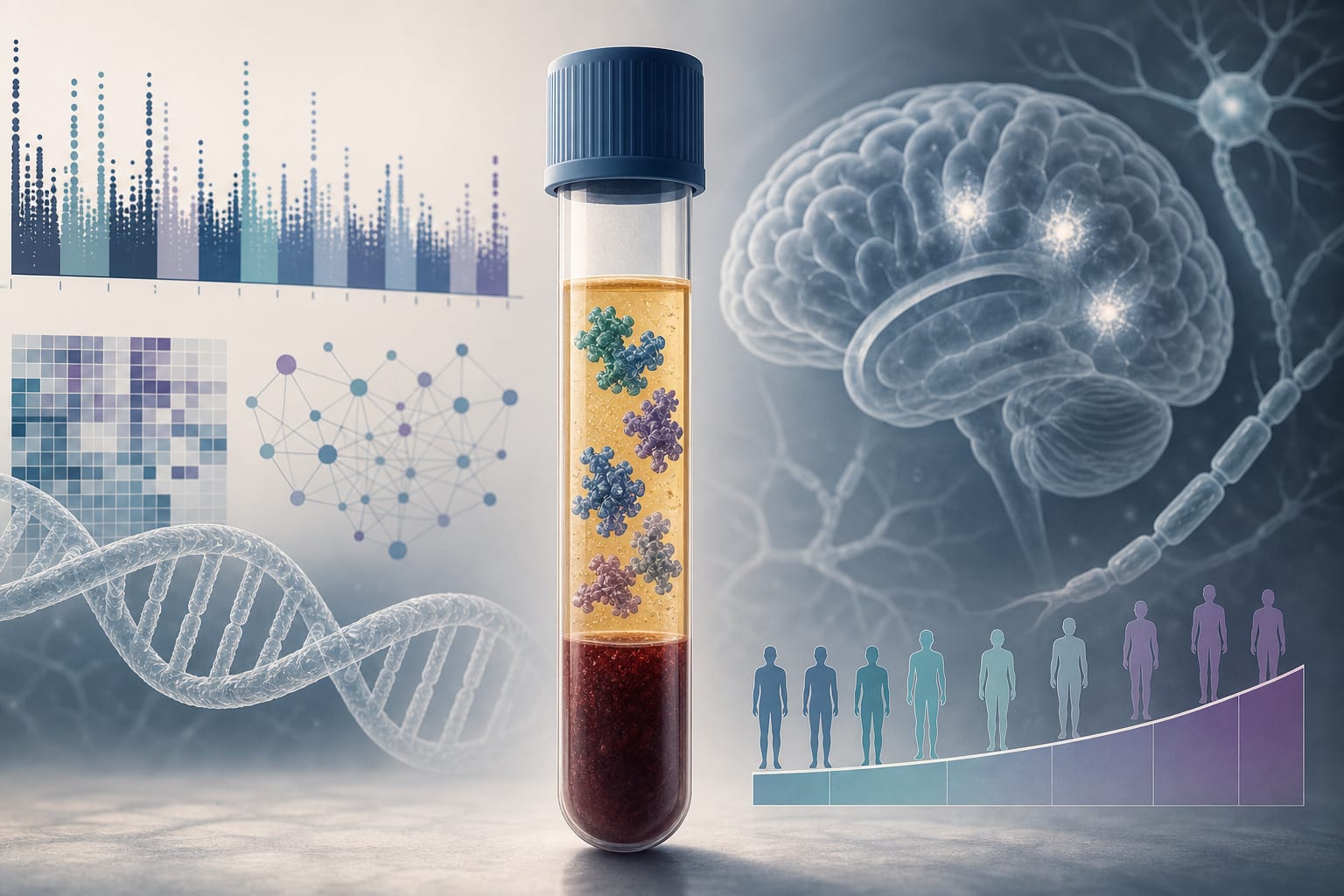
This study identifies 39 plasma proteins causally implicated in multiple sclerosis (MS) using an integrated genetic-proteomic approach.

Background

Multiple sclerosis (MS) remains an incurable disease despite advancements in therapies targeting its inflammatory component. Early intervention is crucial, as the disease process may begin years before clinical symptoms appear.

Data Highlights

The study utilized 2,545 protein measurements from 3 cohorts, totaling 80,824 individuals, to derive genetically predicted protein levels and assess their association with MS in an independent set of 14,802 cases and 26,703 controls.

Key Findings

  • 39 causal proteins associated with MS risk were nominated through an integrated genetic-proteomic approach.
  • DKKL1 was identified as a candidate protein with protective effects on both MS risk and severity.
  • The integrated approach improved fine-mapping resolution by more than 10-fold, identifying novel MS risk loci.
  • Validation of predictive value for the identified proteins was conducted in individuals diagnosed with MS up to 15 years prior.
  • Discordance across proteomic platforms was resolved in this study.

Clinical Implications

The identification of plasma proteins associated with MS risk may facilitate further research into their roles in the disease.

Conclusion

The integration of genetic and proteomic data presents a method for identifying biomarkers in multiple sclerosis.

Related Resources & Content

  1. Genetic-Proteomic Integration Identifies Predictive Plasma Proteins for Multiple Sclerosis, PubMed, 2023 -- Integration of Genetic and Proteomic Data Reveals Predictive Plasma Biomarkers for Multiple Sclerosis
  2. the analytical scientist — CSF Proteomics Identifies New Biomarkers for Multiple Sclerosis
  3. Blood Cancer Journal — Characterizing the Bone Marrow Plasma Proteome in Multiple Myeloma and Monoclonal Gammopathy of Undetermined Significance
  4. asco ai in oncology — Machine Learning–Derived Plasma Protein Signature May Enable Lung Cancer Prediction Years Before Diagnosis
  5. The ASCO Post — ASH 2020: Multiple Myeloma Patient Similarity Network Identifies Prognostic Subgroups With Distinct Genetic and Clinical Features
  6. CSF Proteomics Identifies New Biomarkers for Multiple Sclerosis
  7. Machine Learning–Derived Plasma Protein Signature May Enable Lung Cancer Prediction Years Before Diagnosis
  8. Diagnosis of multiple sclerosis: 2024 revisions of the McDonald criteria
  9. Prognostic value of neurofilament light chain protein and glial fibrillary acidic protein in multiple sclerosis subtypes and disease activity patterns: a systematic review and meta-analysis
  10. Genetic-Proteomic Integration Identifies Predictive Plasma Proteins for Multiple Sclerosis - PubMed

Original Source(s)

Related Content