Clinical Report: Community-Based Behavioral Program and Child BMI
Overview
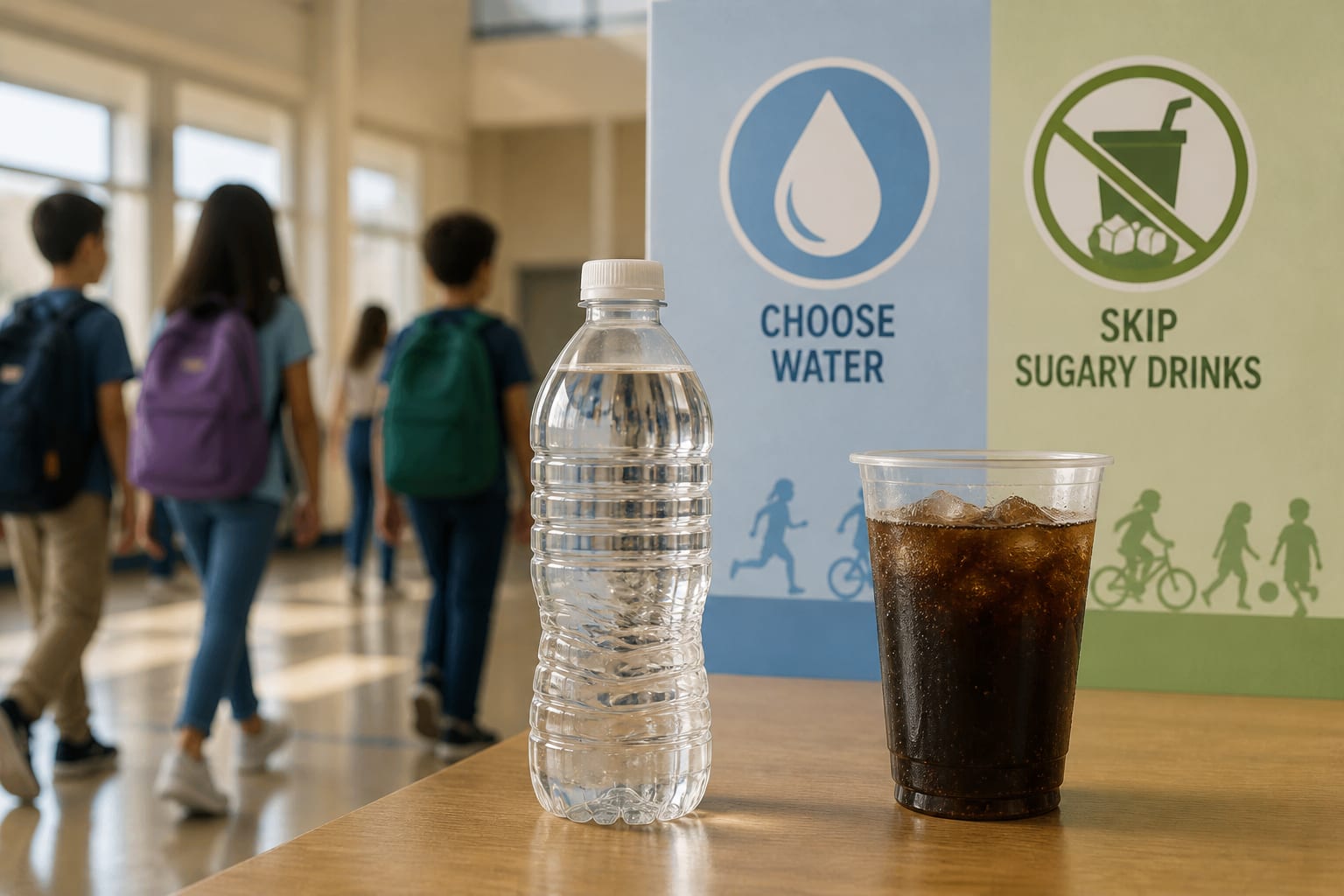
This cluster-randomized trial evaluated H2GO!, a community-based program designed to reduce sugar-sweetened beverage intake and obesity risk among school-aged children. The supplied trial context describes the study design and outcomes assessed, while the accompanying web research reports a statistically significant adjusted between-group difference in 12-month change in BMI z score favoring intervention sites.
Background
Childhood obesity is a substantial US public health concern and is associated with increased risks of diabetes and cardiovascular disease. The source reports that BMI increases accelerated during and after the COVID-19 pandemic, while multibehavior interventions have shown variable results and may be difficult to implement or sustain. Sugar-sweetened beverages are associated with excess calorie intake and elevated obesity risk; approximately two-thirds of US children aged 6 to 11 years reportedly consume at least one such beverage daily. H2GO! was developed with the Boys & Girls Clubs of America and used after-school sessions, youth-generated narratives, and parent–child activities to target beverage behaviors.
Data Highlights
Measure
Reported information
Trial design
Unblinded, parallel-group cluster-randomized clinical trial; 10 sites were initially assigned, with 11 participating sites overall after a replacement comparison site was recruited.
Sites
5 intervention sites and 6 comparison sites.
Participants
Children aged 8 to 13 years who were Boys & Girls Club members and their parents or caregivers; participant count is not provided in the supplied material.
Assessments
Baseline and 2-, 6-, and 12-month evaluations.
Primary outcome
Change in child BMI z score from baseline to 12 months.
Reported 12-month result
Adjusted between-group difference in change in BMI z score: −0.19 (95% CI, −0.38 to −0.01), favoring intervention, as reported in the supplied web research context.
Intervention format
12 in-person, 1-hour group sessions; the supplied context does not provide further session details.
Key Findings
H2GO! was designed to reduce sugar-sweetened beverage consumption and obesity risk among school-aged youths.
The intervention was delivered through Boys & Girls Club sites by trained personnel and included interactive sessions, youth-generated narratives, and parent–child activities.
The trial used matched site pairs across five Massachusetts regions, with sites separated by more than 5 miles to reduce contamination.
Children were assessed at baseline and at 2, 6, and 12 months; the primary outcome was change in BMI z score at 12 months, with sugar-sweetened beverage and water intake as secondary outcomes.
The supplied web research reports an adjusted 12-month between-group BMI z-score change difference of −0.19 (95% CI, −0.38 to −0.01), favoring H2GO!.
Related articles in the supplied context address other pediatric topics—including exercise and bone marrow fat, body-image programming, and metabolite associations with BMI—but do not provide additional results about H2GO!.
Clinical Implications
The supplied trial description supports considering community after-school settings as a venue for delivering a structured beverage-focused behavioral program, with parent–child activities included in the intervention. The reported BMI z-score estimate should be interpreted in the context of the trial’s specific population, site-based design, and 12-month follow-up; the supplied material does not provide enough information to assess other clinical outcomes or implementation effects.
Conclusion
H2GO! was evaluated as a community-based, family-context intervention targeting sugar-sweetened beverage intake among school-aged children. The supplied web research reports a modest adjusted between-group difference in 12-month BMI z-score change favoring intervention, while detailed participant and secondary-outcome results are not included in the provided article context.
by Monica L. Wang, Selenne Alatorre, Aviva G. Schwarz, Janice Weinberg, Linda Sprague Martinez, Jennifer Aldworth, Rabindra Kadel, Milagros C. Rosal, Stephenie C. Lemon