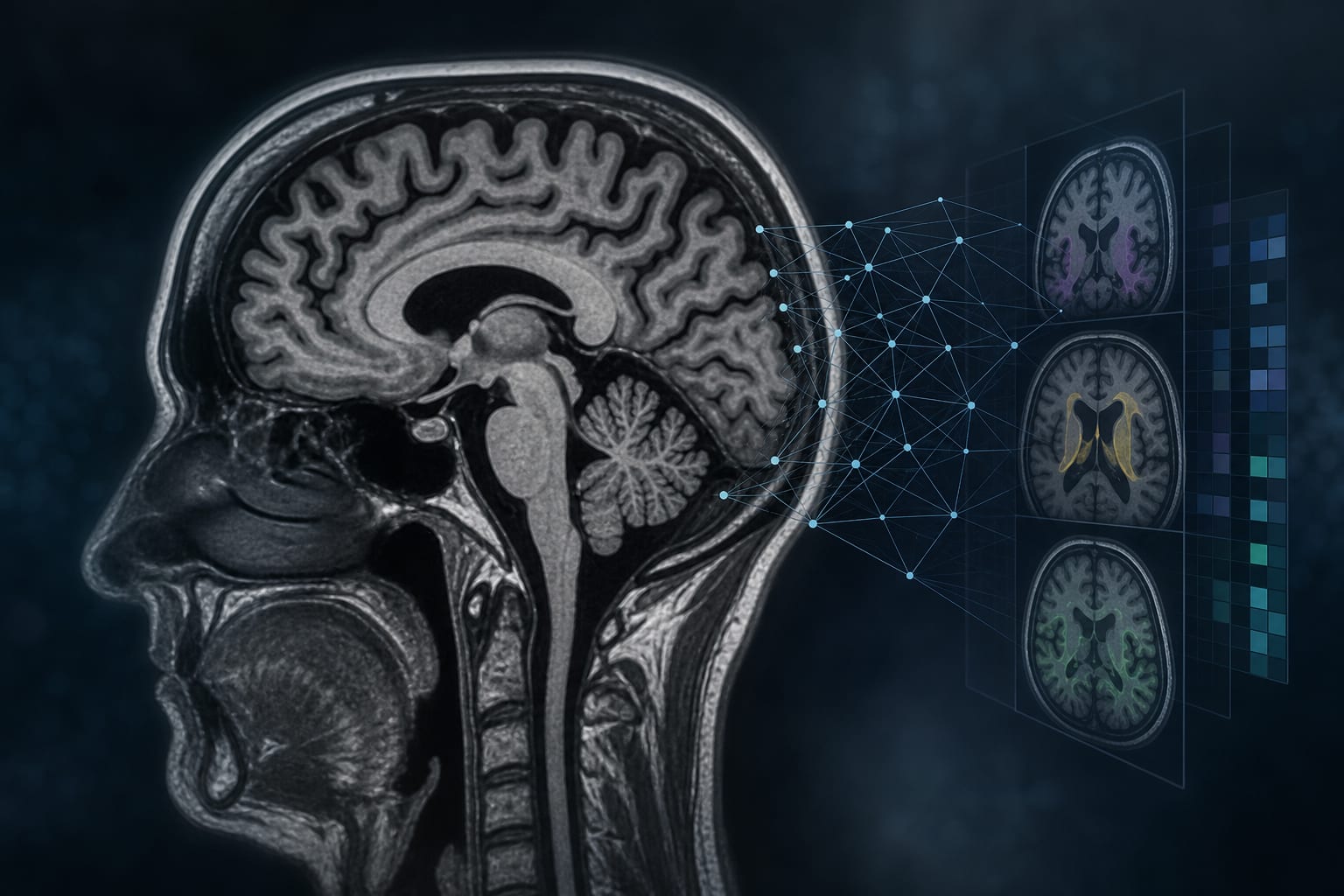
Clinical Report: Recommendations for MRI Endpoints in Ataxia Clinical Trials
Overview
The Ataxia Global Initiative MRI Biomarkers Working Group has provided recommendations for MRI endpoints in clinical trials for hereditary ataxias, emphasizing the need for sensitive outcome measures. These recommendations aim to enhance trial feasibility and participant selection, particularly for emerging gene therapies.
Background
Hereditary cerebellar ataxias are progressive neurodegenerative diseases characterized by debilitating symptoms such as gait ataxia and reduced coordination. The rarity of these conditions complicates clinical trial designs, necessitating the development of sensitive biomarkers for effective treatment monitoring and participant selection. Recent advancements in neuroimaging present opportunities to improve endpoint sensitivity in clinical trials.
Data Highlights
No numerical data provided in the source material.
Key Findings
Quantitative neuroimaging measures are viable candidates for surrogate or primary outcome measures in ataxia trials.
Recommendations include the use of structural MRI, diffusion MRI, and magnetic resonance spectroscopy for assessing disease progression.
Current clinical outcome assessments require large sample sizes, which poses challenges for trial initiation and success.
Identifying gene-positive individuals before symptom onset may allow for earlier intervention in clinical trials.
Favorable characteristics of imaging biomarkers include objectivity, reproducibility, and sensitivity to change.
Clinical Implications
The recommendations provided by the Ataxia Global Initiative can guide researchers in selecting appropriate MRI endpoints for clinical trials in hereditary ataxias. Utilizing these imaging biomarkers may enhance the sensitivity of outcome measures and facilitate the development of effective therapies.
Conclusion
The consensus recommendations for MRI endpoints represent a significant step towards improving clinical trial designs in hereditary ataxias. Further research is necessary to address existing knowledge gaps and optimize the use of neuroimaging in this context.