Clinical Report: Utilizing Catheter Monitoring in Advanced Endovascular Navigation
Overview
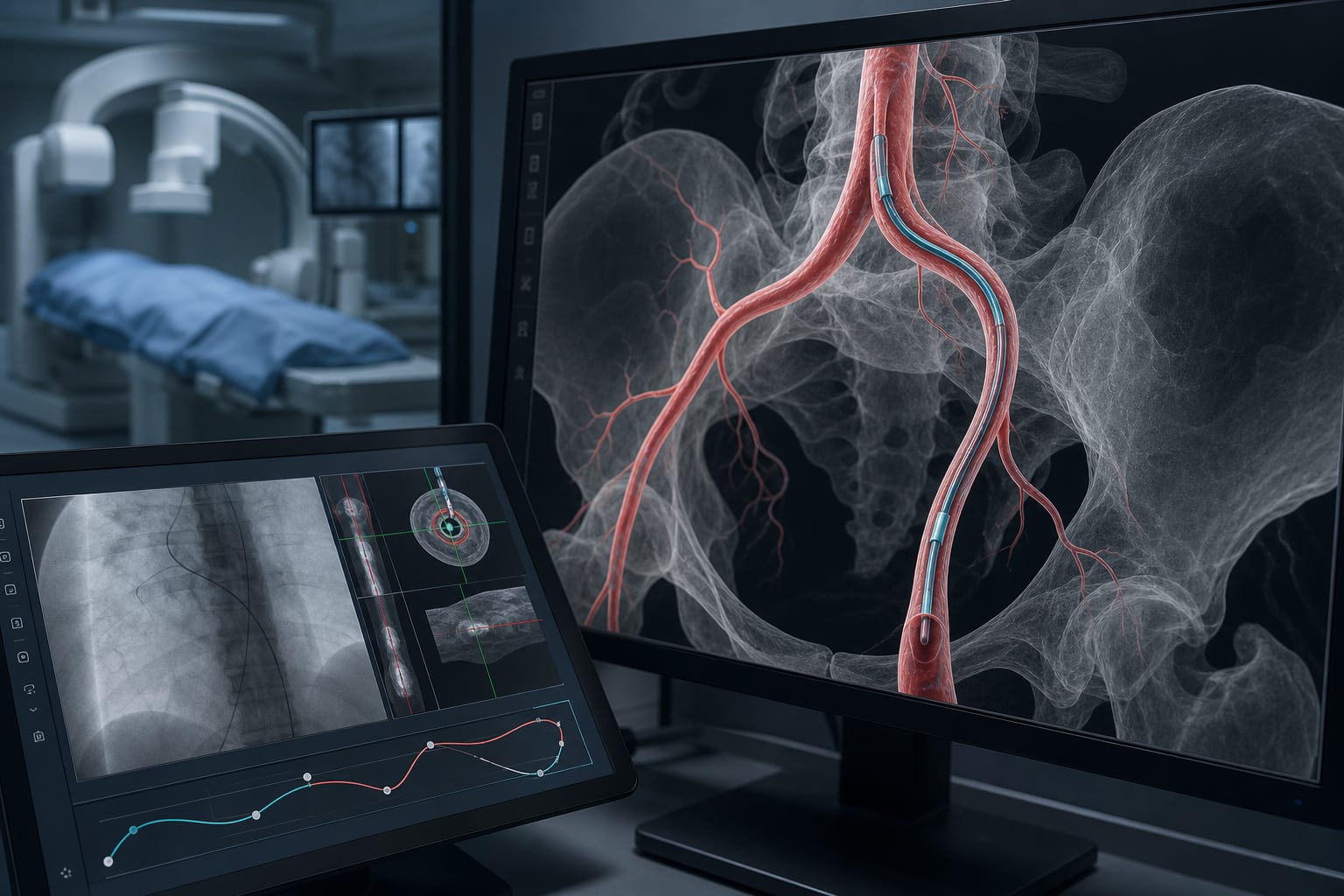
This study presents a novel method integrating sensor-based catheter shape reconstruction, interactive biomechanical simulation, and mixed reality visualization to enhance navigational awareness during transcatheter procedures. The approach aims to improve 3D monitoring of catheter-vessel interactions and associated vessel deformations, addressing limitations of conventional imaging techniques.
Background
Transfemoral access is a common approach for various transcatheter procedures, yet it poses significant technical challenges and risks due to limited visualization of catheter interactions with vessels. Current imaging methods primarily rely on 2D X-ray fluoroscopy, which can lead to incomplete information and potential vascular complications. Advancements in mixed reality and sensor technologies offer promising solutions to enhance operator awareness and improve procedural outcomes.
Data Highlights
No numerical data or trial results were provided in the source material.
Key Findings
The proposed method integrates real-time shape reconstruction with mixed reality visualization for catheter monitoring.
Utilization of fiber Bragg grating and electromagnetic sensors enables accurate tracking of catheter shape.
Interactive biomechanical simulations allow for monitoring of vessel deformation during catheter navigation.
Mixed reality systems can enhance spatial understanding and ergonomics in the operating field.
Current mixed reality solutions are not yet sufficient for standalone surgical guidance but can improve operator understanding.
Clinical Implications
The integration of mixed reality and sensor-based technologies in catheter navigation may significantly enhance procedural safety and efficacy. Clinicians should consider these advancements to improve situational awareness and reduce the risk of vascular complications during transcatheter interventions.
Conclusion
The study highlights the potential of combining advanced monitoring techniques with mixed reality to improve navigational awareness in endovascular procedures. Continued research and validation are essential to fully realize the benefits of these technologies in clinical practice.
Narrative review describes how physiologic stressors accumulate from induction through postintubation care and may contribute to cardiovascular deterioration during airway management.