Ferroptosis in chemotherapy resistance and resensitization in breast cancer: a systematic review of preclinical evidence and translational implications - Report - MDSpire
Advertisement
Ferroptosis in chemotherapy resistance and resensitization in breast cancer: a systematic review of preclinical evidence and translational implications
Clinical Report: Ferroptosis and Its Role in Chemotherapy Resistance in Breast Cancer
Overview
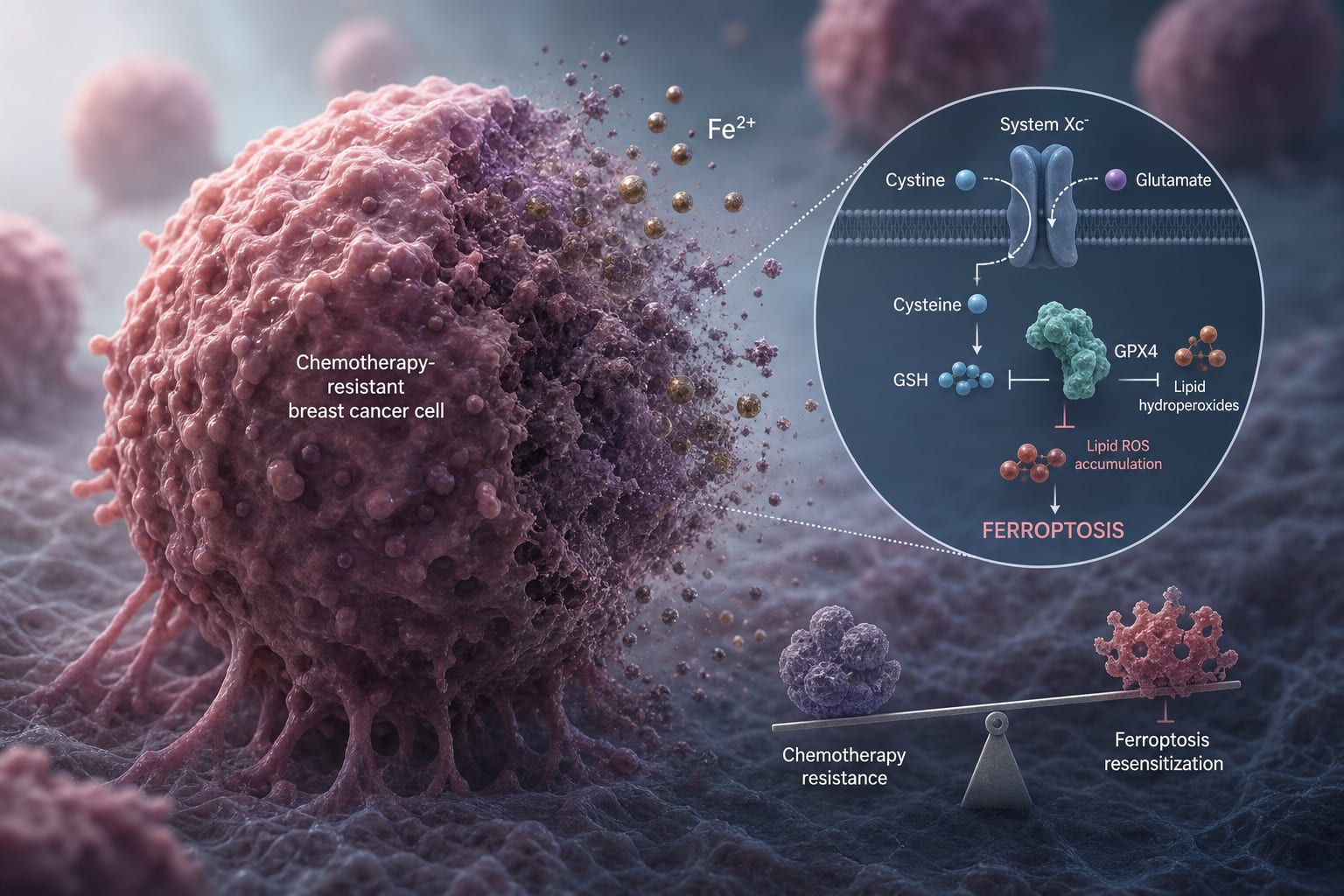
This comprehensive review synthesizes preclinical findings on ferroptosis as a potential therapeutic target in chemotherapy-resistant breast cancer, particularly triple-negative breast cancer (TNBC). The GPX4 axis, iron metabolism regulation, and the SLC7A11/xCT pathway are identified as mechanisms supported by multiple studies.
Background
Chemotherapy resistance is a significant challenge in breast cancer treatment, especially in TNBC, which lacks targetable receptors. Approximately 30-50% of TNBC patients experience chemoresistance, leading to treatment failure and poor outcomes, as reported in various studies. Understanding the mechanisms of ferroptosis may provide new avenues for overcoming this resistance.
Data Highlights
Mechanism
Number of Studies
Evidence Level
GPX4 axis
28
A (strong evidence based on study number and validation)
Iron metabolism regulation
8
A (strong evidence based on study number and validation)
SLC7A11/xCT pathway
5
A (strong evidence based on study number and validation)
Other mechanisms
3
C (limited evidence)
Key Findings
Ferroptosis is a regulated form of cell death distinct from apoptosis and necrosis.
GPX4 modulation has shown efficacy across various drug classes in preclinical studies, as evidenced by multiple research articles.
Iron metabolism regulation and the SLC7A11/xCT pathway are also critical in ferroptosis and chemoresistance.
Methodological quality of included studies was adequate, with 88.6% performing rescue experiments.
Reporting of randomization and blinding in animal studies needs improvement.
Clinical Implications
The findings indicate that further investigation into ferroptosis may be warranted in the context of chemotherapy resistance in breast cancer, particularly focusing on the GPX4 axis and related pathways.
Conclusion
Ferroptosis regulation presents a potential approach to addressing chemoresistance in breast cancer, with several mechanisms identified as relevant targets.