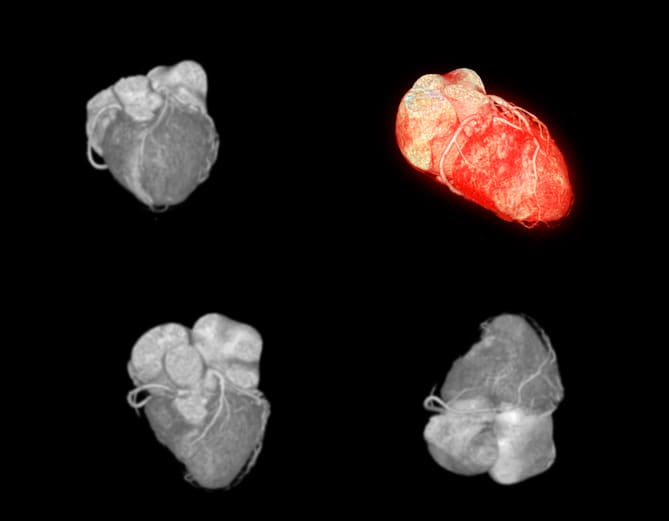
A single-center editorial described real-world integration of artificial intelligence–based coronary artery calcium scoring into routine cardiac CT workflow, with researchers reporting rapid report availability and high agreement with manual reference standards while emphasizing continued radiologist oversight.
An AI-based coronary artery calcium (CAC) scoring system, as implemented at Wonkwang University Hospital, significantly improves workflow efficiency by generating reports within 10 minutes of image upload. The system demonstrates high agreement with manual scoring methods, although limitations such as false-positive and false-negative detections persist.
Background
Coronary artery calcium scoring is a critical tool in assessing cardiovascular risk, particularly in asymptomatic individuals. The integration of AI in CAC scoring has the potential to streamline workflows and enhance diagnostic accuracy, but understanding the effectiveness and limitations of AI-based systems is essential for optimizing patient care and treatment decisions.
Data Highlights
No numerical data provided in the source material.
Key Findings
The AI-based CAC scoring system generates reports within 10 minutes of CT image upload.
High agreement was observed between AI-based CAC scoring and manual reference standards, particularly for clinically relevant thresholds.
False-positive and false-negative detections were noted, especially related to noncoronary calcifications and motion artifacts.
AI scoring replaced manual preliminary reports, reducing operator-dependent variability and workflow disruption.
Radiologist oversight remains crucial, particularly in patients with complex coronary anatomy.
Clinical Implications
The implementation of AI-based CAC scoring can enhance the efficiency of cardiac CT workflows and improve risk stratification for patients. However, clinicians must remain vigilant regarding the limitations of AI outputs and ensure appropriate oversight in interpreting results, including ongoing training.
Conclusion
AI-based CAC scoring represents a promising advancement in cardiovascular imaging, but careful integration into clinical practice is necessary to address its limitations and ensure optimal patient outcomes.
A large audit of biomedical publications suggests fabricated references are increasingly appearing in peer-reviewed papers — often in ways that are difficult for reviewers and readers to detect.