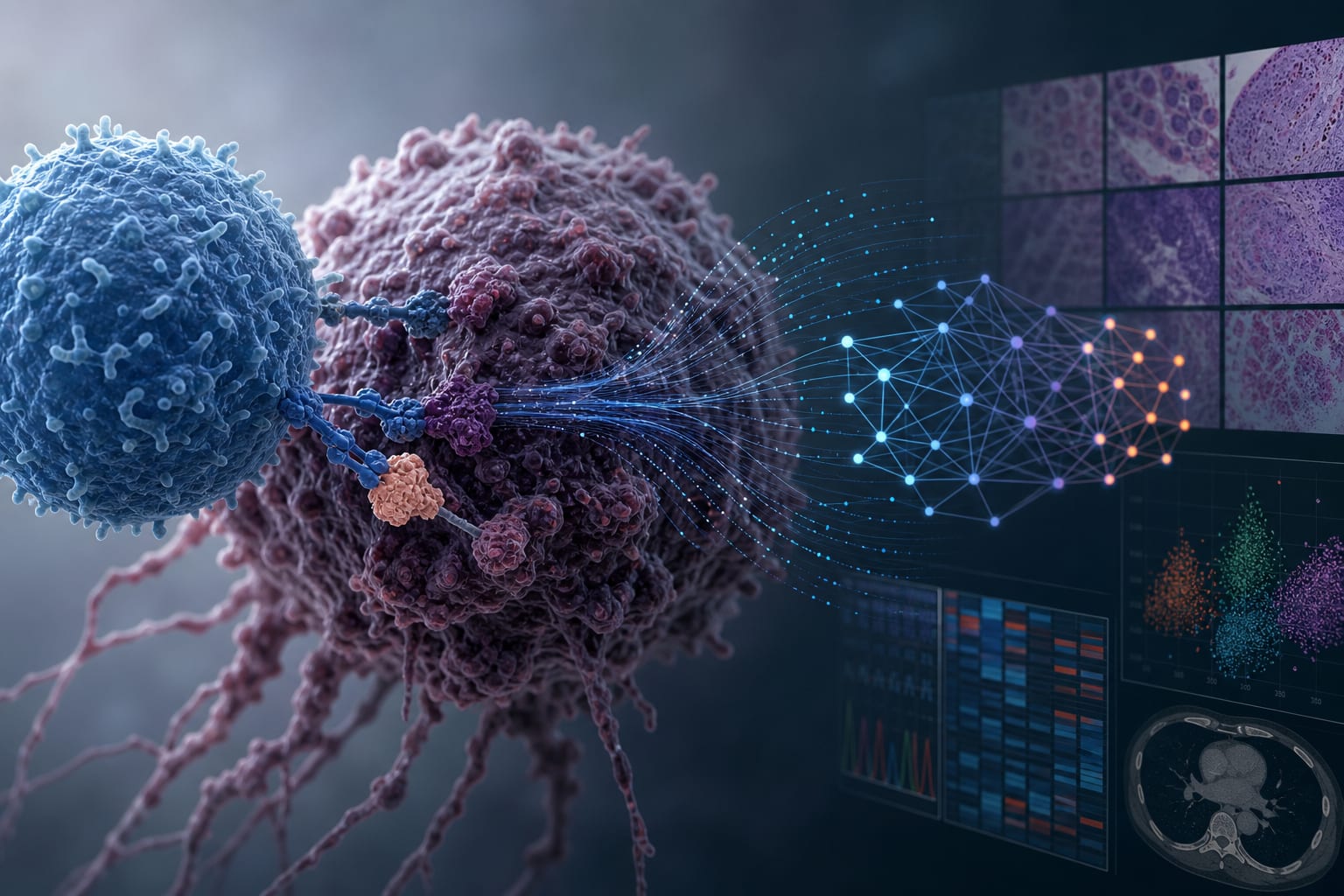
CD32b defines distinct dendritic cell lineages generated from the culture of bone marrow with GM-CSF - Report - MDSpire

CD32b defines distinct dendritic cell lineages generated from the culture of bone marrow with GM-CSF

  • By

  • Wanho Choi

  • Seul Hye Ryu

  • Ji Soo Park

  • Da Eun Park

  • Min Kyung Chu

  • Hye Young Na

  • Chae Gyu Park

  • May 29, 2026

  • 0 min

Share

CD32b Distinguishes Unique Lineages of Dendritic Cells Derived from Bone Marrow Cultured with GM-CSF

Overview

This study identifies two distinct subsets of dendritic cells (DCs) generated from bone marrow cultured with GM-CSF, differentiated by the expression of CD32b.

Background

Dendritic cells play a crucial role in bridging innate and adaptive immunity, making their study important for understanding immune responses. The generation of dendritic cells from bone marrow using GM-CSF is a standard method, yet the developmental pathways and functional diversity of these cells remain inadequately characterized.

Data Highlights

No numerical data or trial data was provided in the source material.

Key Findings

  • GM-DCs can be divided into two subsets based on CD32b expression: CD32b- and CD32b+ GM-DCs.
  • CD32b- GM-DCs arise from monocyte-dendritic cell progenitors (MDPs) within the first week of culture.
  • CD32b+ GM-DCs are generated from granulocyte-monocyte progenitors (GMPs) at a slower rate and become dominant later in culture.
  • Distinct pre-GM-DC populations exist in the bone marrow culture, each corresponding to the two GM-DC subsets.
  • CD32b+ GM-DCs have a greater capacity to stimulate CD4+ T cells compared to CD32b- GM-DCs.
  • In vivo, GMPs selectively generate CD32b+ GM-DCs with delayed kinetics, while MDPs produce heterogeneous GM-DC subsets rapidly.

Clinical Implications

The identification of CD32b as a marker for distinct dendritic cell subsets may enhance the understanding of immune responses.

Conclusion

This research establishes CD32b as a critical marker for differentiating between functionally distinct dendritic cell lineages derived from bone marrow cultures.

Related Resources & Content

  1. Blood Cancer Journal, 2011 -- Enhanced phenotypic analysis of the primitive lineage− CD34+CD38−CD90+CD45RA− hematopoietic stem/progenitor cell subset derived from cord blood, mobilized peripheral blood, and chronic myelogenous leukemia patients
  2. Blood Cancer Journal, 2015 -- Human cord blood-derived primitive CD34-negative hematopoietic stem cells (HSCs) are myeloid-biased long-term repopulating HSCs
  3. Blood Cancer Journal, 2013 -- Effect of intravenous coadministration of human stroma cell lines on engraftment of long-term repopulating clonal myelodysplastic syndrome cells in immunodeficient mice
  4. WBC Growth Factors: ASCO Guideline Update | Journal of Clinical Oncology
  5. Comparative efficacy, immune response, and safety of mRNA versus dendritic cell vaccines in solid tumors: a systematic review and meta-analysis - PMC
  6. Acta Neuropathologica — B cells producing IL-10 regulate the inflammatory responses of macrophages and microglia in central nervous system autoimmune disorders
  7. Contemporary guidance on GM-CSF in clinical practice
  8. DC-based cancer vaccination evidence synthesis
  9. FcγRIIB (CD32B) antibodies enhance immune responses through activating FcγRs - PubMed

Original Source(s)

Related Content