Clinical Report: Esculentoside A Reduces Oxidative Stress in Spinal Cord Injury
Overview
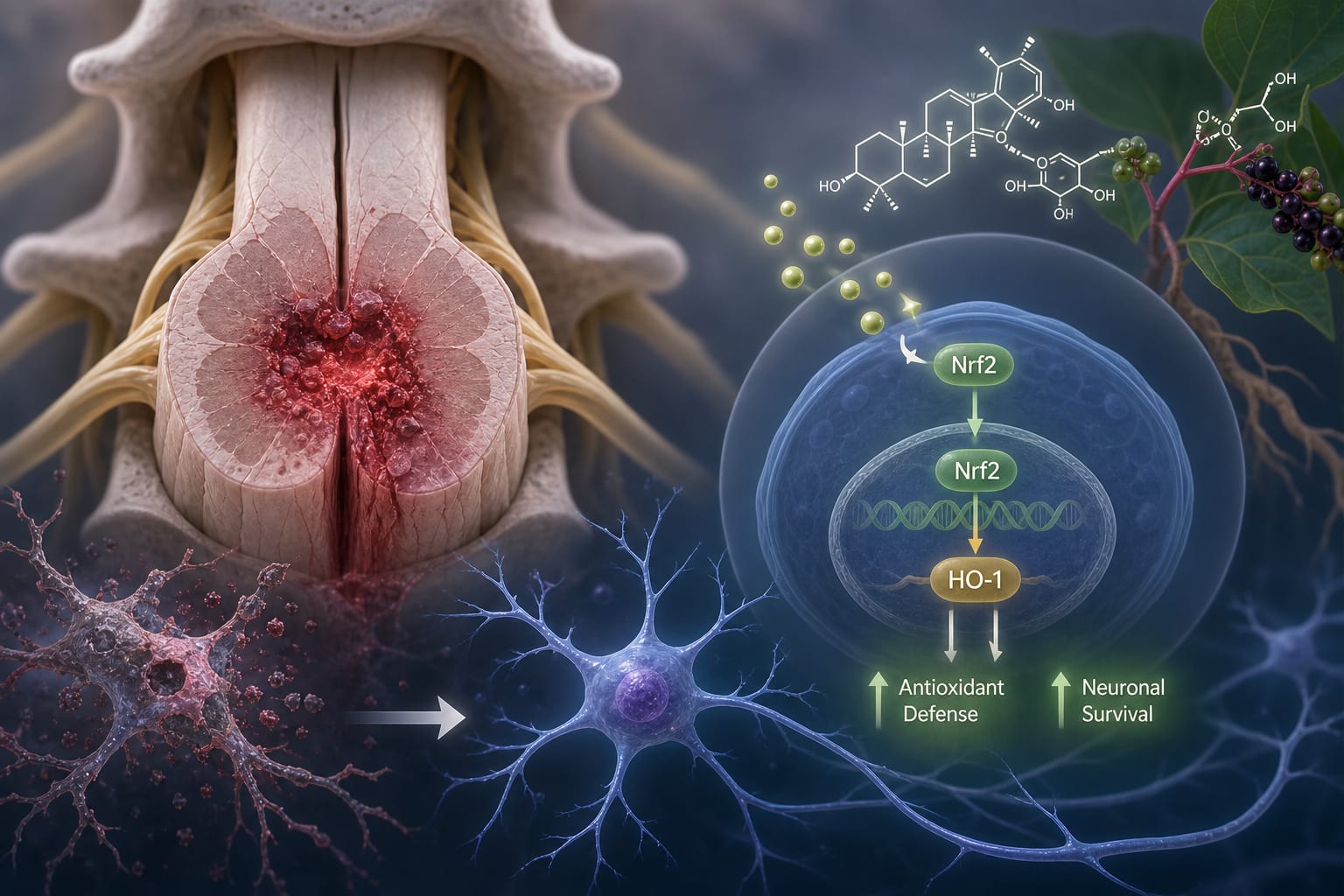
Esculentoside A (EsA) reduces oxidative stress and neuronal apoptosis in spinal cord injury (SCI). The study highlights the activation of the Nrf2/HO-1 signaling pathway as a key mechanism underlying these effects.
Background
Spinal cord injury (SCI) leads to significant disability and poses a major public health challenge. Oxidative stress and neuronal apoptosis are critical contributors to the secondary injury phase following SCI.
Data Highlights
Parameter
Effect of EsA
Motor Function Improvement
Significant
Histopathological Damage
Reduced
Oxidative Stress Markers
Improved
Neuronal Apoptosis
Reduced
Nrf2/HO-1 Activation
Significant
Key Findings
EsA significantly improved motor function in SCI rats.
Histopathological damage in spinal cord tissue was reduced with EsA treatment.
Oxidative stress biomarkers showed significant improvement after EsA administration.
EsA reduced neuronal apoptosis in the injured spinal cord.
The neuroprotective effects of EsA were associated with activation of the Nrf2/HO-1 pathway.
Clinical Implications
Further research is warranted to explore the effects of EsA in SCI.
Conclusion
EsA reduces oxidative stress and neuronal apoptosis in SCI through the Nrf2/HO-1 pathway.