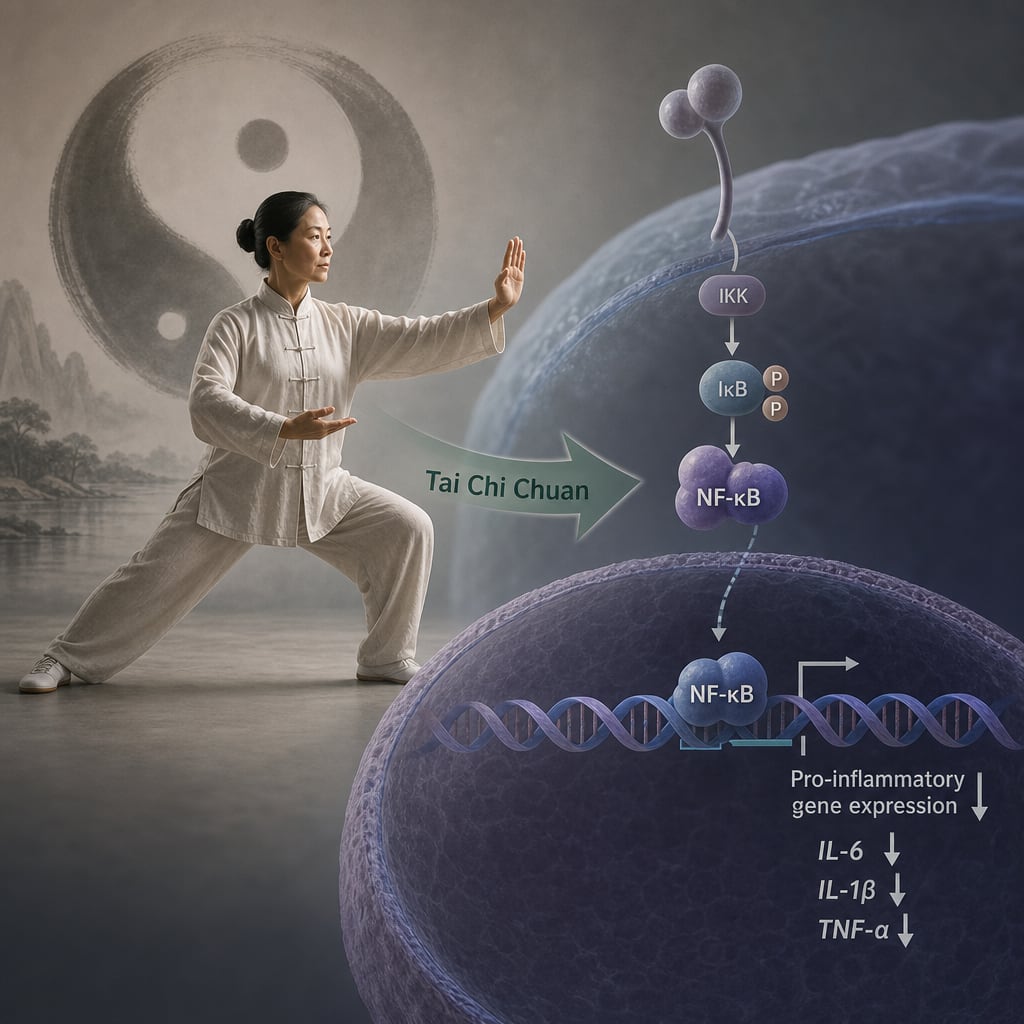
Performance of Tai Chi Chuan and NF-κB-driven proinflammatory gene expression (IL-6, IL-1β, TNF-α) in adult chronic disease patients: a systematic review and meta-analysis of randomized controlled trials - Report - MDSpire
Advertisement
Performance of Tai Chi Chuan and NF-κB-driven proinflammatory gene expression (IL-6, IL-1β, TNF-α) in adult chronic disease patients: a systematic review and meta-analysis of randomized controlled trials
Clinical Report: Efficacy of Tai Chi Chuan on NF-κB-mediated Pro-inflammatory Gene Expression
Overview
This systematic review and meta-analysis evaluates the impact of Tai Chi Chuan on pro-inflammatory gene expression in adults with chronic illnesses. The findings indicate significant reductions in IL-6 and IL-1β levels, suggesting Tai Chi's potential as an anti-inflammatory intervention.
Background
Chronic inflammation is a significant contributor to various chronic diseases, leading to increased morbidity and healthcare costs. The NF-κB signaling pathway plays a crucial role in mediating inflammation, with pro-inflammatory cytokines such as IL-6, IL-1β, and TNF-α perpetuating this cycle. Understanding interventions that can modulate this pathway is essential for improving patient outcomes in chronic disease management.
Data Highlights
Gene
Standardized Mean Difference (SMD)
95% Confidence Interval (CI)
p-value
Overall
-0.48
-0.76 to -0.19
<0.01
IL-6
-0.66
-1.27 to -0.06
0.03
IL-1β
-0.59
-0.95 to -0.23
<0.01
TNF-α
-0.28
-0.59 to 0.02
0.07
Key Findings
Tai Chi Chuan significantly reduced pro-inflammatory gene expression in chronic disease patients.
IL-6 levels were significantly down-regulated (SMD = -0.66, p = 0.03).
IL-1β levels were significantly reduced (SMD = -0.59, p < 0.01).
TNF-α showed a downward trend but was not statistically significant (SMD = -0.28, p = 0.07).
Patients with endocrine and respiratory diseases benefited most from Tai Chi interventions.
Future research should focus on RCTs examining NF-κB core proteins as outcome measures.
Clinical Implications
Identify specific chronic conditions where Tai Chi may be particularly beneficial.
Conclusion
Highlight the importance of understanding Tai Chi's mechanisms in future research.
IBTV speaks with industry leaders at Advanced Therapies London 2026 to explore how automation, AI, closed systems, and smarter supply chain models are helping advanced therapies move toward scalable delivery