Characterization of cancer-associated fibroblast populations that promote tertiary lymphoid structure formation in murine melanoma tumors - Report - MDSpire

Characterization of cancer-associated fibroblast populations that promote tertiary lymphoid structure formation in murine melanoma tumors

  • By

  • Robert Barnes

  • Kara Cummings

  • Mirna Perusina Lanfranca

  • Anthony B. Rodriguez

  • Katarzyna Stasiak

  • Burkhard Ludewig

  • Sepideh Dolatshahi

  • Victor H. Engelhard

  • July 17, 2026

Share

Clinical Report: Analysis of Fibroblast Subpopulations Linked to Tertiary Lymphoid Structure Development in Melanoma Tumors in Mice

Overview

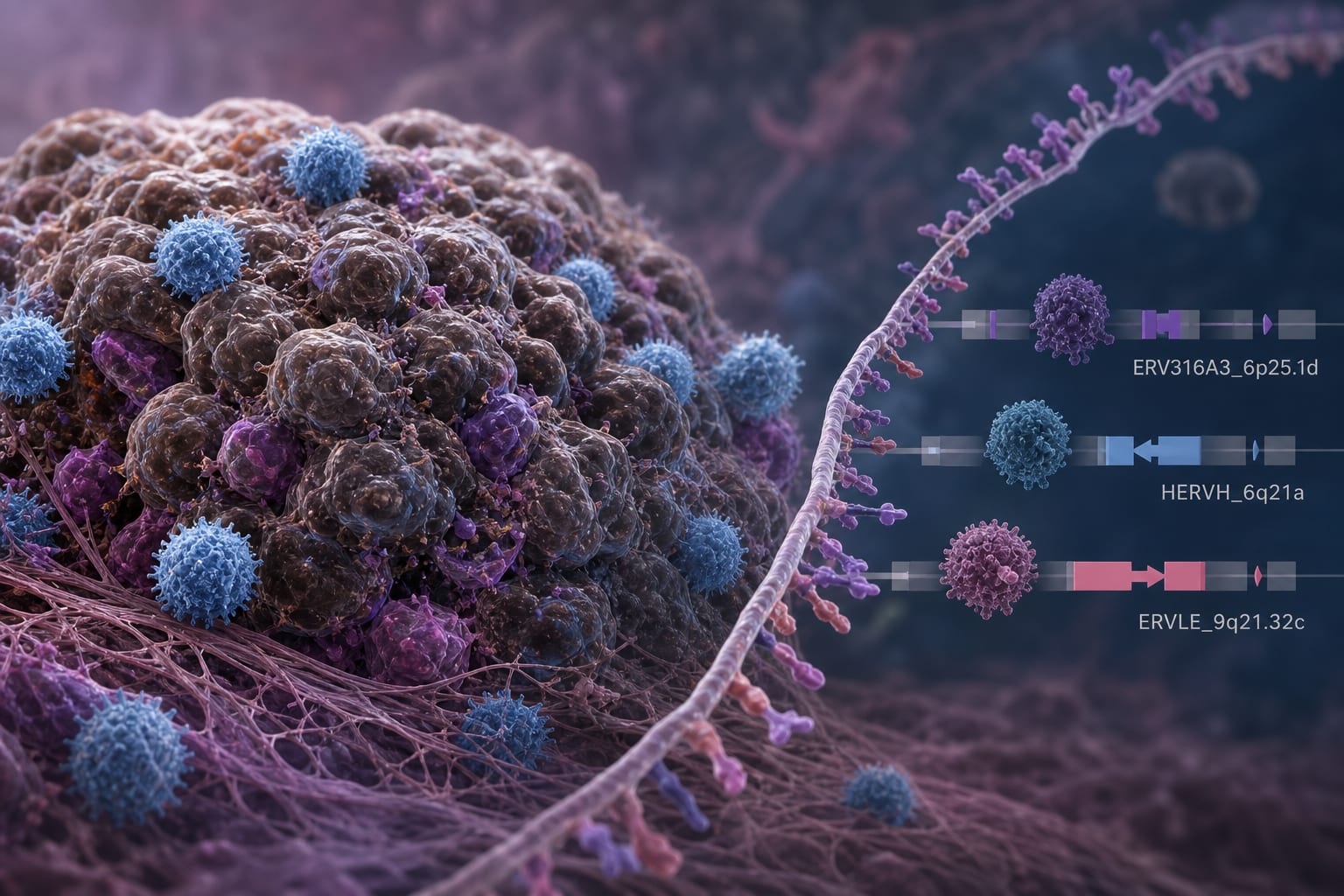
This study identifies distinct populations of cancer-associated fibroblasts (CAF) that are crucial for the development of tertiary lymphoid structures (TLS) in melanoma tumors. A specific CAF population expressing CXCL13 was found to promote B cell accumulation.

Background

Tertiary lymphoid structures (TLS) are important in the tumor microenvironment, influencing immune responses. Understanding the cellular mechanisms that drive TLS development is essential. This study utilizes a mouse model to elucidate the role of CAF in TLS formation within melanoma tumors.

Data Highlights

No numerical data or trial data was provided in the source material.

Key Findings

  • CXCL13 is exclusively expressed by a population of cancer-associated fibroblasts (CAF).
  • CXCL13-expressing CAF are essential for promoting B cell accumulation in melanoma tumors.
  • Seven distinct groups of CAF were identified in tumors containing TLS.
  • One CAF group enriched for CXCL13 expression also showed enrichment for genes that may promote B cell recruitment.
  • Other CAF populations expressed genes hypothesized to be important in TLS development.

Clinical Implications

The identification of CAF populations that influence TLS development may inform future therapeutic strategies aimed at enhancing immune responses in melanoma. Understanding these mechanisms could lead to improved patient outcomes through targeted immunotherapy approaches.

Conclusion

This research highlights the complexity of CAF populations in melanoma and their critical role in TLS development.

Related Resources & Content

  1. Blood Cancer Journal, 2025 -- Macrophages Expressing PDL1 Infiltrate Diffuse Large B-Cell Lymphoma and Enhance Tumor Growth in a MYC-Driven Experimental Model
  2. Blood Cancer Journal, 2023 -- Association of CD57+ T follicular helper cell phenotype in the tumor microenvironment with unfavorable prognosis in follicular lymphoma
  3. TFF3 Inhibition Enhances CD8+ T Cell Infiltration and Function by Reducing PD-L1 Expression in Colorectal Cancer
  4. Blood Cancer Journal, 2014 -- BCL2 Heterogeneity Within and Between Tumors is Associated with IgH Expression and Prognostic Outcomes in Follicular Lymphoma
  5. Cutaneous melanoma: ESMO Clinical Practice Guideline for diagnosis, treatment and follow-up - PubMed, 2023
  6. Frontiers | Tertiary lymphoid structures as biomarkers and therapeutic targets in neoadjuvant cancer immunotherapy, 2026
  7. Frontiers | Characterization of cancer-associated fibroblast populations that promote tertiary lymphoid structure formation in murine melanoma tumors, 2026
  8. Cutaneous melanoma: ESMO Clinical Practice Guideline for diagnosis, treatment and follow-up - PubMed
  9. Frontiers | Tertiary lymphoid structures as biomarkers and therapeutic targets in neoadjuvant cancer immunotherapy
  10. Frontiers | Characterization of cancer-associated fibroblast populations that promote tertiary lymphoid structure formation in murine melanoma tumors

Original Source(s)

Related Content