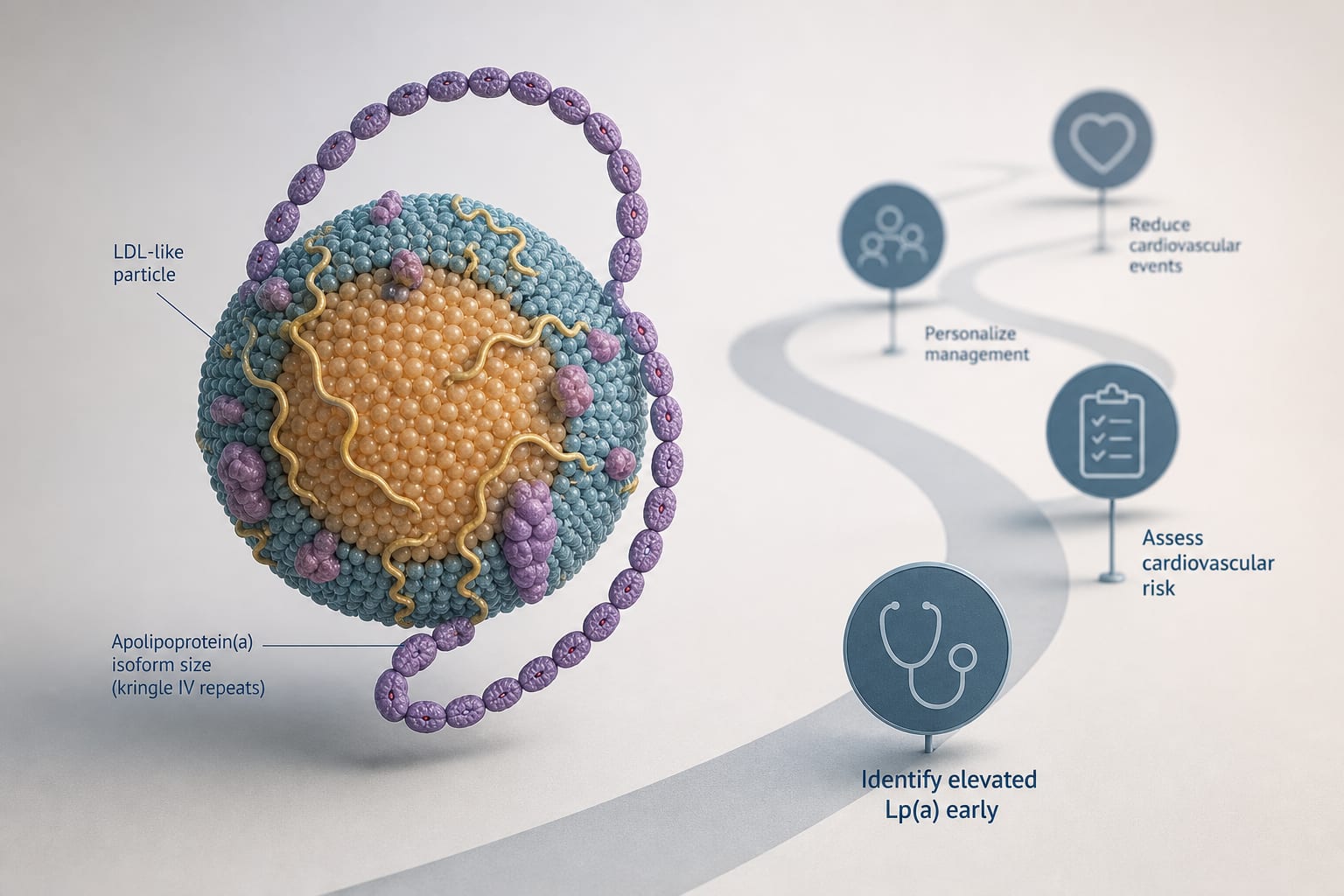
Clinical Report: Exploring General Practitioners' Views on Lipoprotein(a)
Overview
This study investigates general practitioners' perspectives on the detection and management of elevated Lipoprotein(a) [Lp(a)], highlighting significant barriers to routine testing and the positive impact of targeted educational interventions. The findings underscore the need for improved training and national management pathways to enhance Lp(a) awareness and treatment.
Background
Elevated Lp(a) is recognized as an independent risk factor for cardiovascular disease, yet it remains underdiagnosed and poorly managed globally. Despite recommendations for universal testing, only a small fraction of high-risk individuals are assessed for elevated Lp(a). Understanding general practitioners' views is crucial, as they play a key role in primary care and cardiovascular risk management.
Data Highlights
In a study involving 50 general practitioners, the LILAC-for-Lp(a) educational framework significantly improved GPs' confidence in managing Lp(a) (p < 0.001).
Key Findings
Only 2 out of 18 GPs routinely test for Lp(a) in high cardiovascular risk patients.
Barriers to Lp(a) testing include lack of management pathways, out-of-pocket costs, and low public awareness.
Pre- and post-education questionnaires indicated a positive shift in GPs' perspectives on Lp(a) testing after the LILAC training.
80% of Singapore’s primary healthcare is provided by private-sector GPs, emphasizing their role in managing Lp(a).
Current guidelines recommend testing Lp(a) at least once in a lifetime for all adults.
Clinical Implications
Healthcare providers should prioritize training on Lp(a) to enhance detection and management in primary care settings. Establishing clear management pathways and subsidizing costs may facilitate broader implementation of Lp(a) testing.
Conclusion
The study highlights critical gaps in the management of elevated Lp(a) among general practitioners, while also demonstrating the effectiveness of educational interventions in improving awareness and confidence in handling this risk factor.
“High-dose intravenous vitamin C administered early after injury did not reduce organ dysfunction or [mortality] and should not be a treatment in severe burns.”