Clinical Report: Assessment of a Computerized Decision Support Tool for Polytrauma
Overview
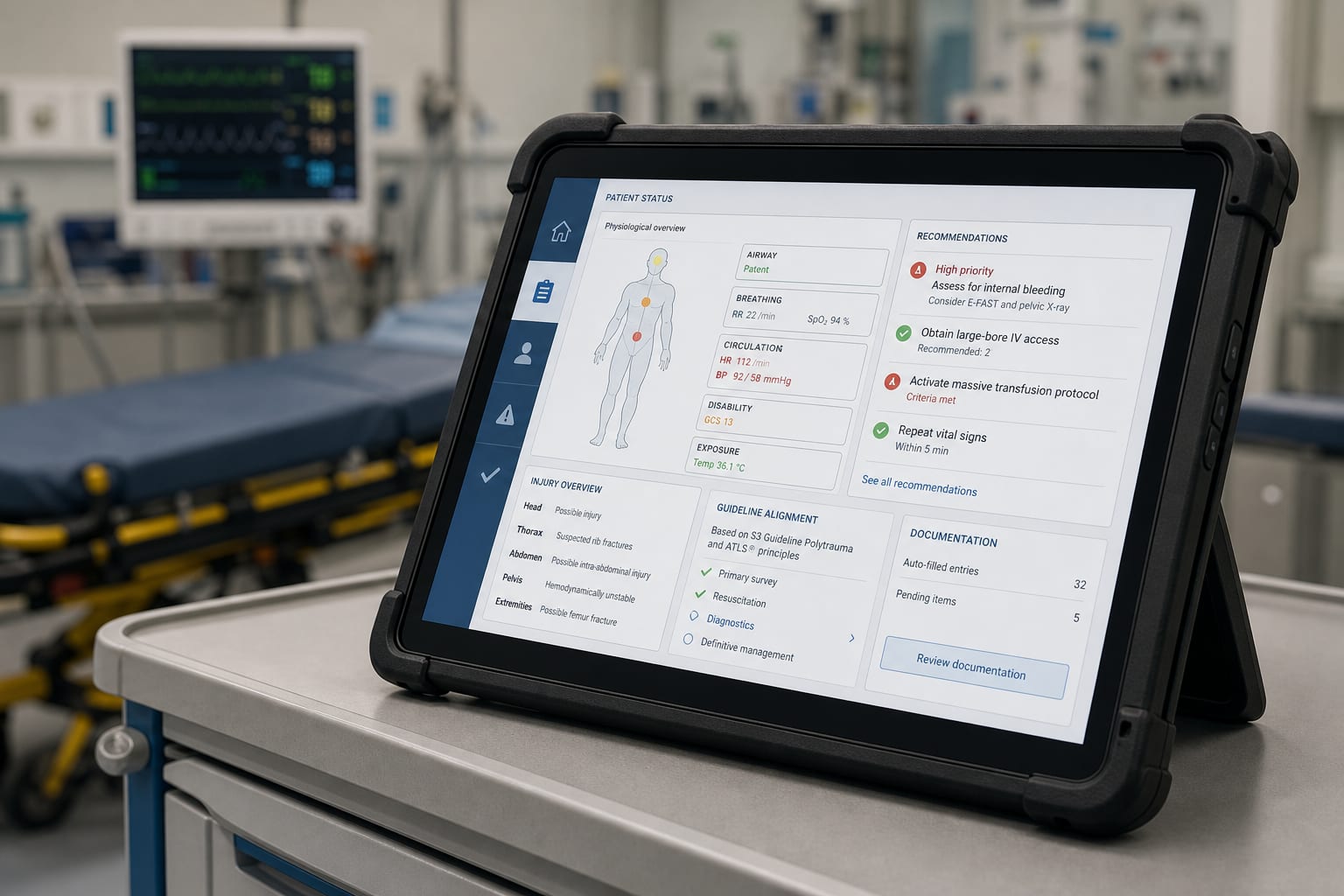
The study evaluated TraumaFlow, a computerized decision support system, in managing polytrauma cases. Results indicated improved documentation completeness, although no significant reduction in workload was observed.
Background
Polytrauma management is critical due to the high risk of treatment errors in time-sensitive situations. The integration of computerized decision support systems (CDSS) like TraumaFlow aims to enhance guideline adherence and reduce cognitive load among healthcare professionals.
Data Highlights
Metric
TraumaFlow
Paper Protocol
P-value
Documentation Completeness
82% (20.5/25 items)
74% (18.4/25 items)
0.002
Clinically Relevant Actions Triggered
37%
N/A
N/A
Workload (NASA-RTLX)
35.0 ± 12.4
34.7 ± 15.3
N/A
Key Findings
Documentation completeness was significantly higher with TraumaFlow compared to paper documentation (82% vs. 74%, p = 0.002).
37% of system-generated clinical prompts triggered relevant actions.
No significant difference in workload was observed between TraumaFlow-supported and conventional cases.
Participants reported positive usability ratings.
TraumaFlow improved structure and reduced the risk of omission in documentation.
Clinical Implications
TraumaFlow can enhance documentation quality and support adherence to clinical guidelines in acute polytrauma care.
Conclusion
TraumaFlow demonstrates the ability to improve documentation and guideline adherence in polytrauma management.