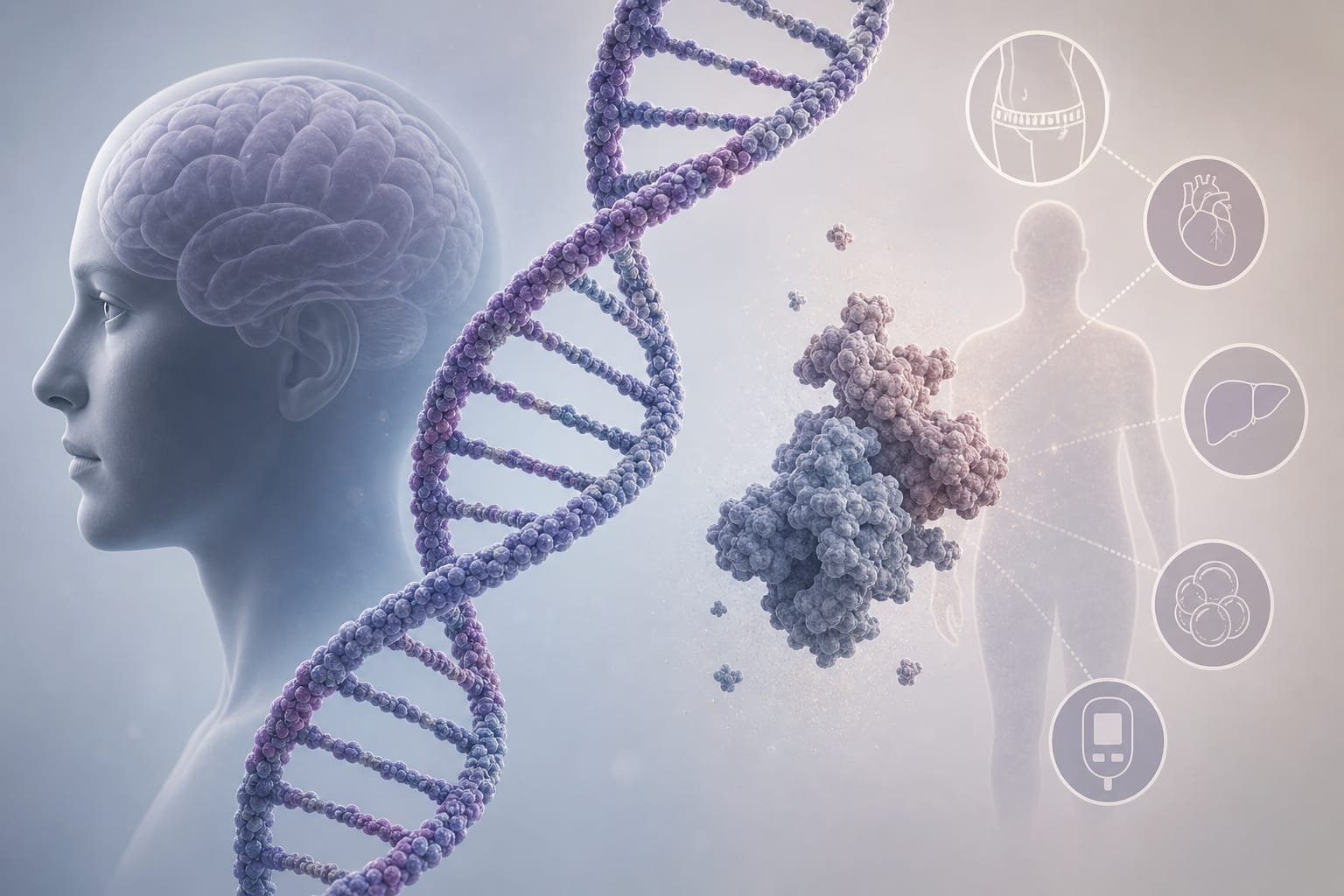
Clinical Report: Association of Polygenic Risk for C-Reactive Protein with Obesity-Related Characteristics in Schizophrenia Spectrum Disorders
Overview
This study investigates the association of polygenic risk scores for C-reactive protein (CRP) and interleukin 6 (IL-6) with cardiometabolic outcomes in patients with schizophrenia spectrum disorders (SSDs).
Background
Patients with schizophrenia spectrum disorders (SSDs) face a heightened risk of cardiometabolic dysregulations, which can lead to significant cardiovascular morbidity and reduced life expectancy. Chronic low-grade inflammation is a critical factor in these outcomes, and understanding the genetic contributions through polygenic risk scores (PRS) for inflammatory biomarkers like CRP and IL-6 may provide insights into this risk.
Data Highlights
Outcome
β (Coefficient)
95% CI
P-value
BMI
0.64
0.21-1.02
0.003
Waist Circumference
2.25
1.00-3.53
<0.001
Triglycerides
0.13
0.01-0.26
0.036
Metabolic Composite Score
0.14
0.04-0.24
0.006
HbA1c Level
-0.66
-1.26 to -0.05
0.033
Key Findings
Higher standardized PRSCRP is significantly associated with increased BMI and waist circumference in SSDs.
PRSCRP explains up to 1.85% variance in BMI and 2.52% in waist circumference.
Nominal associations were found between PRSCRP and triglycerides and metabolic composite score, though not significant after correction.
PRSIL-6 showed a nominal association with HbA1c levels, which did not remain significant after multiple testing correction.
Clinical Implications
Clinicians should consider the potential role of inflammation in managing cardiometabolic risk in this population.
Conclusion
The study provides evidence that higher genetic susceptibility for low-grade inflammation is associated with increased obesity-related traits in SSDs.
by Chenxu Zhao, Elnaz Naderi, Tesfa Dejenie Habtewold, Therese van Amelsvoort, Wiepke Cahn, Lieuwe de Haan, Marieke van der Pluijm, Claudia J.P. Simons, Jim van Os, Wim Veling, Richard Bruggeman, Behrooz Z. Alizadeh
Four-day treatment targeting the prefrontal cortex and cerebellum produced larger reductions in suicidal ideation scores than prefrontal stimulation alone in adolescents with major depressive disorder.