HPV Viral Load as a Predictor of Immune Exhaustion and Clinical Outcomes in Cervical Neoplasia
Overview
This study evaluates the prognostic significance of HPV viral load in cervical cancer, revealing that high viral load is associated with advanced disease and higher recurrence rates.
Background
Cervical cancer is a leading cause of cancer-related morbidity and mortality among women globally, primarily driven by persistent high-risk HPV infections. Understanding the role of HPV viral load in disease progression and immune response is crucial for improving patient management and treatment strategies.
Data Highlights
Parameter
High Viral Load
Low Viral Load
p-value
Advanced Disease Stage
Significantly Associated
Not Significantly Associated
< 0.001
Lymph Node Metastasis
28.3%
13.5%
0.002
Recurrence Rates
27.4%
13.0%
0.002
5-Year Overall Survival
68.5%
87.3%
0.38
5-Year Recurrence-Free Survival
59.3%
82.1%
0.068
Key Findings
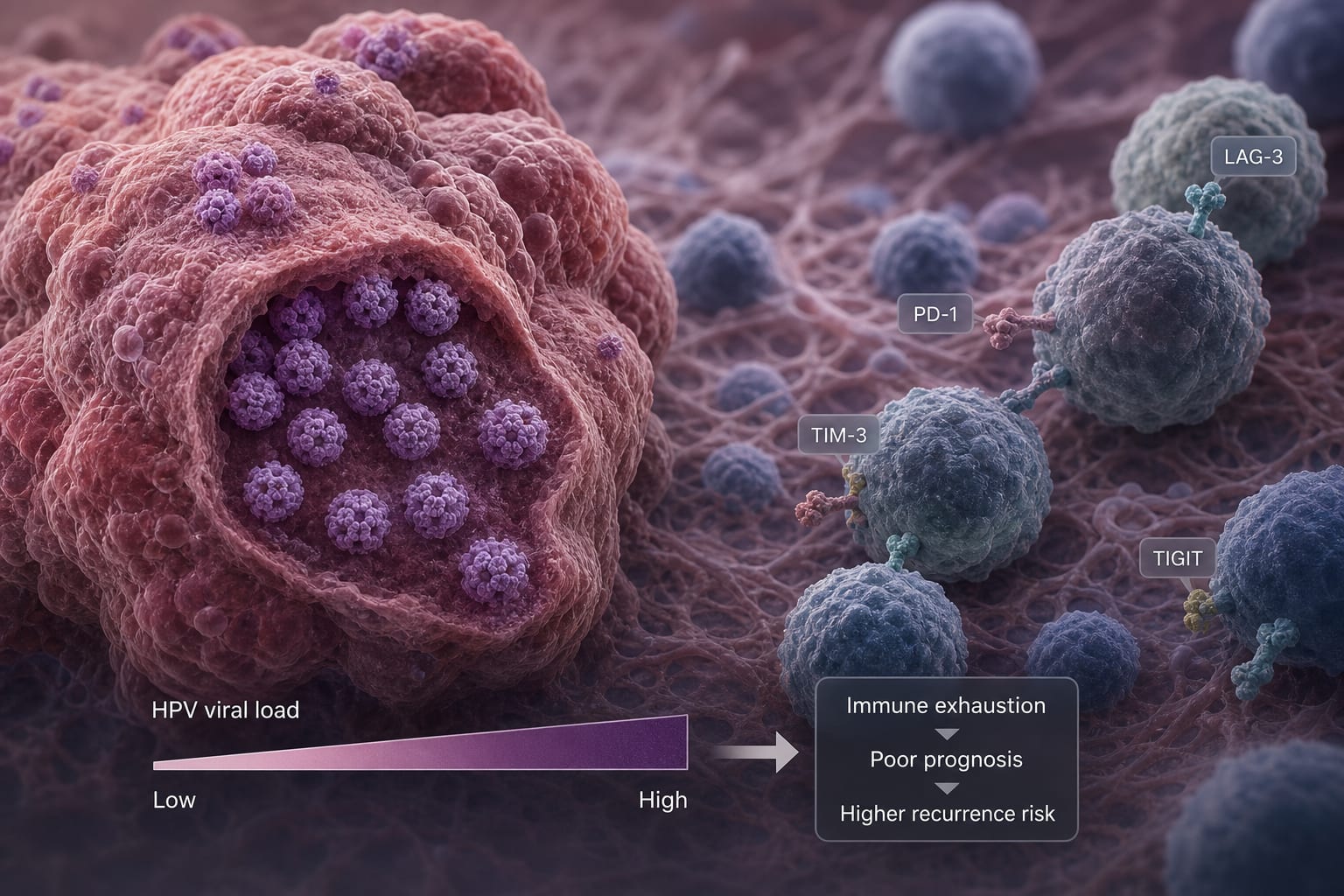
High HPV viral load (log10 ≥5.6) correlates with advanced disease stage and lymph node metastasis.
Patients with high viral load exhibit higher recurrence rates compared to those with low viral load.
High viral load is an independent predictor of recurrence (HR 2.18, 95% CI 1.32–3.61).
High viral load is associated with reduced tumor-infiltrating lymphocytes and lower PD-L1 expression.
Post-treatment viral load decline is linked to a lower recurrence risk.
In premenopausal women, estradiol levels positively correlate with viral load and disease severity.
Clinical Implications
The findings indicate that HPV viral load may have relevance in the assessment of cervical cancer prognosis.
Conclusion
High HPV viral load serves as a significant prognostic factor in cervical cancer.