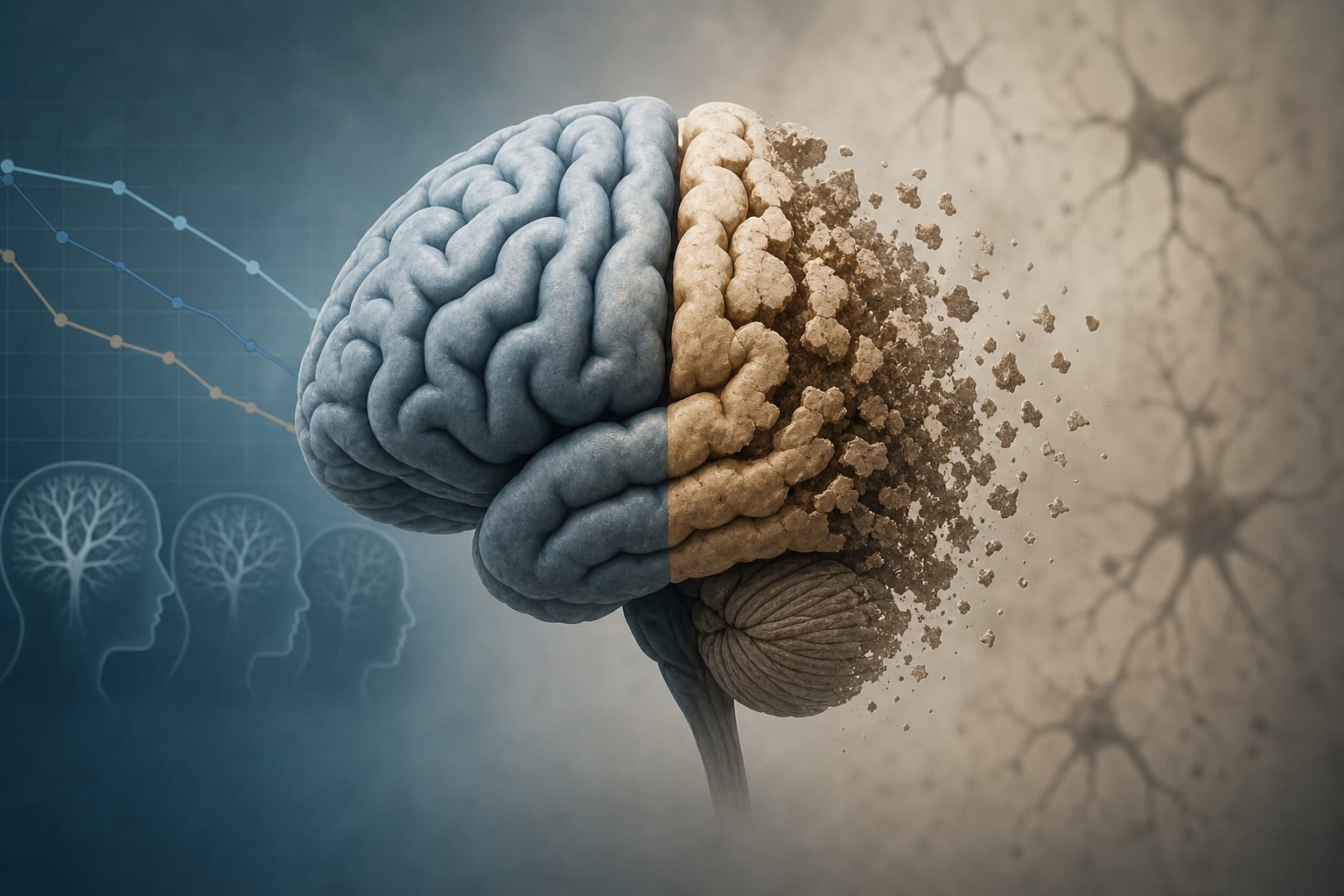
Transforming tissue transcriptomes, delivering on the promise of machine learning
-
By
-
Eric B Dammer
-
September 3, 2025
-
0 min
Advancing Tissue Transcriptome Analysis Through Machine Learning Innovations
Overview
Berson et al. applied the Cellformer machine learning algorithm to deconvolute bulk brain transcriptomic data, revealing cell type-specific gene expression patterns associated with Alzheimer's disease (AD) resilience and resistance. This approach outperformed existing methods and enabled high-resolution analysis of cell type-specific differential expression in post-mortem human brain tissue.
Background
Bulk tissue transcriptomic datasets contain mixed signals from multiple cell types, complicating the identification of cell-specific gene expression changes in diseases like Alzheimer's. Traditional RNA abundance analyses yield averaged results that mask cellular heterogeneity. Machine learning-based deconvolution algorithms, such as Cellformer, can computationally separate these mixed signals to profile individual cell types within bulk data, enhancing understanding of disease mechanisms and cellular responses.
Data Highlights
| Metric | CellformerRNA | BayesPrism | CIBERSORTx |
|---|---|---|---|
| Correlation to Ground Truth | Higher | Lower | Lower |
| Number of Genes Predicted at Varying Correlation Thresholds | More | Fewer | Fewer |
| DE Genes Detected in Kainate-Treated Mouse Model | 100-fold more than single-nucleus RNA counts | N/A | N/A |
Key Findings
- CellformerRNA was trained on pseudo-bulk single-nucleus RNA profiles from 3.3 million post-mortem cells across seven cohorts.
- It accurately deconvoluted bulk brain transcriptomic data into seven broadly defined cell types, enabling cell type-specific differential expression analysis.
- CellformerRNA outperformed BayesPrism and CIBERSORTx in correlation to ground truth and gene prediction metrics.
- Deconvolution revealed distinct gene expression signatures in astrocytes and excitatory neurons associated with AD, AD resilience, and AD resistance.
- High-resolution deconvolution allowed multi-cohort integration with coherent clustering by cell type and brain region.
- Model accuracy was influenced by RNA integrity and noise from low-expressed genes.
Clinical Implications
The ability to resolve cell type-specific transcriptomic changes in bulk brain tissue enhances understanding of Alzheimer's disease mechanisms, particularly in resilient and resistant individuals. This approach may facilitate identification of novel therapeutic targets and improve pharmacological intervention strategies by integrating multi-omic drug response signatures with genetic and epigenetic data. Ultimately, it supports precision medicine efforts in neurodegenerative diseases.
Conclusion
Machine learning-based deconvolution with CellformerRNA significantly advances the resolution and interpretability of bulk brain transcriptomic data, uncovering cell type-specific molecular signatures relevant to Alzheimer's disease. This innovation paves the way for deeper insights into cellular interactions and therapeutic targeting in neurodegeneration.
References
- Berson et al. 2022 -- Deep learning-based cell type profiles reveal signatures of Alzheimer’s resilience and resistance
- BayesPrism Algorithm Reference
- CIBERSORTx Algorithm Reference
This content is an AI-generated, fully rewritten summary based on a published scholarly article. It does not reproduce the original text and is not a substitute for the original publication. Readers are encouraged to consult the source for full context, data, and methodology.