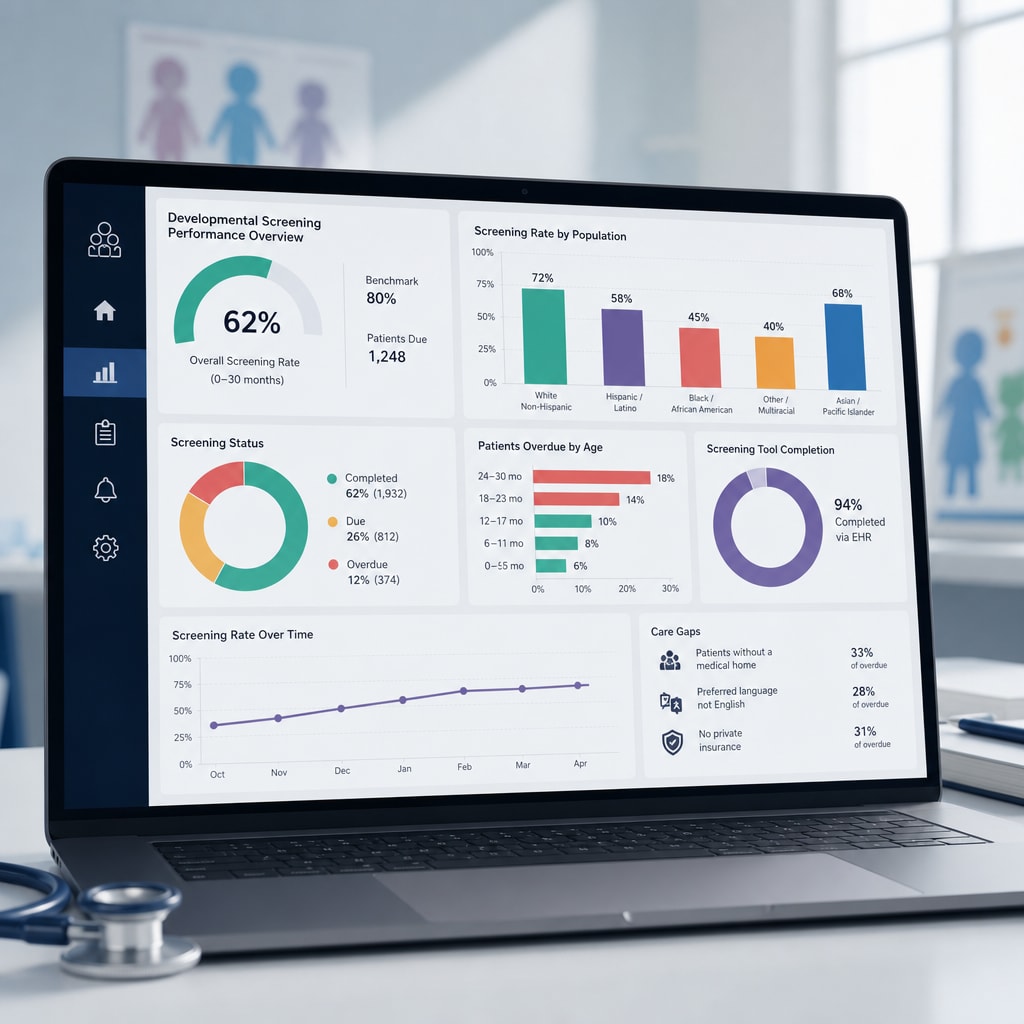
Monitoring Dashboards for Electronic Health Records and Developmental Assessments in Children
Overview
This study investigates the impact of electronic health record (EHR) dashboards on developmental screening rates among children. It identifies patient and system-level factors influencing screening questionnaire return rates and completion times, highlighting disparities in early identification of developmental delays and autism.
Background
Early identification and treatment of developmental delays and autism are crucial for improving child outcomes. Despite guidelines from organizations like the American Academy of Pediatrics advocating for regular developmental screenings, national rates remain low, particularly among marginalized groups. This study aims to address gaps in understanding how electronic tools can enhance screening processes and outcomes.
Data Highlights
No numerical data or trial data provided in the source material.
Key Findings
Developmental screening rates are lowest among racial/ethnic minority children and those from low-income families.
Implementation of standardized screening processes and electronic tools can improve screening rates.
The use of EHR dashboards may help monitor patient progress and improve screening outcomes.
Clinician-level challenges, such as time constraints and training, hinder effective screening.
Clinical Implications
Healthcare providers should consider integrating EHR-based dashboards to facilitate monitoring of developmental screening processes. Addressing clinician-level barriers and utilizing standardized electronic tools may enhance screening rates and reduce disparities in early identification of developmental issues.
Conclusion
The study underscores the potential of EHR dashboards in improving developmental screening outcomes. Continued efforts are needed to address systemic and demographic disparities in early identification of developmental delays and autism.
This twice-monthly newsletter highlights recently published research where Dana-Farber faculty are listed as first or senior authors. The information is pulled from PubMed and this issue notes papers published from February 16 - 28.