Association of antiretroviral therapy regimens with serum cortisol abnormalities in people living with HIV/AIDS: a retrospective study - Report - MDSpire
Advertisement
Association of antiretroviral therapy regimens with serum cortisol abnormalities in people living with HIV/AIDS: a retrospective study
Clinical Report: Impact of Antiretroviral Therapy Types on Serum Cortisol Levels
Overview
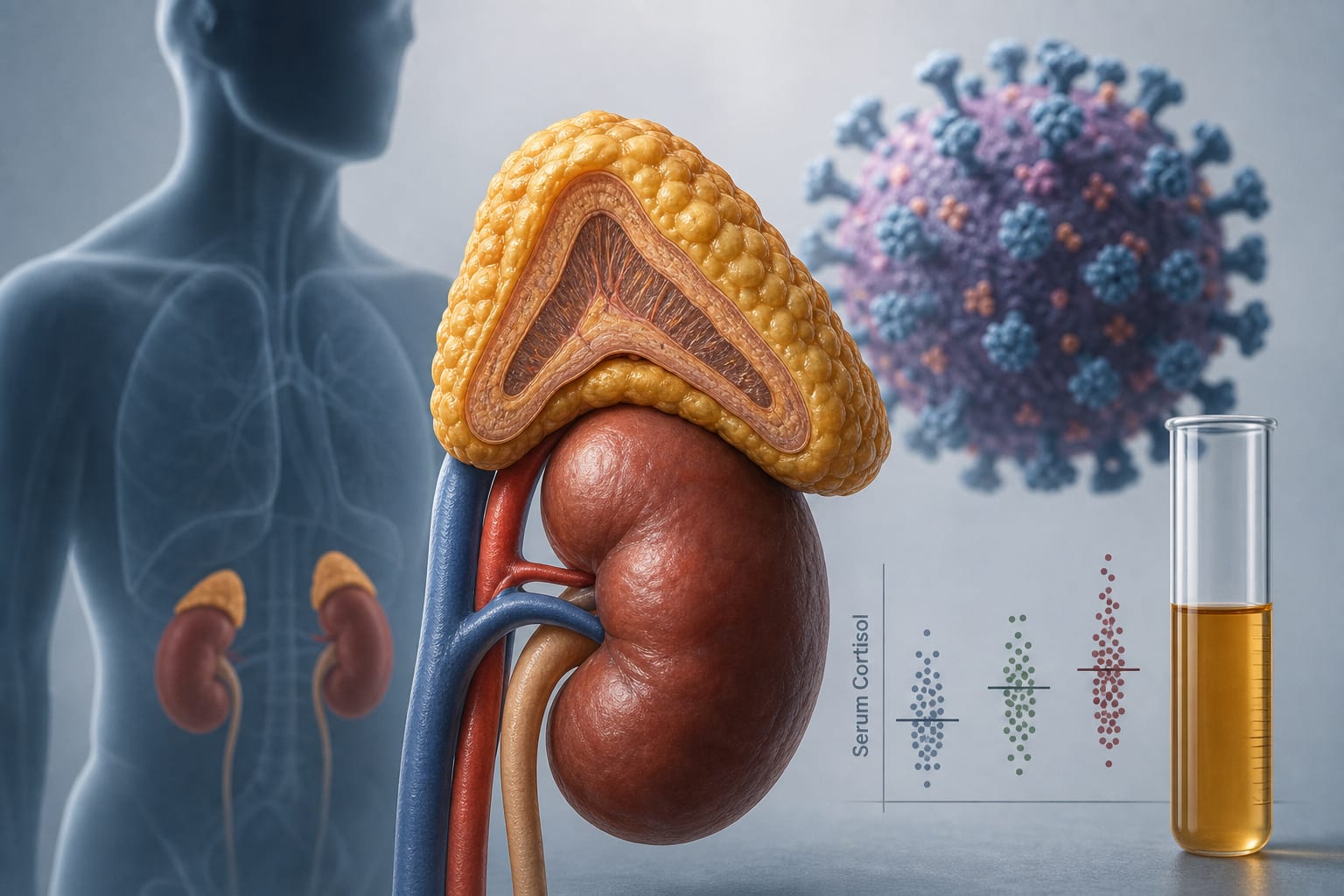
This study investigates the correlation between antiretroviral therapy (ART) regimens and serum cortisol levels in individuals with HIV/AIDS. A significant proportion of participants exhibited abnormal cortisol levels.
Background
The life expectancy of people living with HIV (PLWH) has improved due to effective antiretroviral therapy (ART). Understanding the effects of different ART regimens on hormonal levels, such as cortisol, is crucial.
Data Highlights
Group
Findings
Group A
Higher diastolic blood pressure, longer duration of HIV diagnosis
Group B
Normal cortisol levels
Group C
Elevated triglyceride levels compared to Group B
Key Findings
47.9% of participants exhibited abnormal high cortisol levels.
Group A had significantly higher diastolic blood pressure and longer HIV diagnosis duration compared to Group C.
Mean triglyceride levels were significantly elevated in Group C compared to Group B.
The NRTIs + PIs regimen was associated with a higher likelihood of reduced cortisol levels compared to NRTIs + NNRTIs.
Longer duration of HIV diagnosis was independently associated with changes in cortisol levels.
Clinical Implications
Clinicians should monitor cortisol levels in PLWH, especially those on specific ART regimens.
Conclusion
The findings indicate that certain ART regimens may be associated with changes in cortisol levels among individuals with HIV/AIDS.
by Han Yajuan, Chen Xingxing, Jiang Huirong, Wan Jinshu, Zhang Yinhua, Pan Xiuzhen, Muhammad Tahir Khan, Xu Chao, Lin Sizhe, Pan Chih-Lin, Liu Yanrong, He Piao