Catastrophic STS/SVS type B3 aortic dissection complicated by hepatic portal venous gas and multi-organ malperfusion: a case report - Report - MDSpire

Catastrophic STS/SVS type B3 aortic dissection complicated by hepatic portal venous gas and multi-organ malperfusion: a case report

  • By

  • Jia Li

  • Xinping Lan

  • Jianbo Guo

  • Zifang Shang

  • June 17, 2026

  • 0 min

Share

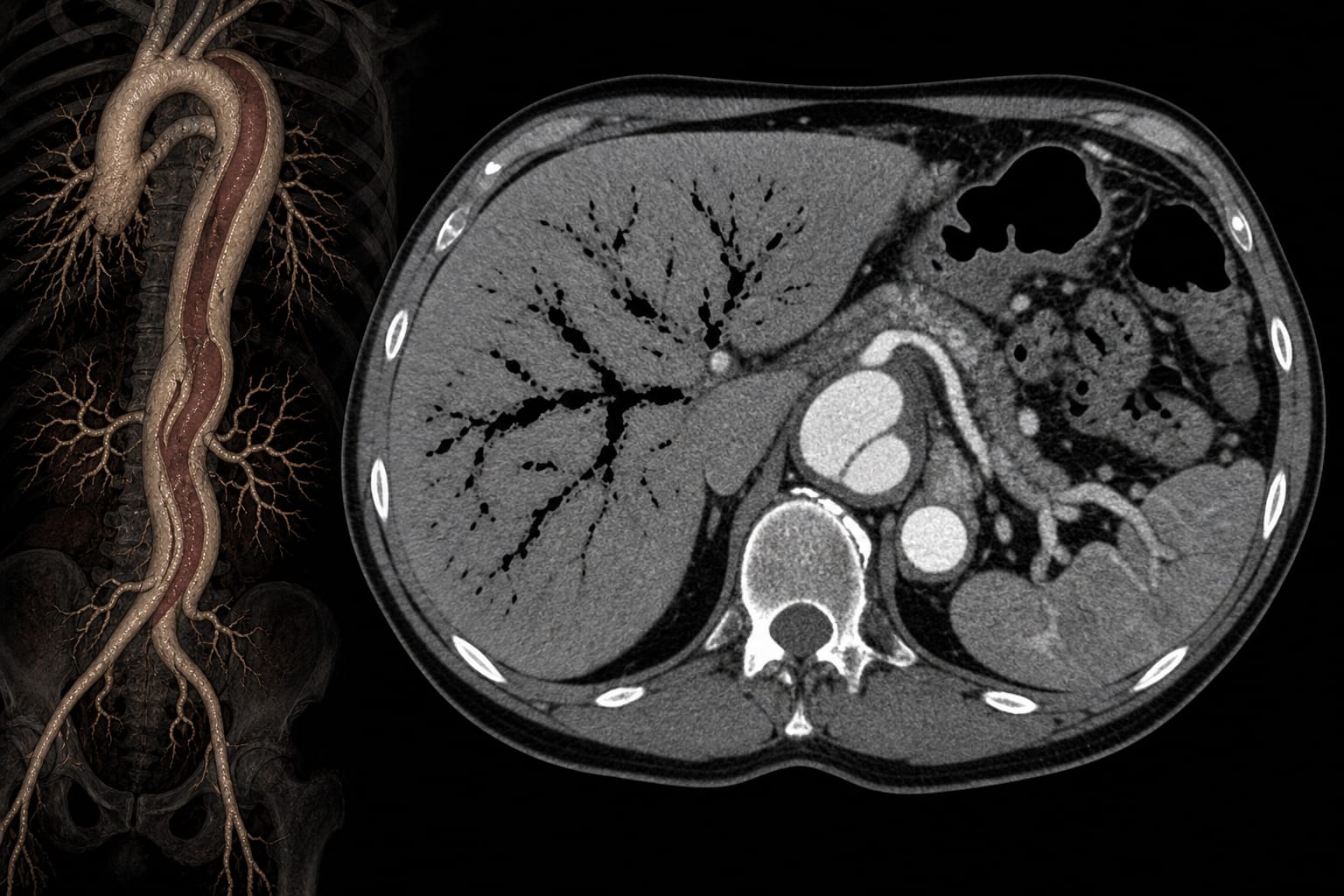
Fatal Case of Type B3 Aortic Dissection with Hepatic Portal Venous Gas

Overview

This report details a fatal case of STS/SVS Type B3 aortic dissection in a 64-year-old male, characterized by hepatic portal venous gas (HPVG) and multi-organ ischemia. The findings emphasize the critical importance of early recognition and intervention in cases of visceral malperfusion associated with aortic dissection.

Background

Acute aortic dissection (AAD) is a life-threatening condition that can lead to severe complications, including visceral malperfusion. The presence of hepatic portal venous gas (HPVG) is a concerning radiological sign that often indicates irreversible bowel damage. Understanding the implications of these findings is crucial for timely and effective clinical management.

Data Highlights

Case details include:
- Patient age: 64 years
- Symptoms: Severe abdominal pain for 8 hours
- WBC count: 27.1 × 10⁹/L
- IL-6 level: 14,001.98 pg/mL
- Time to palliative care decision: 47 hours post-presentation

Key Findings

  • Acute aortic dissection can lead to visceral malperfusion, significantly increasing mortality risk.
  • HPVG is a critical radiological sign indicating potential bowel necrosis in the context of aortic dissection.
  • Physical examination may reveal significant blood pressure discrepancies between limbs, indicating vascular compromise.
  • Early computed tomography angiography (CTA) is essential for diagnosing complex cases of aortic dissection.
  • Multidisciplinary decision-making is vital in managing patients with severe visceral ischemia and aortic dissection.

Clinical Implications

Healthcare professionals should maintain a high index of suspicion for visceral malperfusion in patients presenting with acute abdominal pain and aortic dissection. Rapid imaging and recognition of HPVG can guide urgent clinical decisions and improve patient outcomes.

Conclusion

This case highlights the severe consequences of STS/SVS Type B3 aortic dissection and the importance of early recognition of associated complications like HPVG. Timely intervention can be critical in managing these life-threatening conditions.

Related Resources & Content

  1. Society for Vascular Surgery (SVS) and Society of Thoracic Surgeons (STS) Reporting Standards for Type B Aortic Dissections - PubMed
  2. 2022 ACC/AHA Guideline for the Diagnosis and Management of Aortic Disease | Circulation
  3. Management of Acute Type B Aortic Dissection: New England Journal of Medicine
  4. Journal of Gastrointestinal Surgery — Urgent Orthotopic Liver Transplantation Due to Hemorrhage from a Large Cavernous Hepatic Hemangioma: A Case Study and Literature Review
  5. Frontiers in Medicine — Giant dissecting aneurysm of the superior mesenteric artery with distal branch involvement and true lumen collapse: a case report
  6. Infection — A Lethal Instance of Disseminated Chronic Q Fever: A Case Study and Concise Literature Review
  7. Frontiers in Surgery — Case Report: Nonoperative management of traumatic dual-vessel hepatic infarction
  8. Current guidelines on acute Stanford type B aortic dissection
  9. The Society of Thoracic Surgeons/American Association for Thoracic Surgery Clinical Practice Guidelines on the Management of Type B Aortic Dissection - PubMed
  10. Society for Vascular Surgery (SVS) and Society of Thoracic Surgeons (STS) Reporting Standards for Type B Aortic Dissections
  11. Management of Acute Type B Aortic Dissection : New England Journal of Medicine
  12. 2022 ACC/AHA Guideline for the Diagnosis and Management of Aortic Disease: A Report of the American Heart Association/American College of Cardiology Joint Committee on Clinical Practice Guidelines | JACC
  13. To open or stent type B aortic dissection: umbrella review and meta-analysis | European Heart Journal | Oxford Academic
  14. Impact of aortic visceral branch vessel interventions on the postoperative outcomes of thoracic endovascular aortic repair for type B aortic dissection complicated with visceral malperfusion - ScienceDirect
  15. ECRI Guidelines Trust® - Acute mesenteric ischemia: updated guidelines of the World Society of Emergency Surgery.
  16. Frontiers | Clinical characteristic analysis of 25 cases of hepatic portal venous gas
  17. Frontiers | Clinical characteristics and treatment of hepatic portal venous gas: case series and literature review
  18. Frontiers | Clinical phenotypes and imaging evolution of hepatic portal venous gas under conservative management: a single-center case series using albumin and procalcitonin as prognostic stratification anchors

Original Source(s)

Related Content