Clinical Report: Shifts and Disparities in Health Facility Deliveries in Ghana
Overview
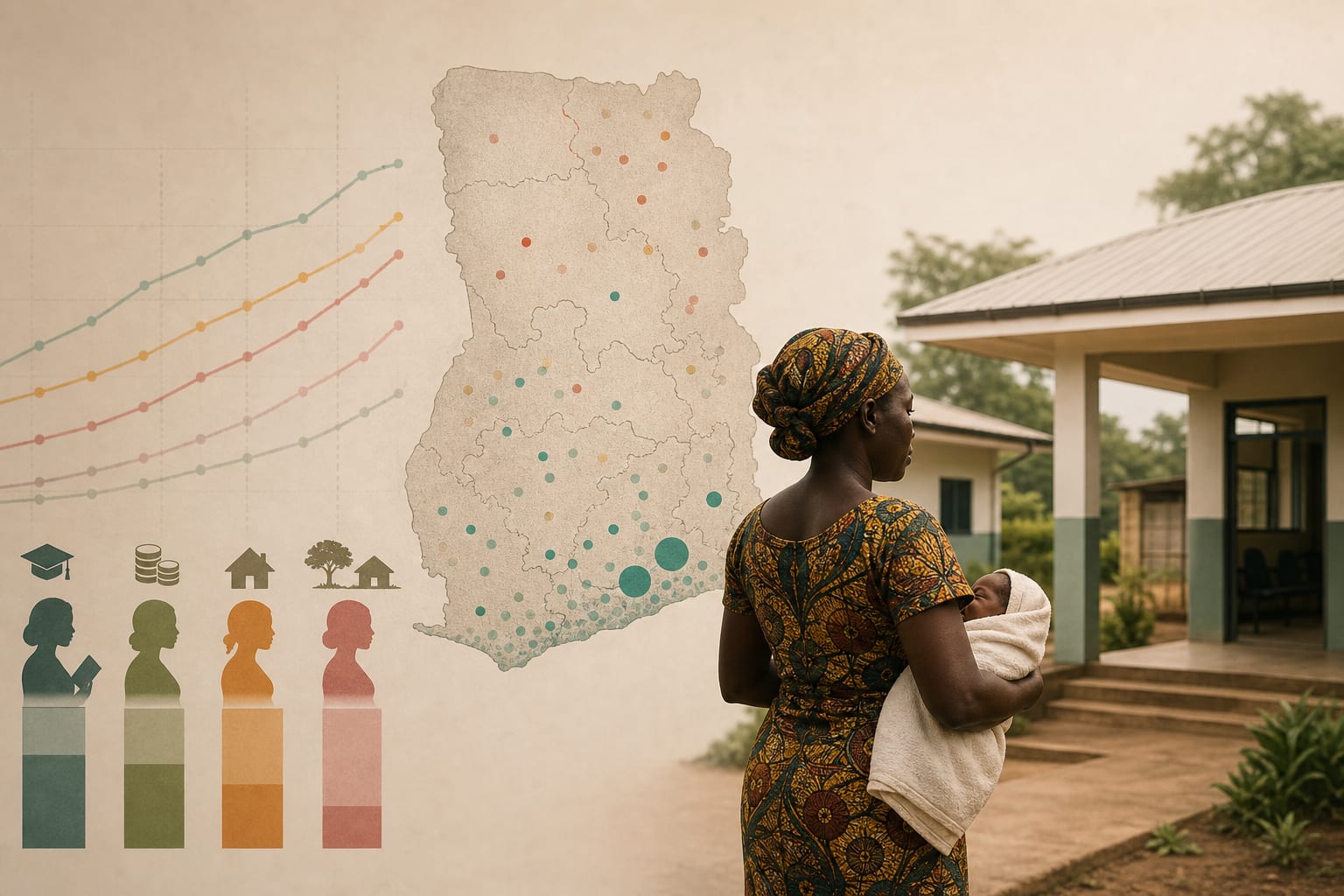
This study analyzes trends in health facility deliveries among reproductive-age women in Ghana from 1993 to 2022, highlighting significant disparities based on socioeconomic and demographic factors. The national prevalence of facility deliveries increased from 42.3% in 1993 to 85.4% in 2022, with persistent inequalities particularly among the poorest, less educated, and rural populations.
Background
Health facility delivery is essential for reducing maternal and neonatal mortality. Despite improvements in Ghana's facility delivery rates over the past three decades, disparities remain across wealth, education, and geographic regions.
Data Highlights
Year
Facility Delivery Prevalence (%)
95% CI
1993
42.3
39.5–45.1
2022
85.4
84.1–86.7
Key Findings
National health facility delivery prevalence increased from 42.3% in 1993 to 85.4% in 2022.
Disparities in facility delivery rates in 2022: richest vs. poorest quintile (97.1% vs. 71.1%), higher education vs. no education (98.0% vs. 72.3%), urban vs. rural (93.7% vs. 77.9%), and Upper East vs. Northern region (97.7% vs. 69.0%).
Absolute economic inequality (D) in facility deliveries declined from 60.6 percentage points in 1993 to 25.7 in 2022.
Educational inequality fell from 53.6 percentage points in 1993 to 17.8 in 2022.
Rural-urban inequality decreased from 35.8 percentage points in 1993 to 9.7 in 2022.
Age-related inequality was negligible throughout the study period.
Clinical Implications
The findings highlight disparities in health facility delivery rates among different socioeconomic groups.
Conclusion
Ghana has made significant progress in health facility deliveries; however, persistent inequalities remain.