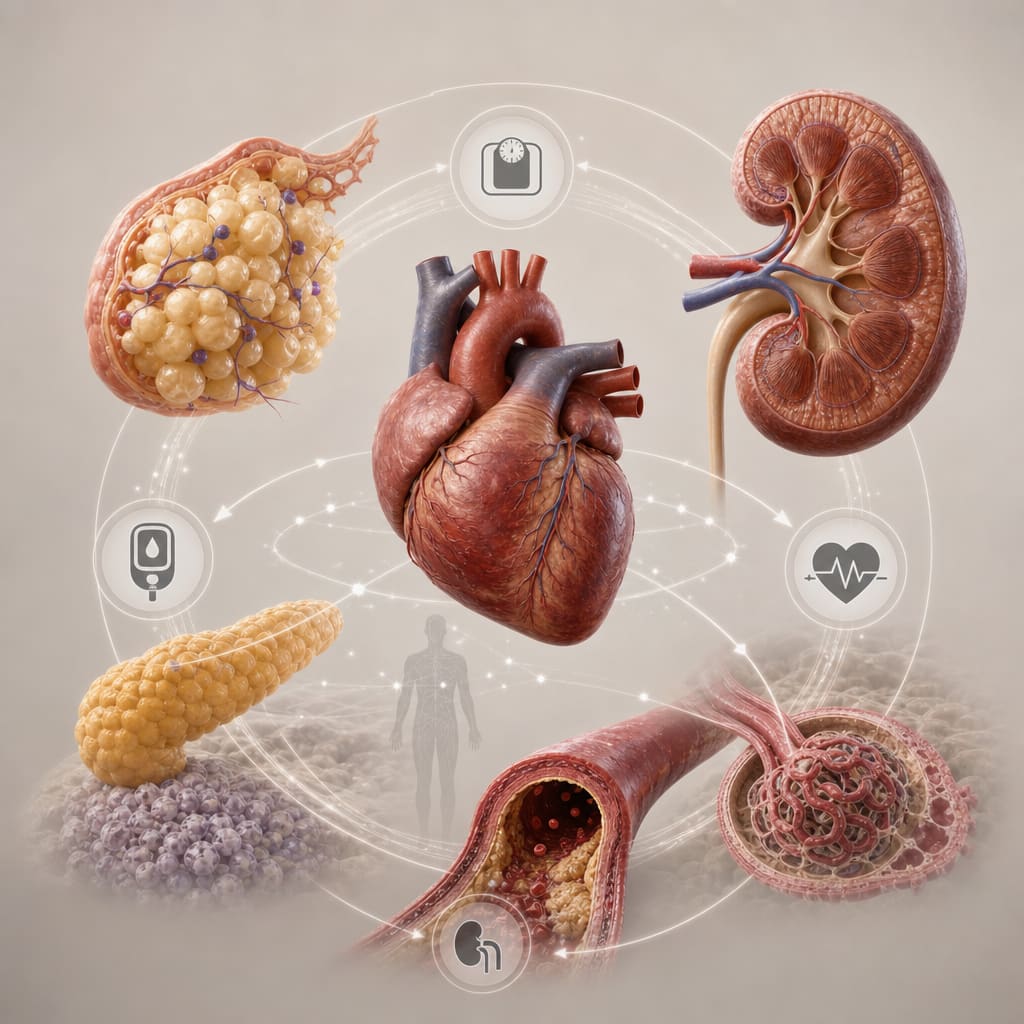
The obesity paradigm and outcome after STEMI: good news for all patients with overweight and moderate obesity
-
By
-
Wolfram Doehner
-
October 16, 2025
-
0 min
Impact of Obesity on STEMI Outcomes: Survival Benefits in Overweight and Mild Obesity
Overview
A large regional registry study of over 11,000 STEMI patients reveals that while severe obesity is linked to higher mortality, overweight and mildly obese patients exhibit significantly better short- and long-term survival compared to normal-weight individuals. These findings challenge the uniform negative perception of excess body weight in cardiovascular disease outcomes.
Background
Obesity is a growing global health challenge and a major risk factor for cardiovascular diseases including ST-elevation myocardial infarction (STEMI). Traditional body mass index (BMI) categories, defined by the WHO, are based on historical mortality data and may not fully reflect modern clinical outcomes. Recent analyses suggest a complex, U-shaped relationship between BMI and mortality, with overweight and mild obesity potentially conferring survival advantages in cardiovascular disease contexts.
Data Highlights
| BMI Category | Proportion of STEMI Patients | Mortality Risk |
|---|---|---|
| Overweight (BMI 25 to <30 kg/m²) | 43% | Lowest mortality (reference group) |
| Mild Obesity (BMI 30 to <35 kg/m²) | 18% | Lower mortality than normal weight |
| Severe Obesity (BMI ≥ 40 kg/m²) | 2.3% | Higher short- and long-term mortality |
| Normal Weight (BMI 18.5 to 24.9 kg/m²) | Not specified | Second highest mortality |
Key Findings
- Severe obesity (BMI ≥ 40 kg/m²) is associated with increased short-term (30-day) and long-term (1- and 5-year) mortality after STEMI.
- Overweight (BMI 25 to <30 kg/m²) and mild obesity (BMI 30 to <35 kg/m²) groups, comprising over 60% of patients, show the lowest mortality rates post-STEMI.
- Normal-weight patients have higher mortality than overweight and mildly obese patients, indicating a U-shaped BMI-mortality relationship.
- Patients with severe obesity tend to be younger and have more comorbidities like hypertension and diabetes, reflecting accelerated atherosclerosis.
- Coronary disease severity, procedural details, and acute complications do not worsen in overweight and mildly obese patients compared to normal-weight patients.
- The survival advantage in overweight and mild obesity persists after adjustment for multiple confounders including age, sex, risk profile, and treatment factors.
Clinical Implications
These findings suggest that moderate excess body weight may confer a protective effect in patients after STEMI, challenging the notion that all obesity is uniformly harmful in cardiovascular disease. Clinicians should consider a nuanced approach to weight management, differentiating between primary prevention in healthy individuals and secondary prevention in patients with established cardiovascular disease. Weight reduction strategies post-STEMI might need to be individualized rather than universally applied.
Conclusion
The study reinforces the obesity paradox in STEMI, where overweight and mild obesity are linked to better survival outcomes compared to normal weight. This underscores the importance of tailored clinical strategies addressing body weight in cardiovascular disease management.
References
This content is an AI-generated, fully rewritten summary based on a published scholarly article. It does not reproduce the original text and is not a substitute for the original publication. Readers are encouraged to consult the source for full context, data, and methodology.