The effect of oral magnesium supplementation on glycemic control and metabolic parameters in type 2 diabetes mellitus: a double-blind randomized controlled trial - Report - MDSpire
Advertisement
The effect of oral magnesium supplementation on glycemic control and metabolic parameters in type 2 diabetes mellitus: a double-blind randomized controlled trial
Clinical Report: Impact of Oral Magnesium Supplementation on Glycemic Regulation
Overview
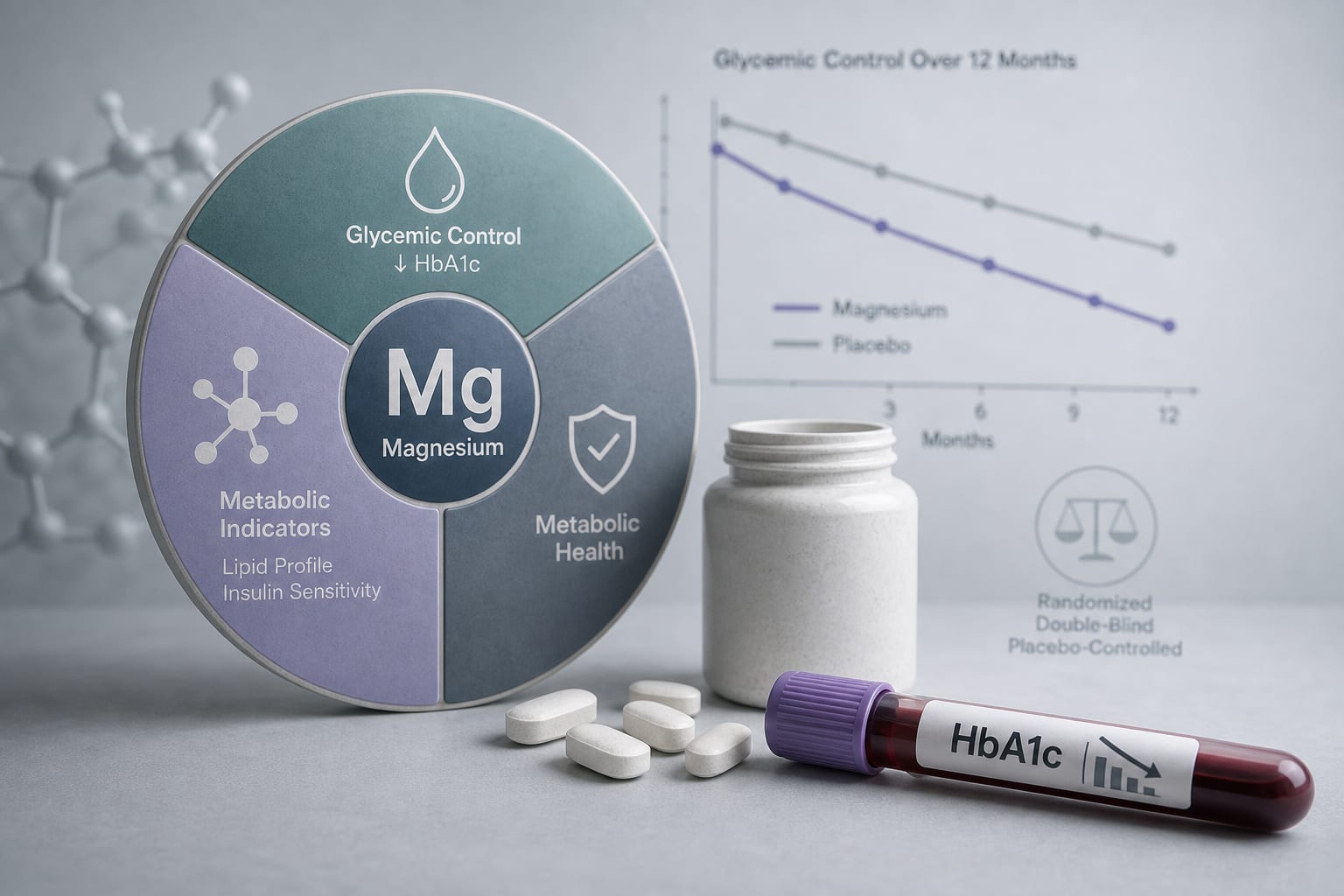
This study evaluated the effects of magnesium oxide supplementation on glycemic control in adults with Type 2 Diabetes Mellitus (T2DM). Magnesium supplementation showed a significant reduction in fasting blood glucose in a subgroup (p = 0.039), while the reduction in HbA1c was -0.30% in the magnesium group compared to -0.05% in the placebo group, which was not statistically significant (p = 0.145).
Background
Type 2 Diabetes Mellitus (T2DM) management focuses on achieving glycemic control to prevent complications. Magnesium plays a crucial role in insulin signaling and glucose metabolism, and its deficiency is linked to poor glycemic control. Understanding the impact of magnesium supplementation could provide additional strategies for managing T2DM.
Data Highlights
Parameter
Magnesium Group
Placebo Group
P-value
Fasting Blood Glucose
Significant reduction
Not reported
0.039
HbA1c Reduction
-0.30%
-0.05%
0.145
Achieved HbA1c < 7%
14.0%
6.0%
0.043
Key Findings
247 participants were included in the intention-to-treat analysis.
Median age of participants was 58 years, with a median diabetes duration of 16 years.
7.3% had hypomagnesemia by ionized magnesium and 8.1% by total magnesium.
Fasting blood glucose significantly reduced in a subgroup receiving magnesium (p = 0.039).
HbA1c reduction was modest and not statistically significant (−0.30% vs. −0.05%; p = 0.145).
A higher proportion of participants in the magnesium group achieved HbA1c < 7% compared to placebo (14.0% vs. 6.0%; p = 0.043).
Clinical Implications
Clinicians should consider the findings regarding magnesium supplementation in managing T2DM, particularly for patients with hypomagnesemia or shorter diabetes duration, while noting that the overall reduction in HbA1c did not reach statistical significance.
Conclusion
The study indicates that magnesium oxide supplementation may improve magnesium status and show favorable trends in glycemic control among certain subgroups of T2DM patients.
by Juhaina Salim Al-Maqbali, Abdullah M. Al Alawi, Alaa Osman, Ahmed Al-Farqani, Suneel Kumar, Abdullah Al Futisi, Ali Al-Mamari, Ibrahim Al-Zakwani, Mohammed Al Za’abi