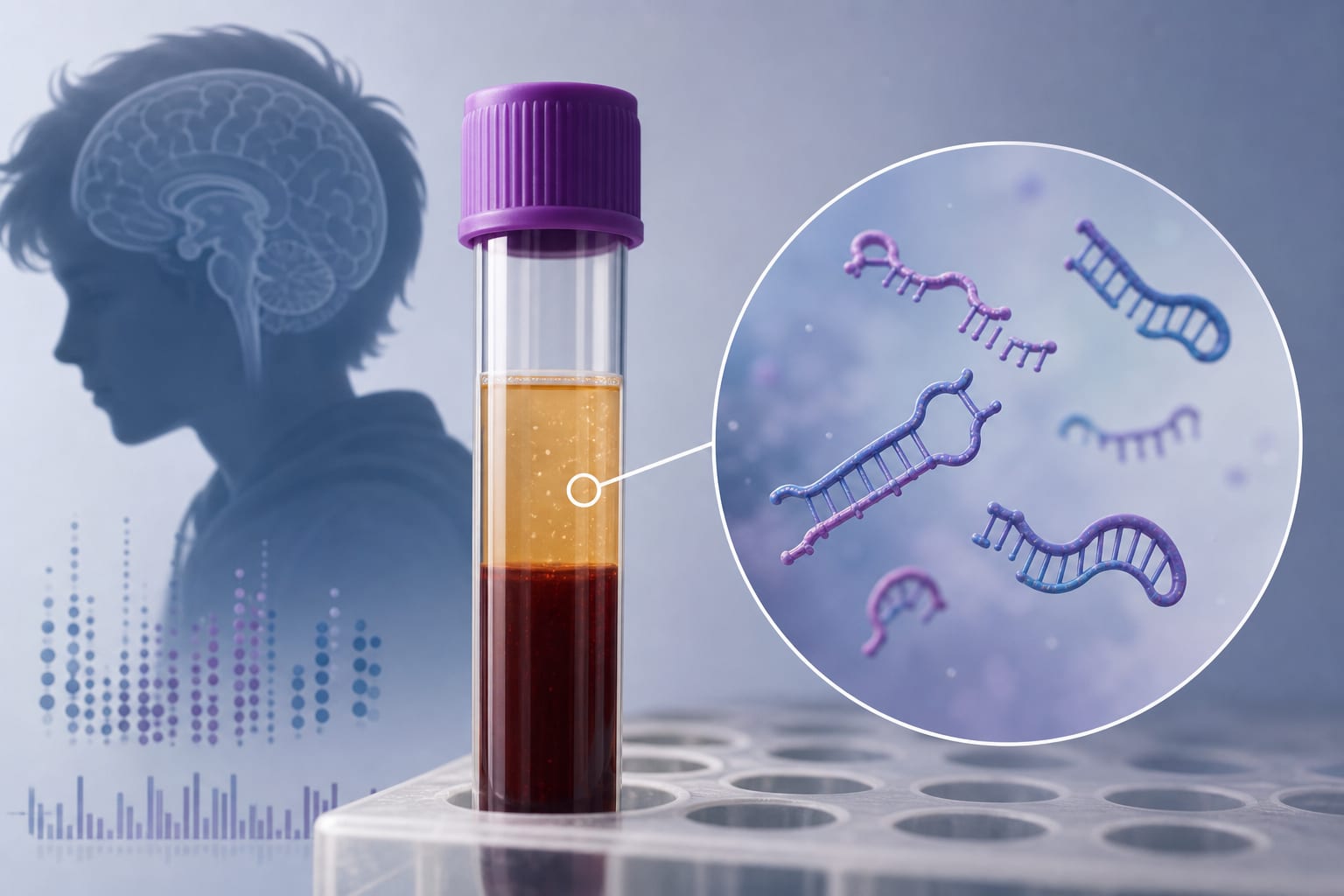
Clinical Report: Circulating microRNA Profiles in Drug-Naïve Romanian Adolescents
Overview
This study identifies unique plasma microRNA profiles in drug-naïve Romanian adolescents experiencing first-episode psychosis (FEP). Notably, specific miRNAs correlated with symptom severity, suggesting their potential as early biomarkers for psychotic disorders.
Background
Psychotic disorders often onset during adolescence, yet no validated biomarkers exist for their diagnosis, which relies heavily on clinical assessments. The exploration of circulating microRNAs (miRNAs) as potential biomarkers is crucial, particularly in drug-naïve populations, to enhance early diagnosis and treatment strategies. This study addresses a gap in research focused on adolescent cohorts, providing insights into the biological underpinnings of FEP.
Data Highlights
miRNA
Expression Level in FEP
Correlation with Symptoms
miR-125a-5p
Lower
Negative
miR-205-5p
Lower
Not specified
miR-145-5p
Lower
Not specified
miR-363-3p
Lower
Positive
miR-23b-3p
Lower
Negative
miR-16-5p
Higher
Positive
Key Findings
21 miRNAs showed significantly altered levels in FEP patients compared to controls.
miR-125a-5p, miR-23b-3p, and miR-146a-5p levels negatively correlated with psychotic, depressive, and manic symptoms.
miR-16-5p and miR-363-3p levels positively correlated with symptom severity.
Significant differences in miRNA profiles suggest the influence of age, treatment status, and environmental factors.
Findings indicate the potential of specific miRNAs as early-stage biomarkers for psychosis.
Clinical Implications
The identification of specific circulating miRNAs in drug-naïve adolescents with FEP may aid in early diagnosis and intervention strategies. Clinicians should consider these biomarkers alongside traditional assessment methods to enhance the understanding of psychotic disorders in this demographic.
Conclusion
This study highlights the unique miRNA profiles in drug-naïve adolescents with FEP, emphasizing their potential role as biomarkers for early diagnosis. Further research is needed to validate these findings and explore their clinical applications.