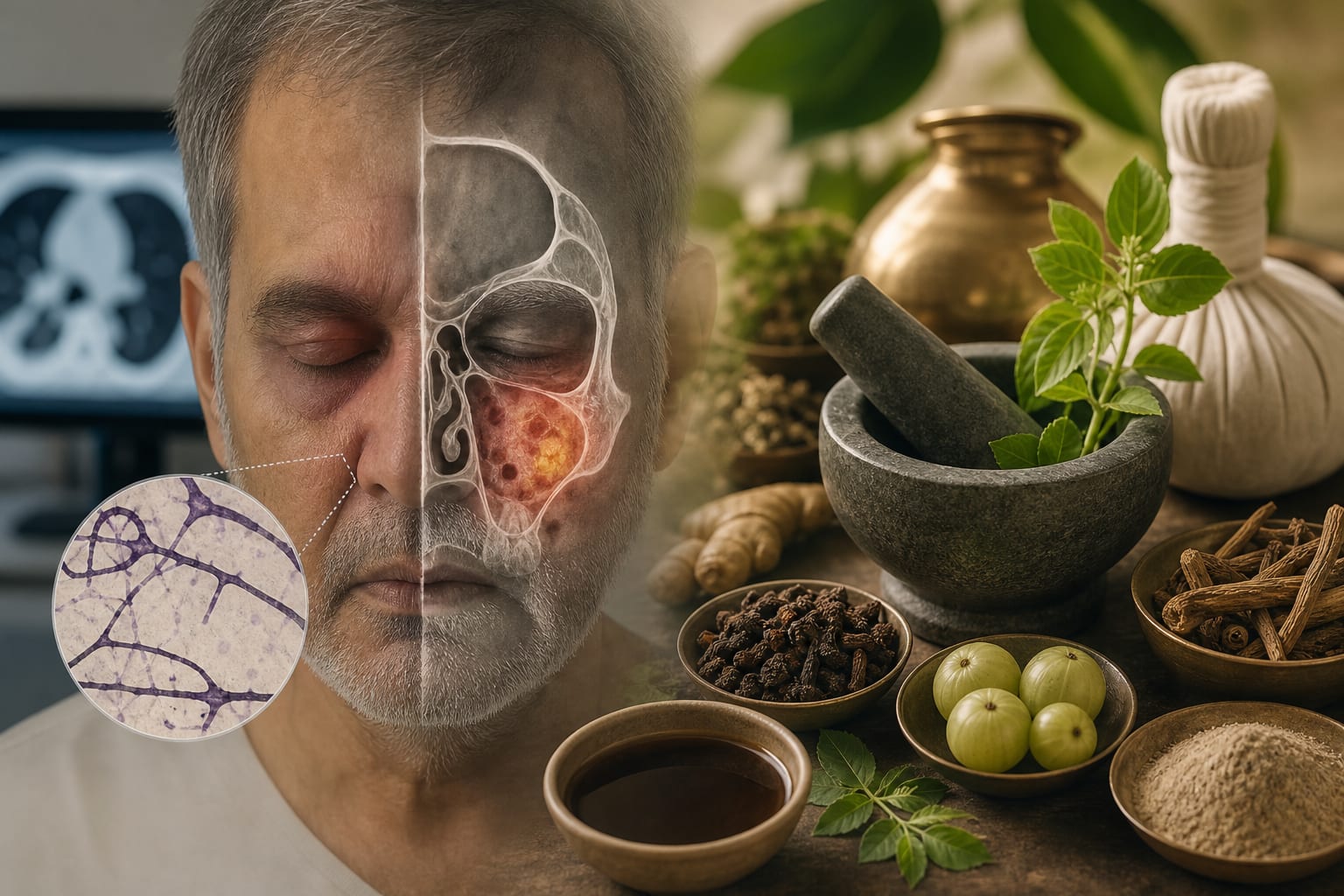
Clinical Report: Ayurveda-Based Management of COVID-Related Mucormycosis
Overview
This report details a case of a 60-year-old male with COVID-related mucormycosis managed solely with Ayurveda. The patient showed progressive improvement over 90 days, with no adverse events and no clinical recurrence at three-year follow-up.
Background
Mucormycosis is a severe opportunistic fungal infection primarily affecting immunocompromised individuals, particularly those with diabetes or recent COVID-19 infections. The condition has a high mortality rate and is typically managed with surgical debridement and antifungal therapy. Given the limitations and side effects of standard treatments, exploring alternative management strategies like Ayurveda may be warranted.
Data Highlights
No numerical data or trial data was presented in the article.
Key Findings
A 60-year-old male with COVID-related mucormycosis was managed exclusively with Ayurveda.
Diagnostic evaluation confirmed invasive mucormycosis through various tests including histopathology and fungal culture.
The patient experienced symptomatic improvement over a structured 15-day Ayurvedic regimen, continued for 90 days.
At three-year follow-up, there was no evidence of clinical recurrence and laboratory parameters remained normal.
This case represents a novel approach to managing a complex clinical scenario with Ayurveda.
Clinical Implications
The case highlights the potential for Ayurveda-based management in complex conditions like mucormycosis, although generalization of findings is not supported. Further rigorous studies are needed to evaluate the safety and effectiveness of such interventions.
Conclusion
This case provides insight into an alternative management approach for COVID-related mucormycosis, emphasizing the need for further research in this area.