Clinical Report: The Role of PPIB in Prostate Cancer: Links to Transcriptomic Changes and Splicing Variations
Overview
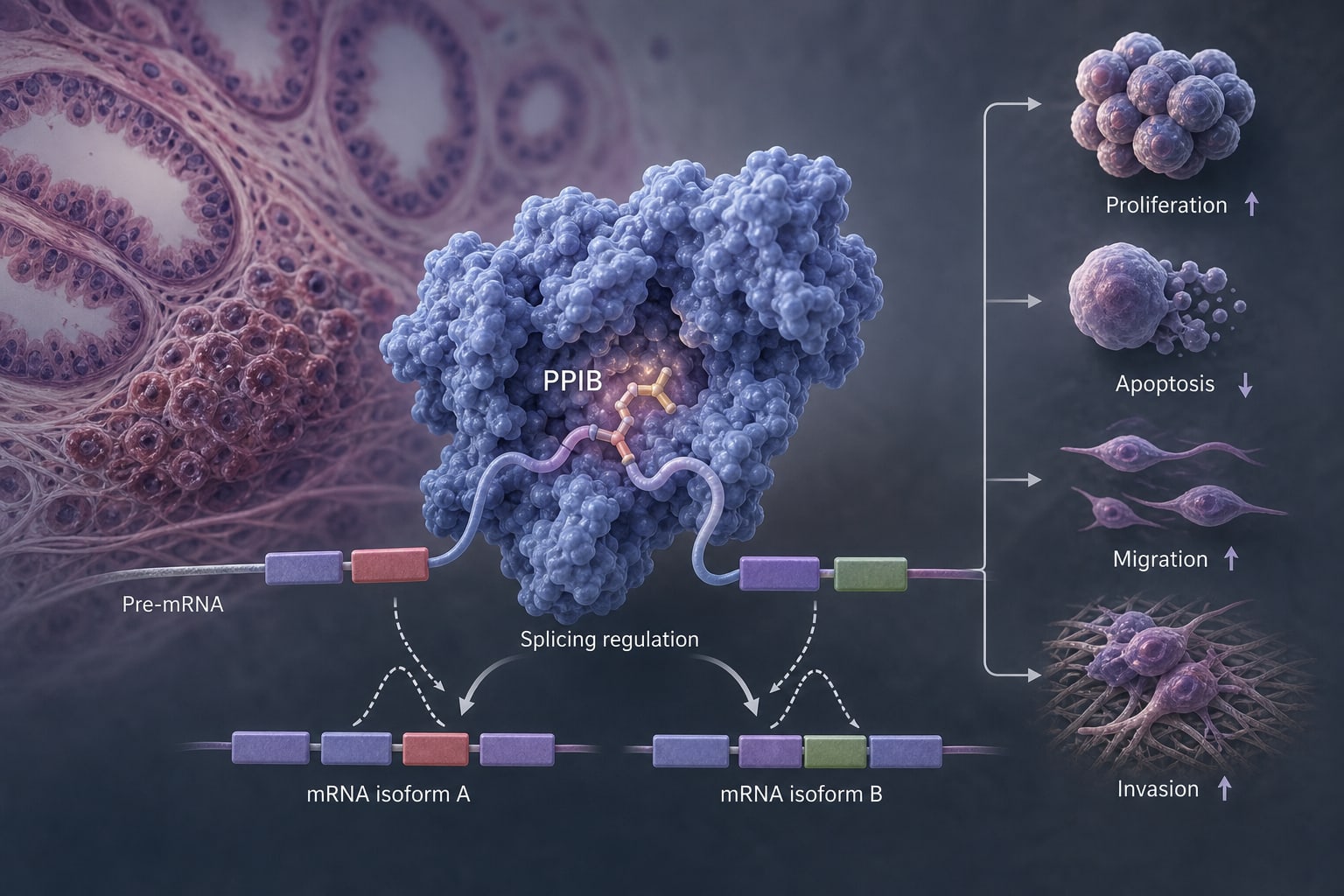
This study investigates the role of PPIB in prostate cancer, revealing its elevated expression in tumor tissues. PPIB depletion was associated with reduced cell proliferation, migration, and invasion.
Background
Prostate cancer is a leading cause of cancer-related mortality among men, with various genetic and environmental factors contributing to its development. Understanding the molecular mechanisms underlying prostate cancer progression is crucial for developing targeted therapies.
Data Highlights
Parameter
Findings
PPIB mRNA expression
Significantly elevated in tumor tissue (TCGA-PRAD)
PPIB H-scores
Higher in tumor areas compared to non-tumor areas (P < 0.05)
570
Differentially expressed genes identified
873
Altered splicing events detected
22
Shared genes between DEG and ASE analysis
Key Findings
PPIB expression is significantly higher in prostate cancer tissues compared to adjacent non-tumor tissues.
PPIB knockdown leads to reduced proliferation, migration, invasion, and tumor growth in xenograft models.
Depletion of PPIB is associated with a modest increase in apoptosis.
Transcriptomic analysis revealed 570 differentially expressed genes and 873 alternative splicing events linked to PPIB.
Re-expression of PPIB restores migration and invasion capabilities in PPIB-depleted cells.
Clinical Implications
The findings suggest that PPIB may serve as a potential biomarker for prostate cancer progression. Targeting PPIB could be explored as a therapeutic strategy to inhibit tumor growth and metastasis.
Conclusion
PPIB plays a role in prostate cancer progression through its influence on transcriptional and splicing changes.