Progression-free survival outcomes of PARP inhibitors in ovarian cancer: an exploratory analysis of treatment heterogeneity based on organ vulnerability - Report - MDSpire
Advertisement
Progression-free survival outcomes of PARP inhibitors in ovarian cancer: an exploratory analysis of treatment heterogeneity based on organ vulnerability
Clinical Report: Evaluating Progression-Free Survival with PARP Inhibitors in Ovarian Cancer
Overview
This exploratory study investigates the relationship between baseline physiological vulnerability and progression-free survival (PFS) in ovarian cancer patients treated with PARP inhibitors.
Background
Ovarian cancer is a leading cause of cancer-related mortality among women, with a significant proportion diagnosed at advanced stages. PARP inhibitors have emerged as a standard treatment, particularly for patients with BRCA mutations. However, variability in treatment response among patients with similar molecular profiles necessitates exploration of additional factors, such as physiological vulnerability.
Data Highlights
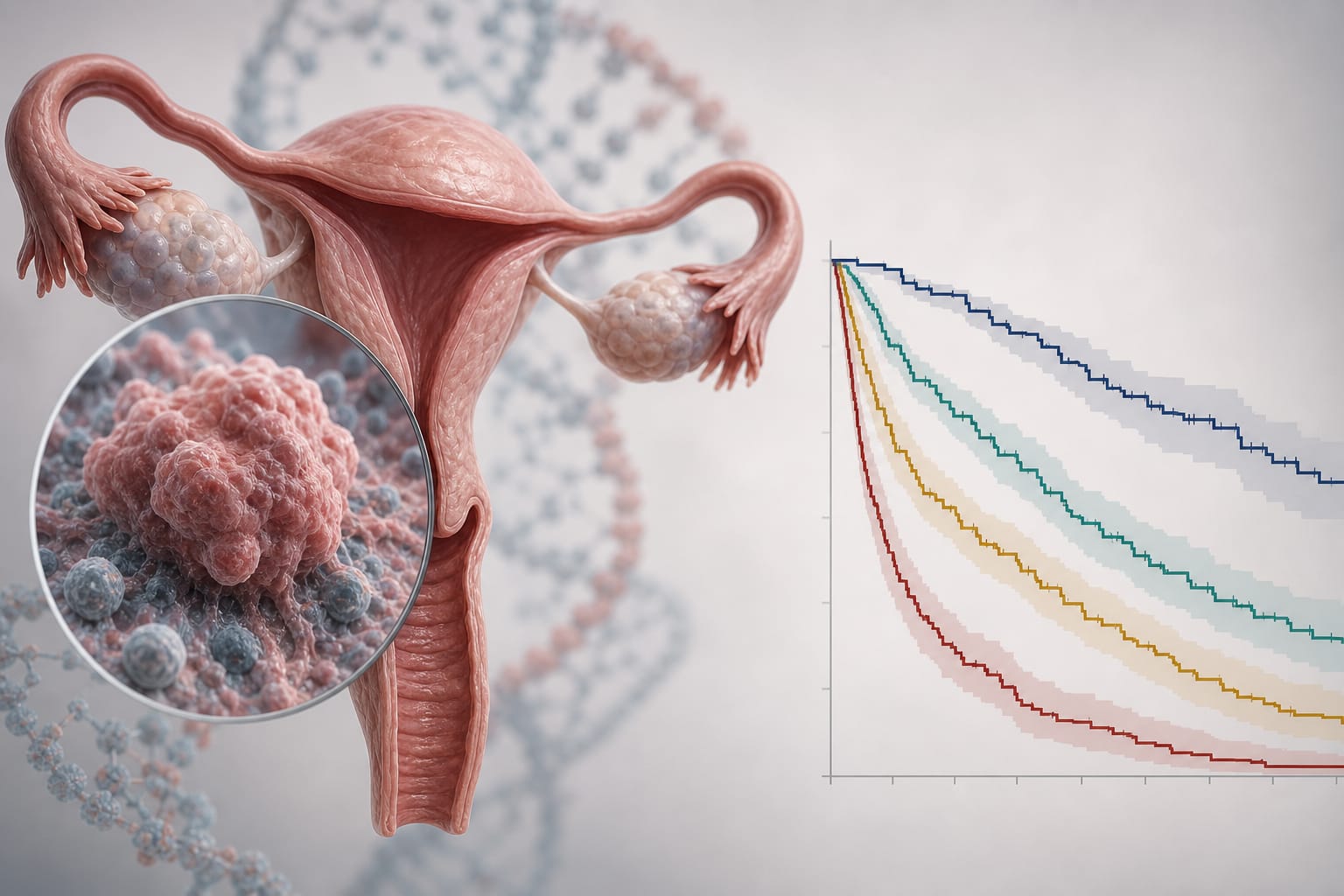
This study analyzed data from 604 ovarian cancer patients, utilizing a 0–3 organ vulnerability score (OVS) based on pre-treatment laboratory indicators. Key findings include:
Key Findings
The association between BRCA mutation status and PFS was consistent with prior evidence (HR = 0.685, P = 0.028).
A significant treatment-by-OVS interaction was observed (interaction HR = 0.488, P = 0.006).
In patients with low vulnerability (OVS 0–1), olaparib showed a modest PFS advantage over niraparib (HR = 0.744, P = 0.030).
In high vulnerability patients (OVS 2–3), olaparib's relative benefit was more pronounced (HR = 0.363, P < 0.001).
Individual-level variation in treatment response was noted, with some patients favoring niraparib.
The findings were qualitatively reproduced in an external cohort of 58 patients.
Clinical Implications
Clinicians should consider physiological factors alongside molecular markers when evaluating treatment options for ovarian cancer patients.
Conclusion
The study indicates that baseline physiological vulnerability may be associated with the effectiveness of PARP inhibitors in ovarian cancer.