The levels of vascular endothelial cells and endothelium-dependent vasomotor cytokines in children with essential hypertension: a case-control study - Report - MDSpire
Advertisement
The levels of vascular endothelial cells and endothelium-dependent vasomotor cytokines in children with essential hypertension: a case-control study
Clinical Report: Assessment of Circulating Endothelial Cells in Pediatric Hypertension
Overview
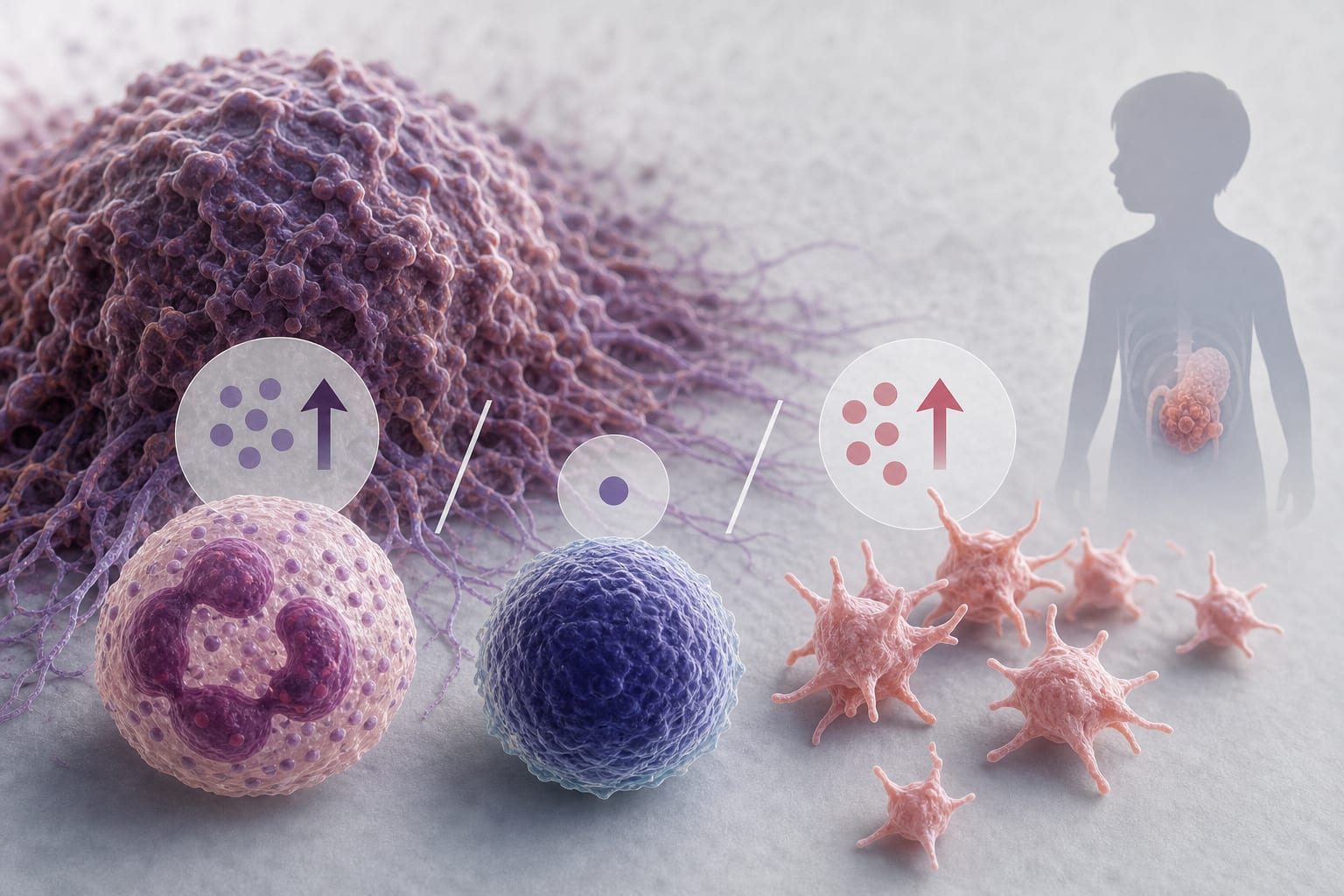
This study evaluates circulating endothelial cells (CECs), endothelial progenitor cells (EPCs), and endothelium-dependent vasomotor cytokines in children with essential hypertension. Significant differences in these markers were observed compared to healthy controls, indicating potential endothelial dysfunction in pediatric hypertension.
Background
Cite specific studies that highlight the gap in research on pediatric hypertension.
Data Highlights
Parameter
HTN Group
Control Group
P-value
CECs
Higher
Lower
< 0.01
EPCs
Lower
Higher
< 0.01
NO2−
Lower
Higher
< 0.01
6-keto-PGF1a
Lower
Higher
< 0.0001
ET-1
Higher
Lower
< 0.0001
TXB2
Higher
Lower
< 0.001
Key Findings
CECs were significantly elevated in children with essential hypertension compared to controls.
EPCs were significantly reduced in the hypertensive group.
Levels of NO2− and 6-keto-PGF1a were significantly lower in hypertensive children.
ET-1 and TXB2 levels were significantly higher in the hypertensive group.
Negative correlations were found between NO2−, 6-keto-PGF1a, and mean arterial pressure.
Positive correlations were observed between ET-1, TXB2, and mean arterial pressure.
Clinical Implications
The findings suggest that monitoring CECs and EPCs, along with vasomotor cytokines, may be crucial for early detection and management of endothelial dysfunction in pediatric hypertension. These markers could serve as potential targets for therapeutic interventions and risk stratification.
Conclusion
Alterations in endothelial markers in children with essential hypertension highlight the importance of endothelial dysfunction in its pathogenesis. Further research is warranted to explore these findings and their implications for clinical practice.