Application of a posterior tibial artery perforator-based fasciocutaneous flap with a broad fascial pedicle in reconstruction of complex lower-leg wounds: a retrospective clinical study - Report - MDSpire
Advertisement
Application of a posterior tibial artery perforator-based fasciocutaneous flap with a broad fascial pedicle in reconstruction of complex lower-leg wounds: a retrospective clinical study
Clinical Report: Utilization of a fasciocutaneous flap for lower leg wounds
Overview
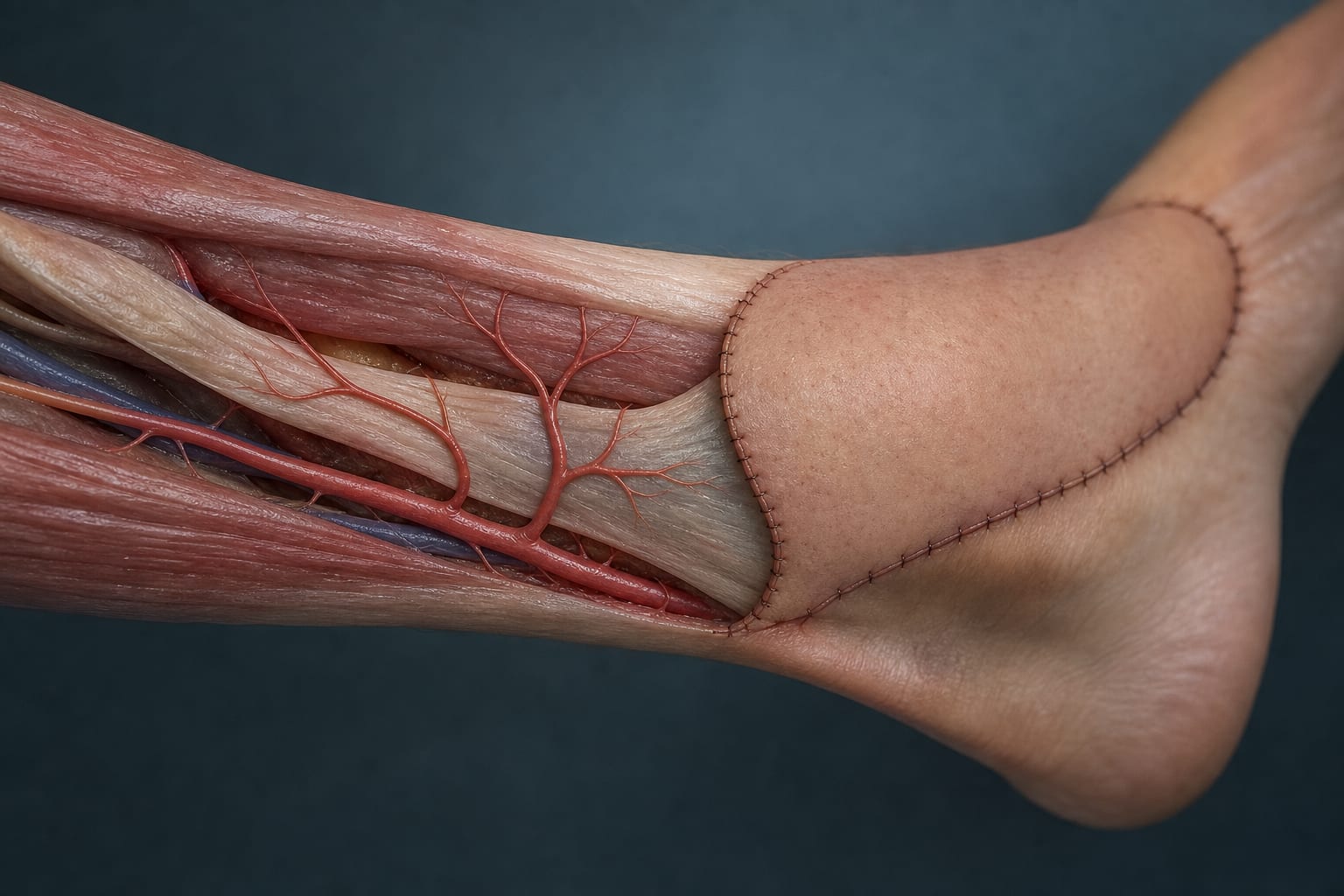
This study evaluates the outcomes of a posterior tibial artery perforator-based fasciocutaneous flap for reconstructing complex lower leg wounds.
Background
Complex soft-tissue defects in the lower leg pose significant reconstructive challenges, particularly when underlying structures are exposed. Conventional treatments often fail due to poor vascularity and infection, necessitating reliable flap coverage.
Data Highlights
Parameter
Outcome
Number of patients
15
Flap survival
100%
Donor-site complications
None
Flap sensory recovery (S3/S2/S1)
8/5/2
Follow-up duration
6–24 months
Key Findings
All 15 flaps survived completely with no necrosis.
No complications such as hematoma or infection occurred beneath the flap.
Active ankle motion was preserved in all patients.
Independent ambulation was regained by all patients.
Clinical Implications
The use of a posterior tibial artery perforator-based fasciocutaneous flap can be an option for reconstructing complex lower leg wounds.
Conclusion
The study demonstrates that the posterior tibial artery perforator-based fasciocutaneous flap is effective for complex lower leg wound reconstruction.