Ultraviolet radiation as a double-edged regulator of melanocyte function in vitiligo therapy and melanoma carcinogenesis - Report - MDSpire

Ultraviolet radiation as a double-edged regulator of melanocyte function in vitiligo therapy and melanoma carcinogenesis

  • By

  • Heng-Heng Fan

  • Yan-Yan Chen

  • Yun Geng

  • Yi-Fei Yang

  • Hui Xu

  • Yu-Yun Xiong

  • Yun-Wen Zheng

  • Yu-Mei Li

  • June 1, 2026

  • 0 min

Share

Clinical Report: The Role of Ultraviolet Radiation in Vitiligo Treatment

Overview

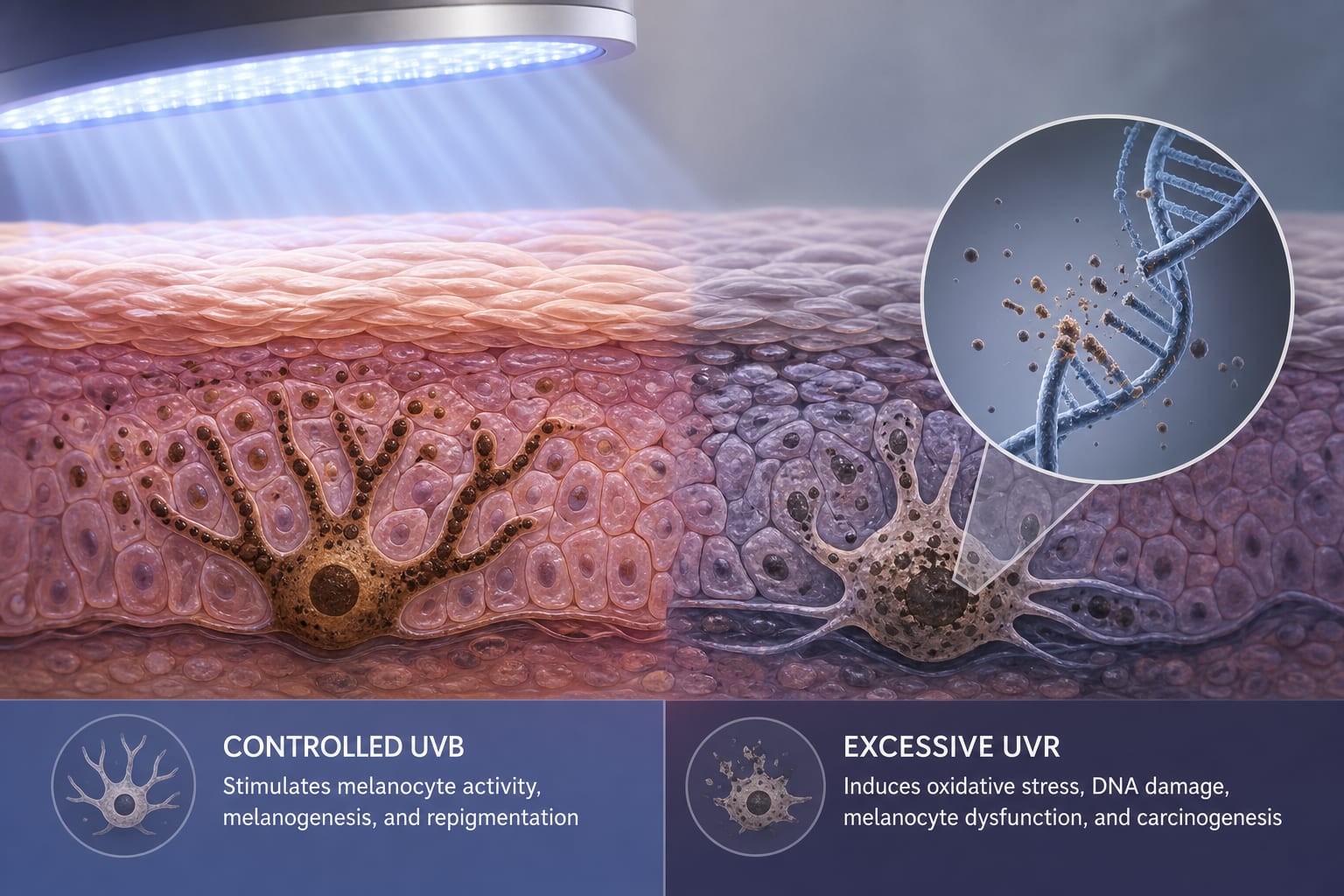
This report discusses the dual role of ultraviolet radiation (UVR) in modulating melanocyte activity, highlighting its therapeutic benefits in vitiligo treatment while also addressing the risks of excessive exposure. Emerging combination therapies are explored as strategies to balance these effects.

Background

Vitiligo is a chronic autoimmune disorder characterized by the loss of melanocytes and skin depigmentation. Effective management of vitiligo often involves phototherapy, particularly narrowband ultraviolet B (NB-UVB) and excimer laser treatments. Understanding the complex effects of UVR on melanocyte biology is crucial for optimizing treatment strategies and minimizing associated risks.

Data Highlights

No specific numerical data provided in the article.

Key Findings

  • NB-UVB and excimer laser are standard treatments for inducing repigmentation in vitiligo.
  • Controlled UVR exposure can enhance melanocyte proliferation and melanin synthesis.
  • Excessive UVR exposure can lead to oxidative stress, DNA damage, and increased melanoma risk.
  • Combination therapies, including JAK inhibitors and platelet-rich plasma, are being explored to enhance treatment efficacy.
  • Emerging evidence suggests that pairing immunomodulators with UV therapy may improve outcomes in vitiligo patients.

Clinical Implications

Clinicians should carefully balance the therapeutic benefits of UVR in treating vitiligo against the potential risks of skin damage and carcinogenesis. Incorporating combination therapies may enhance treatment efficacy while mitigating adverse effects.

Conclusion

The dual effects of UVR on melanocyte activity necessitate a nuanced approach to vitiligo treatment, emphasizing the importance of controlled exposure and innovative combination therapies.

Related Resources & Content

  1. The ASCO Post, 2021 -- New Study Investigates Role of Ultraviolet Radiation in Conjunctival Melanoma
  2. conexiant -- UVB and Psoriasis: More Than Immunosuppression
  3. Frontiers in Immunology -- Regulatory T cells in vitiligo: a review of functional disequilibrium between peripheral blood and lesional tissue
  4. the ophthalmologist -- Modeling the Genetics of Uveal Melanoma
  5. Canadian Consensus Guidelines for the Management of Vitiligo | Dermatology and Therapy | Springer Nature Link
  6. Frontiers | Ultraviolet radiation as a double-edged regulator of melanocyte function in vitiligo therapy and melanoma carcinogenesis
  7. Canadian Consensus Guidelines for the Management of Vitiligo | Dermatology and Therapy | Springer Nature Link
  8. Frontiers | Ultraviolet radiation as a double-edged regulator of melanocyte function in vitiligo therapy and melanoma carcinogenesis

Original Source(s)

Related Content