Novel advanced patient-derived in vitro models of pediatric movement disorders to develop personalized therapeutic strategies - Report - MDSpire

Novel advanced patient-derived in vitro models of pediatric movement disorders to develop personalized therapeutic strategies

  • By

  • Scarlett Yeadon

  • Ainara Salazar-Villacorta

  • Manju A. Kurian

  • Serena Barral

  • June 17, 2026

  • 0 min

Share

Clinical Report: Innovative Patient-Derived In Vitro Models for Pediatric Movement Disorders

Overview

This report discusses the development of patient-derived in vitro models for pediatric movement disorders (PMDs), emphasizing their potential to enhance personalized treatment approaches. These models allow for the exploration of disease mechanisms and therapeutic strategies while preserving the patient's genetic background.

Background

Pediatric movement disorders are a diverse group of neurodevelopmental and neurodegenerative conditions characterized by abnormal motor control. Traditional treatment strategies often rely on symptomatic relief rather than targeting the underlying genetic causes. The emergence of patient-derived models offers a promising avenue for advancing precision medicine in these complex disorders.

Data Highlights

No numerical data available in the source material.

Key Findings

  • PMDs are genetically and phenotypically heterogeneous, complicating treatment approaches.
  • Traditional animal and cellular models lack translational relevance for PMDs.
  • Patient-derived in vitro systems can capture human-specific gene regulation and neurodevelopmental timing.
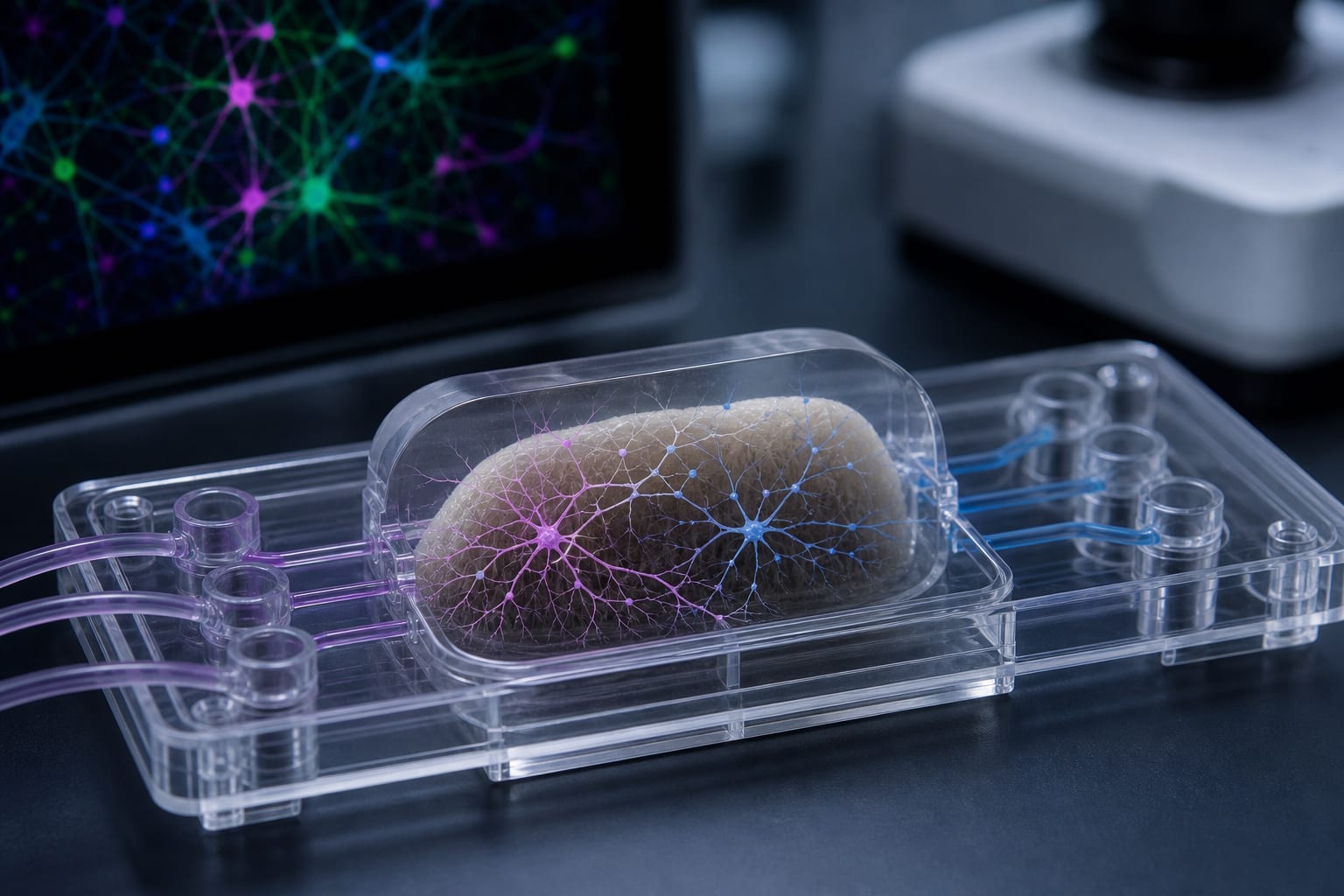
  • Emerging technologies such as organoids and microfluidic platforms enhance the biological complexity of models.
  • Personalized therapies for PMDs are hindered by genetic heterogeneity and challenges in early diagnosis.

Clinical Implications

The development of patient-derived in vitro models can significantly improve our understanding of PMDs and facilitate the identification of targeted therapies. Clinicians should consider these models as valuable tools for advancing personalized treatment strategies in pediatric patients with movement disorders.

Conclusion

Patient-derived in vitro models represent a transformative approach to studying pediatric movement disorders, with the potential to enhance precision medicine. Continued research in this area is essential for developing effective, personalized treatment options.
Related Resources & Content

  1. Smith S., The Medicine Maker, 2026 -- Human-Relevant Discovery: iPSC Models and the Future of Rare Disease R&D
  2. Brain, 2026 -- Exploring the Pathophysiology of Neurodevelopmental Disorders Through Brain Organoid Models
  3. Phoenix Children's Medical Connection, 2026 -- Pediatric Neuromuscular Disorders – Leading the Charge in Personalized Healthcare
  4. Frontiers in Endocrinology, 2026 -- Patient-derived induced pluripotent stem cells for precision modelling of monogenic beta cell disorders
  5. PMC, 2025 -- Definition and Classification of Dystonia
  6. Pediatrics, 2025 -- Genetic Evaluation of the Child With Intellectual Disability or Global Developmental Delay: Clinical Report
  7. Pediatrics, 2025 -- Evaluation, Diagnosis, and Treatment of Sydenham Chorea: Consensus Guidelines
  8. PubMed, 2026 -- Beyond the Globus Pallidus: A Systematic Review of Deep Brain Stimulation of Extrapallidal Targets for Pediatric Movement Disorders
  9. Frontiers, 2026 -- Deep brain stimulation in children with acquired dystonia
  10. JAMA Network, 2026 -- Eladocagene Exuparvovec Approval Summary
  11. Frontiers, 2026 -- Novel advanced patient-derived in vitro models of paediatric movement disorders to develop personalised therapeutic strategies
  12. Nature Medicine, 2026 -- Clinical applications of human organoids
  13. PubMed, 2026 -- Longitudinal Phenotypic Trajectories in GNAO1-Related Disorders: Defining Disease Progression and Clinical Profiles
  14. Definition and Classification of Dystonia - PMC
  15. Genetic Evaluation of the Child With Intellectual Disability or Global Developmental Delay: Clinical Report | Pediatrics | American Academy of Pediatrics
  16. Evaluation, Diagnosis, and Treatment of Sydenham Chorea: Consensus Guidelines | Pediatrics | American Academy of Pediatrics
  17. Beyond the Globus Pallidus: A Systematic Review of Deep Brain Stimulation of Extrapallidal Targets for Pediatric Movement Disorders - PubMed
  18. Frontiers | Deep brain stimulation in children with acquired dystonia
  19. Eladocagene Exuparvovec Approval Summary
  20. Frontiers | Novel advanced patient-derived in vitro models of paediatric movement disorders to develop personalised therapeutic strategies
  21. Clinical applications of human organoids | Nature Medicine
  22. Longitudinal Phenotypic Trajectories in GNAO1-Related Disorders: Defining Disease Progression and Clinical Profiles - PubMed

Original Source(s)

Related Content