Clinical Report: Leveraging Lay and Clinical Narratives for Enhanced Transparency in Autism Diagnosis
Overview
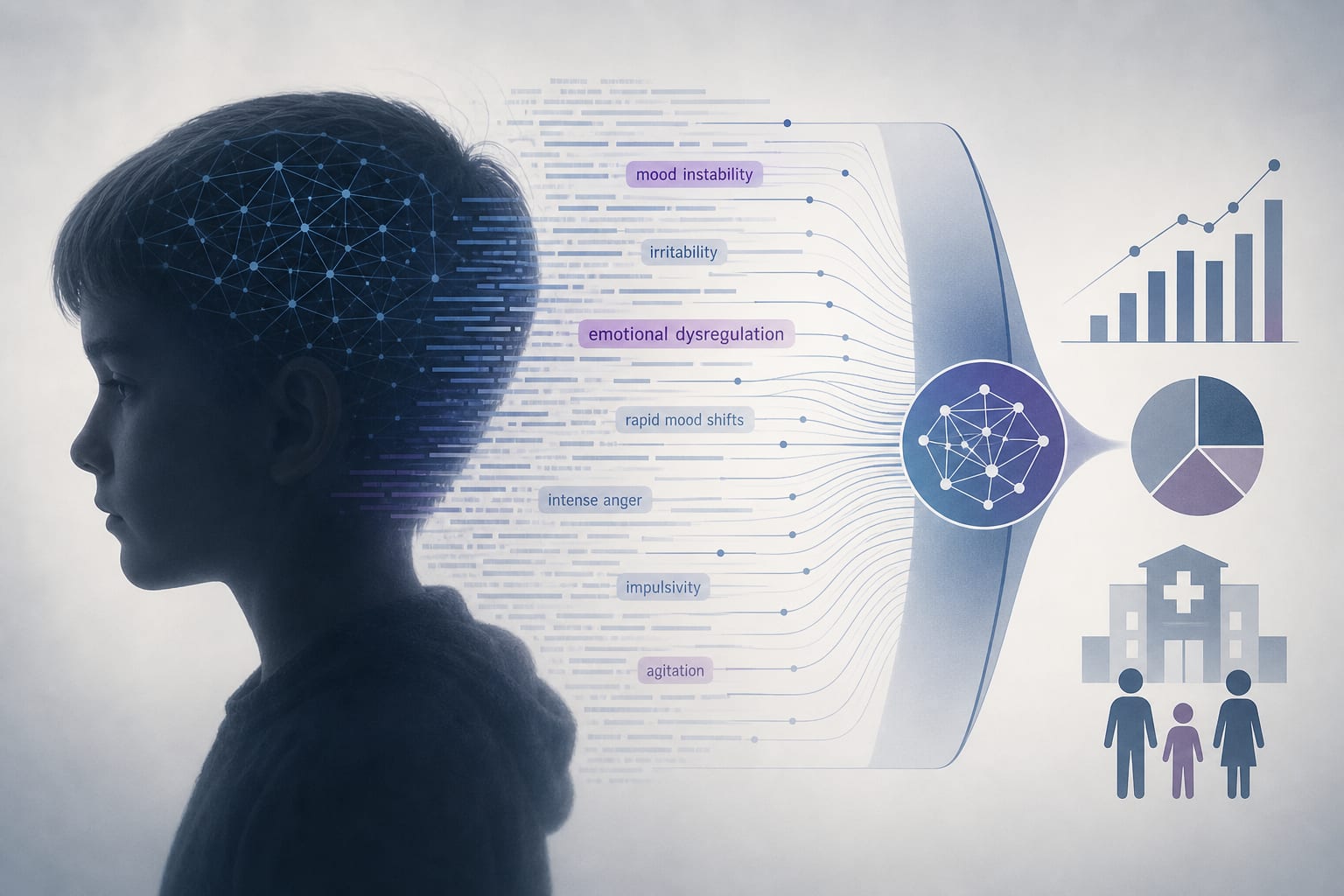
This study evaluates the performance of a BioBERT machine learning model in labeling autism behavioral descriptions based on DSM-5 criteria. The findings indicate that clinical descriptions yield higher precision, while lay descriptions provide greater recall.
Background
Early diagnosis of autism spectrum disorder (ASD) is critical for effective intervention but remains challenging due to reliance on clinical observation and limited specialist availability. The integration of automated diagnostic labeling and parental input may enhance the diagnostic process.
Data Highlights
Data Type
Precision
Recall
Clinical Descriptions
69%
N/A
Lay Descriptions
N/A
83%
Key Findings
BioBERT achieved higher precision (69%) on clinical descriptions.
BioBERT achieved higher recall (83%) on lay descriptions.
Transferring models between data types resulted in a performance drop.
Training on clinical data yielded the best-performing diagnostic models.
Lay behavioral descriptions provide diagnostically valuable information comparable to clinical observations.
Clinical Implications
The findings suggest that integrating lay behavioral descriptions into diagnostic workflows could enhance the speed and accuracy of autism diagnoses. Clinicians may consider utilizing both lay and clinical narratives to inform their assessments.
Conclusion
The study demonstrates the performance of machine learning models like BioBERT in labeling autism behavioral descriptions.