A precise oral glucose loading 18F-FDG PET myocardial metabolic imaging protocol in coronary artery disease patients complicated by diabetes mellitus: an exploratory prospective cohort study - Report - MDSpire

A precise oral glucose loading 18F-FDG PET myocardial metabolic imaging protocol in coronary artery disease patients complicated by diabetes mellitus: an exploratory prospective cohort study

  • By

  • Liang Yin

  • Yangyang Lin

  • Jianlan Yue

  • Zhichun Lin

  • Hongtao Sun

  • July 10, 2026

  • 0 min

Share

Clinical Report: Tailored Oral Glucose Loading for 18F-FDG PET Imaging

Overview

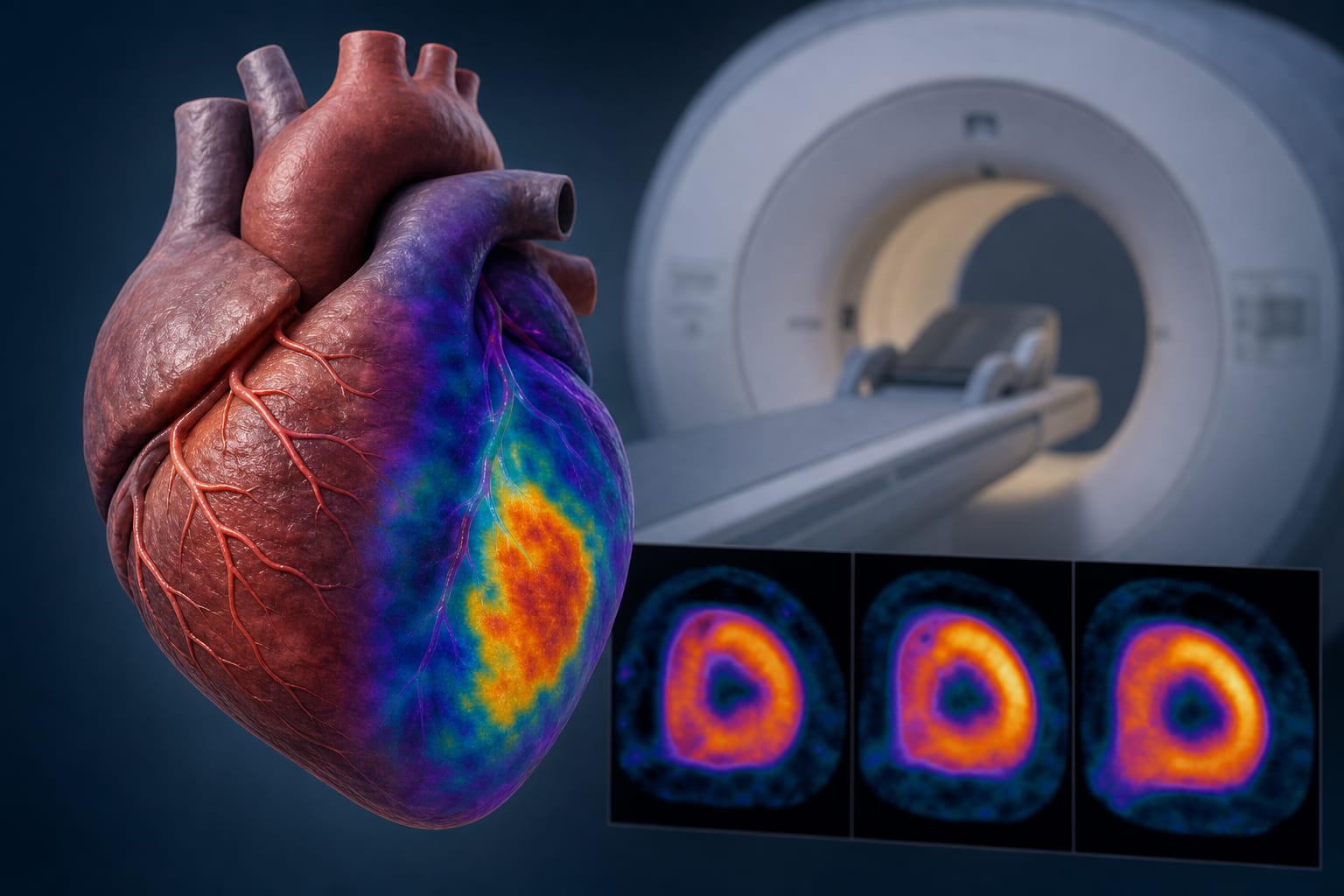
This study evaluates the feasibility of a tailored oral glucose loading protocol combined with insulin administration for 18F-FDG PET myocardial metabolic imaging in diabetic patients with coronary artery disease.

Background

Coronary artery disease (CAD) is a leading cause of morbidity and mortality globally, particularly among patients with diabetes mellitus (DM). Accurate assessment of myocardial viability is crucial for determining appropriate treatment strategies, especially prior to surgical interventions. Traditional imaging protocols may not adequately address the unique metabolic needs of diabetic patients, necessitating further exploration of optimized approaches.

Data Highlights

Blood Glucose LevelImage Quality (Excellent)Image Quality (Very Good)Image Quality (Good)Image Quality (Fair)Image Quality (Non-Diagnostic)
>7.77 mmol/L43.1%43.1%9.8%3.9%0%
5.55–7.77 mmol/L60.4%30.7%5.9%1.0%2.0%
<5.55 mmol/L74.1%14.8%11.1%0%0%

Key Findings

  • 179 CAD patients with DM were enrolled in the study.
  • Image quality was rated as excellent in 57.5% of cases, with a small percentage being non-diagnostic (1.1%).
  • Patients with blood glucose levels >7.77 mmol/L had significantly lower odds of achieving excellent image quality (p = 0.021).
  • 26.3% of patients exhibited completely viable myocardium, while 49.7% had partially viable myocardium.
  • No severe adverse reactions were reported during the imaging process.

Clinical Implications

The tailored oral glucose loading protocol may improve the quality of myocardial imaging in diabetic patients with CAD.

Conclusion

The study demonstrates that a precise oral glucose loading protocol prior to 18F-FDG injection is feasible and can enhance image quality in clinical settings.

Related Resources & Content

  1. Frontiers in Endocrinology, 2026 -- Exploring Metabolic Dysfunction in the Liver-Heart Connection: Tissue-Specific Insulin Sensitivity in Type 2 Diabetes
  2. The Journal of Clinical Endocrinology & Metabolism, 2023 -- The Relationship Between Epicardial Adipose Tissue and Changes in Cardiac Geometry and Diastolic Function in Individuals with Prediabetic Cardiomyopathy
  3. The Journal of Clinical Endocrinology & Metabolism, 2023 -- Altered Glucagon Release Plays a Role in the Progressive Deterioration of Glucose Tolerance
  4. ASNC PRACTICE POINTS, 2024 -- Positron Emission Tomography
  5. 2024 ESC Guidelines for the management of chronic coronary syndromes | European Heart Journal
  6. The Journal of Clinical Endocrinology & Metabolism — Assessing 1-Hour Postload Glucose Levels for Early Detection of Type 2 Diabetes Risk in Koreans With Normal Fasting Glucose
  7. An Optimized Fast Track Protocol to Enhance the Image Quality of 18F-FDG PET Myocardial Viability Imaging in Diabetic CAD Patients: A Randomized Controlled Trial
  8. Clinical use of [15O]H2O/[18F]FDG viability positron emission tomography does not reliably predict left ventricular ejection fraction improvement or survival after revascularization
  9. ASNC PRACTICE POINTS Positron Emission Tomography
  10. 2024 ESC Guidelines for the management of chronic coronary syndromes | European Heart Journal | Oxford Academic
  11. Frontiers | A precise oral glucose loading 18F-FDG PET myocardial metabolic imaging protocol in coronary artery disease patients complicated by diabetes mellitus: An exploratory prospective cohort study

Original Source(s)

Related Content