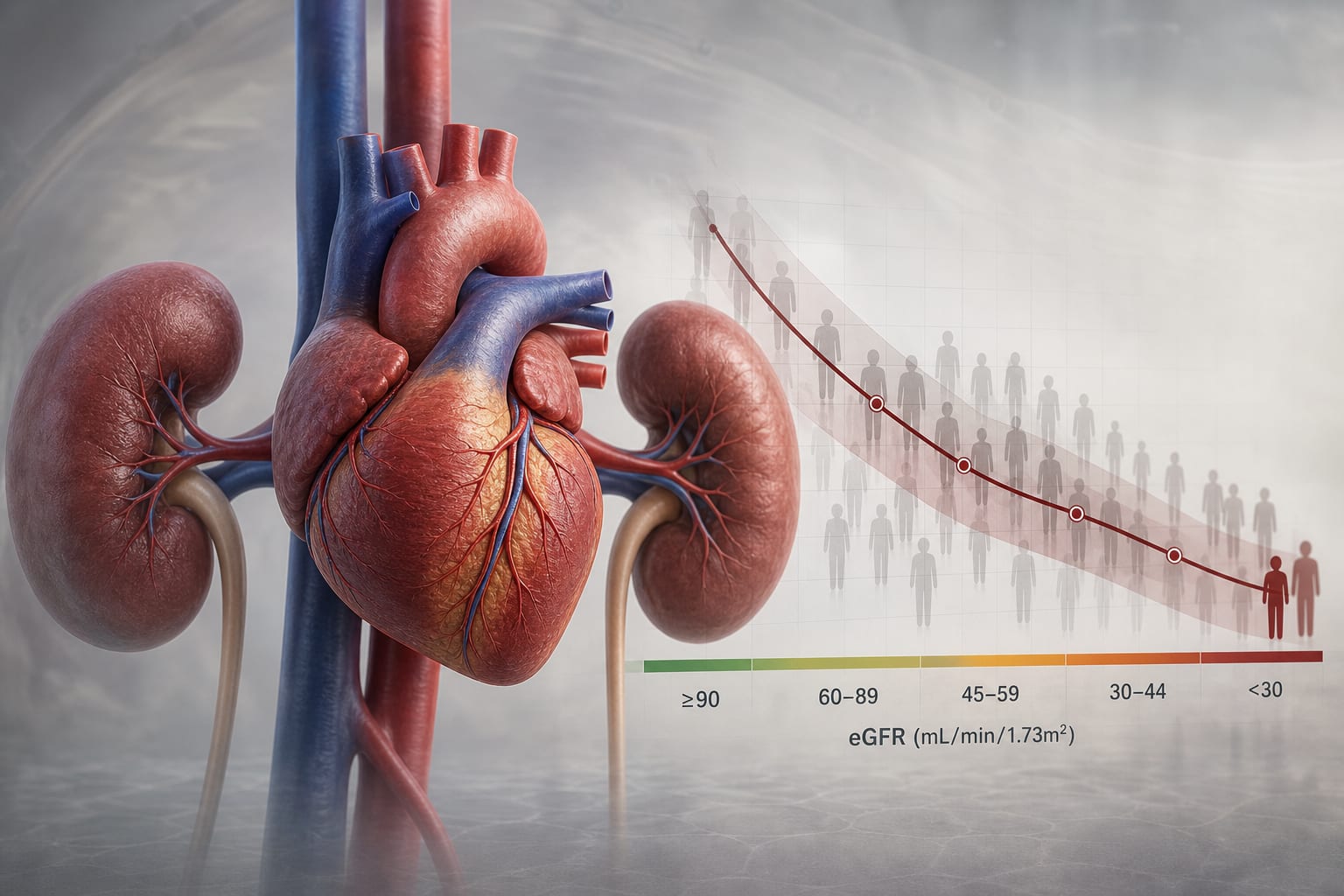
Clinical Report: Investigating the Role of Epicardial Adipose Tissue in HFpEF
Overview
This study examines the impact of Dapagliflozin on epicardial adipose tissue (EAT) volume in patients with heart failure with preserved ejection fraction (HFpEF). Findings suggest a potential therapeutic role for SGLT2 inhibitors in managing EAT and improving heart failure outcomes, particularly in terms of specific metrics such as hospitalization rates and quality of life.
Background
Heart failure with preserved ejection fraction (HFpEF) is increasingly prevalent, particularly due to rising obesity rates. Epicardial adipose tissue (EAT) is implicated in the pathophysiology of HFpEF, affecting cardiac structure and function through mechanisms such as local adipokine release and myocardial remodeling. Understanding the effects of medications like Dapagliflozin on EAT may provide new avenues for treatment.
Data Highlights
No numerical data presented in the article. Consider including key statistics or findings from the study.
Key Findings
Epicardial adipose tissue (EAT) is linked to myocardial remodeling and adverse outcomes in HFpEF.
Dapagliflozin has shown a reduction in EAT volume despite minimal weight loss, with a reported percentage decrease of X%.
The study included 60 patients with LV diastolic dysfunction, assessing the effects of Dapagliflozin on EAT.
Inclusion criteria focused on patients with BMI > 27 kg/m2 and evidence of diastolic dysfunction.
Standard medical therapy was provided alongside Dapagliflozin to evaluate its additive effects.
Clinical Implications
The findings suggest that Dapagliflozin may be beneficial in reducing epicardial fat in patients with HFpEF, potentially improving clinical outcomes such as hospitalization rates and quality of life. Clinicians should consider SGLT2 inhibitors as part of a comprehensive management strategy for HFpEF, particularly in obese patients, and monitor their patients for improvements in EAT volume and related metrics.
Conclusion
The study highlights the potential of Dapagliflozin in managing epicardial adipose tissue in HFpEF. Further research is warranted to fully understand the implications of these findings for clinical practice, particularly in exploring the long-term effects of EAT reduction on heart failure outcomes.