Enhance the explanation of how understanding lens differences can directly impact patient care.
Background
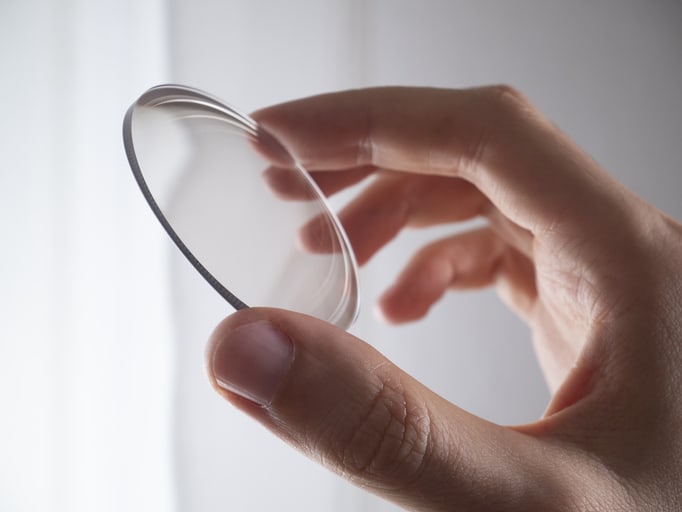
The choice of optical lenses significantly impacts visual acuity and comfort for patients. Premium lenses, tailored to individual prescriptions and frame specifications, offer enhanced performance compared to standard stock lenses. This differentiation is essential for eye care professionals to provide optimal care and improve patient outcomes.
Data Highlights
No numerical data provided in the source material.
Key Findings
Premium lenses are custom-made, offering superior optical clarity and reduced peripheral distortion.
Regular lenses are mass-produced, leading to potential visual distortions, especially in higher prescriptions.
Advanced coatings on premium lenses provide enhanced protection against glare, scratches, and environmental factors.
Customization options for premium lenses include precise measurements for optimal fit and performance.
Premium lenses are designed to be thinner and lighter, improving aesthetic appeal compared to regular lenses.
Clinical Implications
Eye care professionals should prioritize recommending premium lenses for patients with complex prescriptions or specific visual needs. Educating patients on the benefits of premium lenses can lead to improved satisfaction and adherence to prescribed eyewear.
Conclusion
Understanding the fundamental differences between premium and regular lenses is essential for optimizing patient care. By leveraging the advantages of premium lenses, eye care professionals can enhance visual outcomes and overall patient experience.
Eyecare Business and The Vision Council deliver data-driven insights and practical strategies for eyecare practices navigating market shifts, patient behavior, and industry trends in 2026. Here, The Vision Council highlights a shift as overall consumer spending rose despite declines in patient visits and product volume.
A nearly decade-long observational follow-up found continued slowing of axial elongation into late adolescence, while refractive outcomes remained less consistent.