Clinical Report: Examining the Role of Circadian Rhythms in Motor Function Recovery
Background
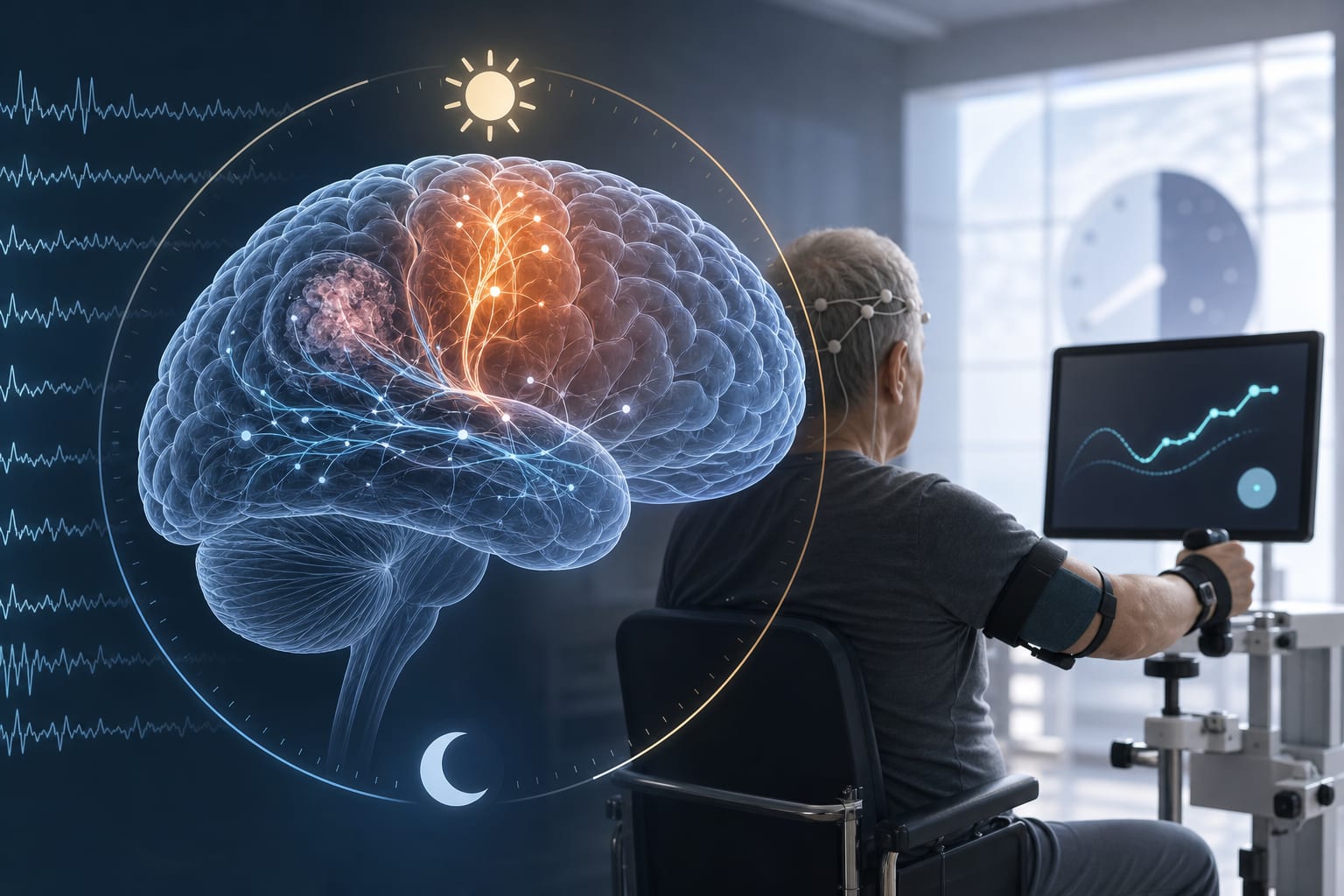
Stroke is a major cause of motor impairment, significantly impacting patients' quality of life during recovery. Understanding the role of circadian rhythms in motor recovery could provide insights into neural mechanisms critical for restoring motor abilities post-stroke.
Data Highlights
No specific numerical data or trial results were provided in the source material.
Key Findings
Circadian rhythms regulate various physiological processes that may influence motor recovery post-stroke.
Neural plasticity and motor control mechanisms are potentially modulated by circadian rhythms.
Current studies highlight the interaction between circadian rhythms and brain function, including neural feedback loops.
Challenges remain in translating findings about circadian rhythms into clinical practice for stroke rehabilitation.
Clinical Implications
Healthcare professionals should consider the impact of circadian rhythms when developing rehabilitation strategies for stroke patients.
Conclusion
The role of circadian rhythms in motor function recovery requires further research.
Federal prosecutors allege that a Florida physician and research staff fabricated clinical trial records that were submitted into database systems used to evaluate investigational drugs.