Clinical Report: Temporal Effects of Intra-Articular Ozone Therapy on Knee Osteoarthritis
Overview
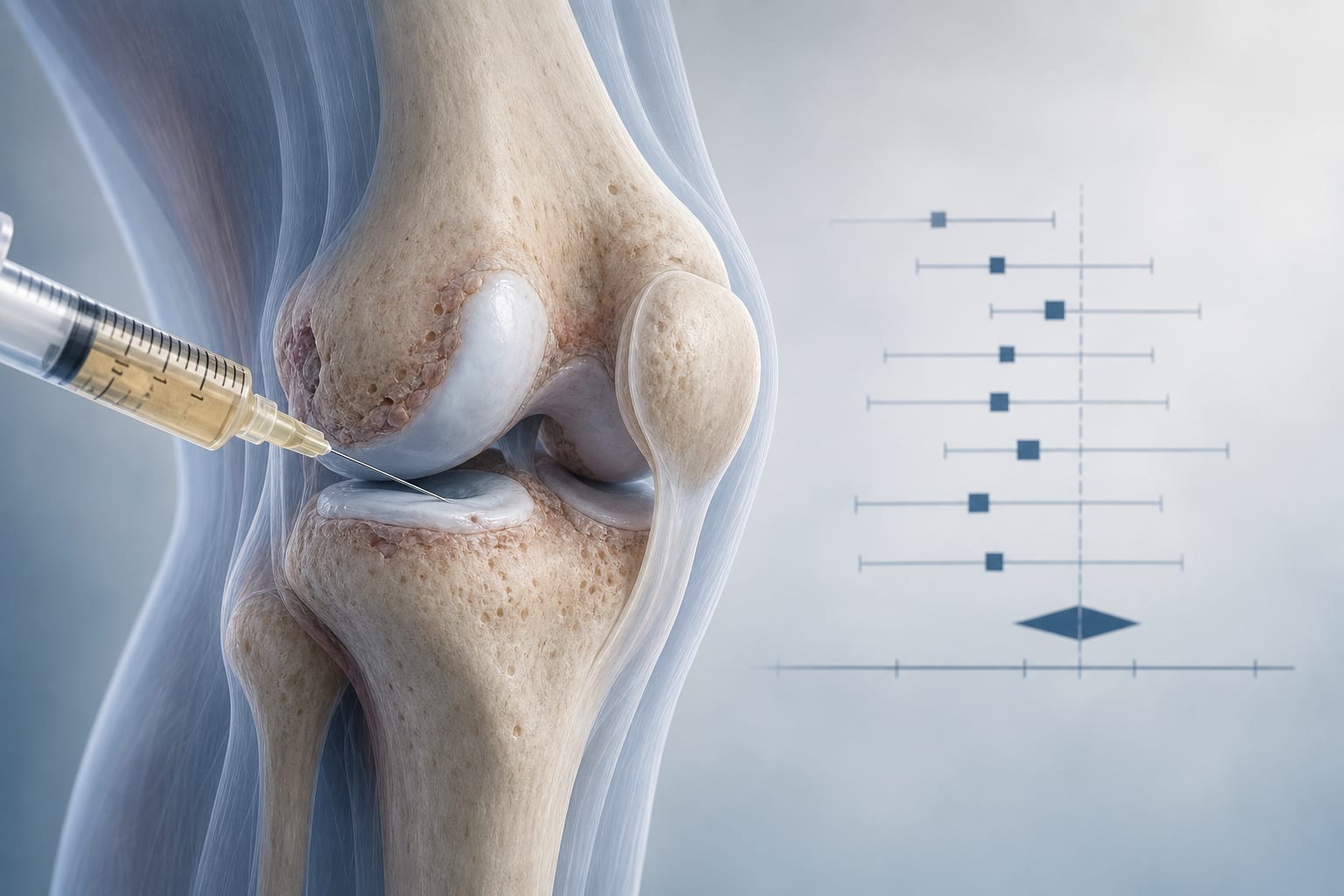
This systematic review and meta-analysis evaluated the temporal efficacy of intra-articular ozone therapy in patients with knee osteoarthritis (KOA). Results indicate significant short-term symptom improvement, particularly at 1-2 months, but diminishing effects by 3 months and inferior outcomes compared to active controls at 6-12 months.
Background
Knee osteoarthritis (KOA) is a prevalent degenerative joint disease that significantly impacts patients' quality of life and healthcare systems. Intra-articular injection therapies, including ozone therapy, are increasingly utilized for symptom relief. Understanding the duration of therapeutic effects is crucial for effective long-term management strategies.
Data Highlights
Outcome
Time Point
SMD (95% CI)
P-value
WOMAC Total
1 month
-0.63 (-1.17, -0.10)
<0.01
WOMAC Pain
2 months
-1.39 (-1.96, -0.81)
<0.01
WOMAC Function
2 months
-1.27 (-2.06, -0.49)
<0.01
VAS Pain
2 months
-1.25 (-2.10, -0.40)
<0.01
Key Findings
Intra-articular ozone therapy shows significant symptom improvement in KOA at 1-2 months.
By 3 months, no statistically significant differences were observed in outcomes.
At 6 and 12 months, ozone therapy demonstrated inferior outcomes compared to active control therapies.
Ozone therapy may serve as a short-term treatment option for KOA.
Further placebo-controlled long-term trials are needed to assess the efficacy of repeated ozone injections.
Clinical Implications
Clinicians should consider intra-articular ozone therapy as a potential short-term treatment for KOA, particularly for immediate symptom relief. However, the diminishing effects over time and inferior outcomes compared to established therapies necessitate careful patient selection and consideration of alternative long-term management strategies.
Conclusion
Intra-articular ozone therapy can provide short-term relief for KOA symptoms, but its long-term efficacy is limited. Further research is essential to establish its role in comprehensive treatment plans.