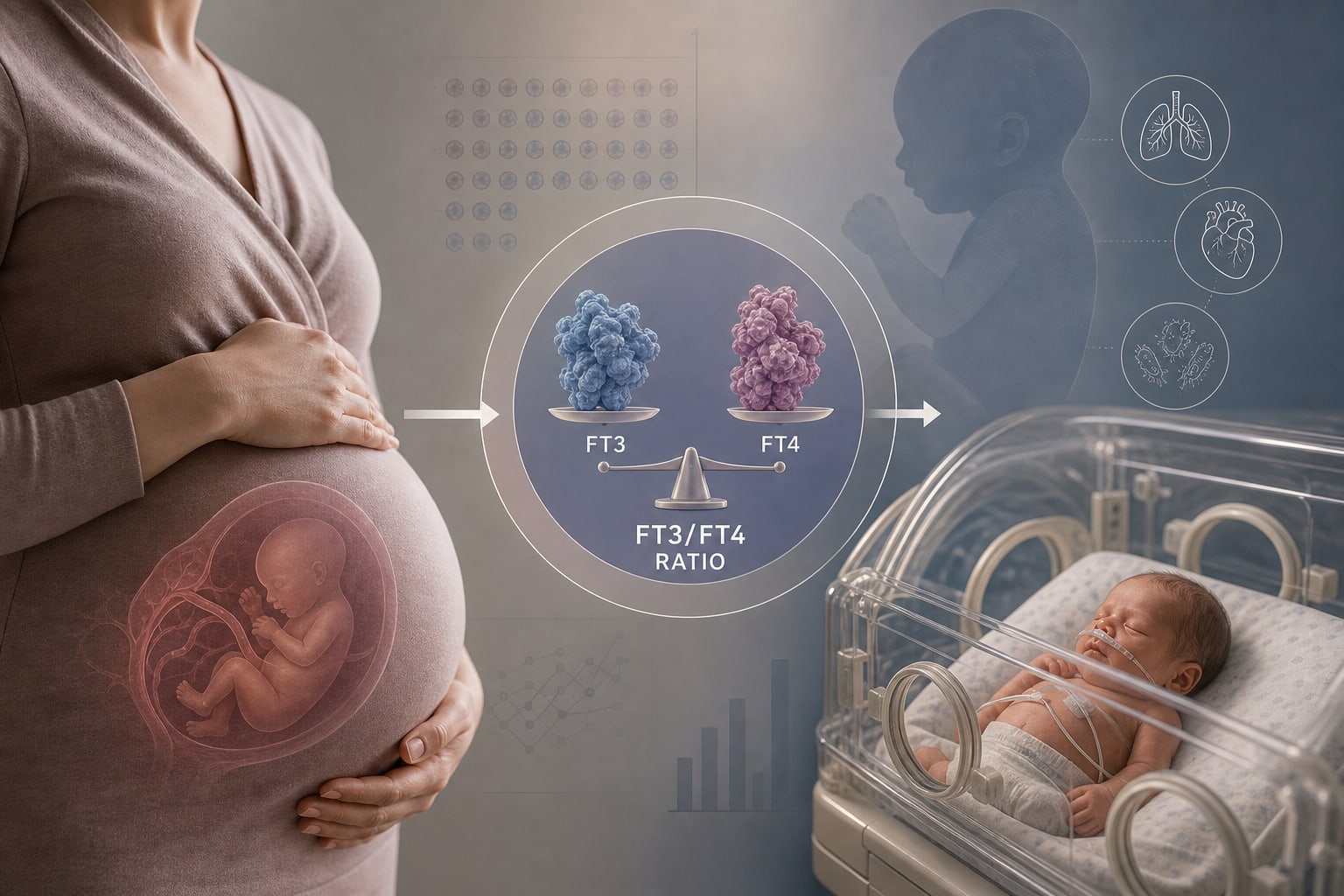
Linking Maternal FT3/FT4 Ratio in Early Gestation to Negative Neonatal Outcomes
Overview
This study identifies a significant association between the maternal FT3/FT4 ratio in early pregnancy and adverse neonatal outcomes. Elevated ratios correlate with increased risks of conditions such as neonatal anemia and patent ductus arteriosus, particularly in specific maternal subgroups.
Background
Maternal thyroid hormone levels are crucial for fetal development, yet the implications of the FT3/FT4 ratio during early gestation are not well understood. This ratio may indicate maternal metabolic status and peripheral thyroid sensitivity, potentially influencing neonatal health outcomes. Understanding these associations is vital for identifying high-risk pregnancies and improving maternal-fetal health.
Data Highlights
Quartile
Risk of Adverse Outcomes
Lowest
Reference
Highest
Significantly Increased
Key Findings
The highest quartile of the FT3/FT4 ratio is linked to a significantly increased risk of adverse neonatal outcomes.
Neonatal anemia, patent ductus arteriosus, jaundice, and myocardial injury were specifically associated with elevated FT3/FT4 ratios.
The relationship between the FT3/FT4 ratio and neonatal outcomes follows a non-linear J-shaped pattern.
Nulliparous women and mothers with a normal body mass index showed heightened risks associated with elevated ratios.
Female neonates were particularly affected by higher maternal FT3/FT4 ratios.
Clinical Implications
Clinicians should consider the maternal FT3/FT4 ratio as a potential marker for assessing neonatal risk during early pregnancy. Monitoring this ratio may help identify mothers at risk for adverse neonatal outcomes, allowing for targeted interventions.
Conclusion
Elevated maternal FT3/FT4 ratios in early gestation are associated with significant neonatal risks, highlighting the need for further investigation into thyroid hormone monitoring in pregnancy.
Women reported improvement across 6 cognitive domains during 12 months of estriol-based treatment, while murine models suggested a potential astrocyte-mediated mechanism.