Long-term Evaluation of Serum Neurofilament Light Chain and Glial Fibrillary Acidic Protein in Severe NMOSD Patients Undergoing Allogeneic Stem Cell Transplantation
Background
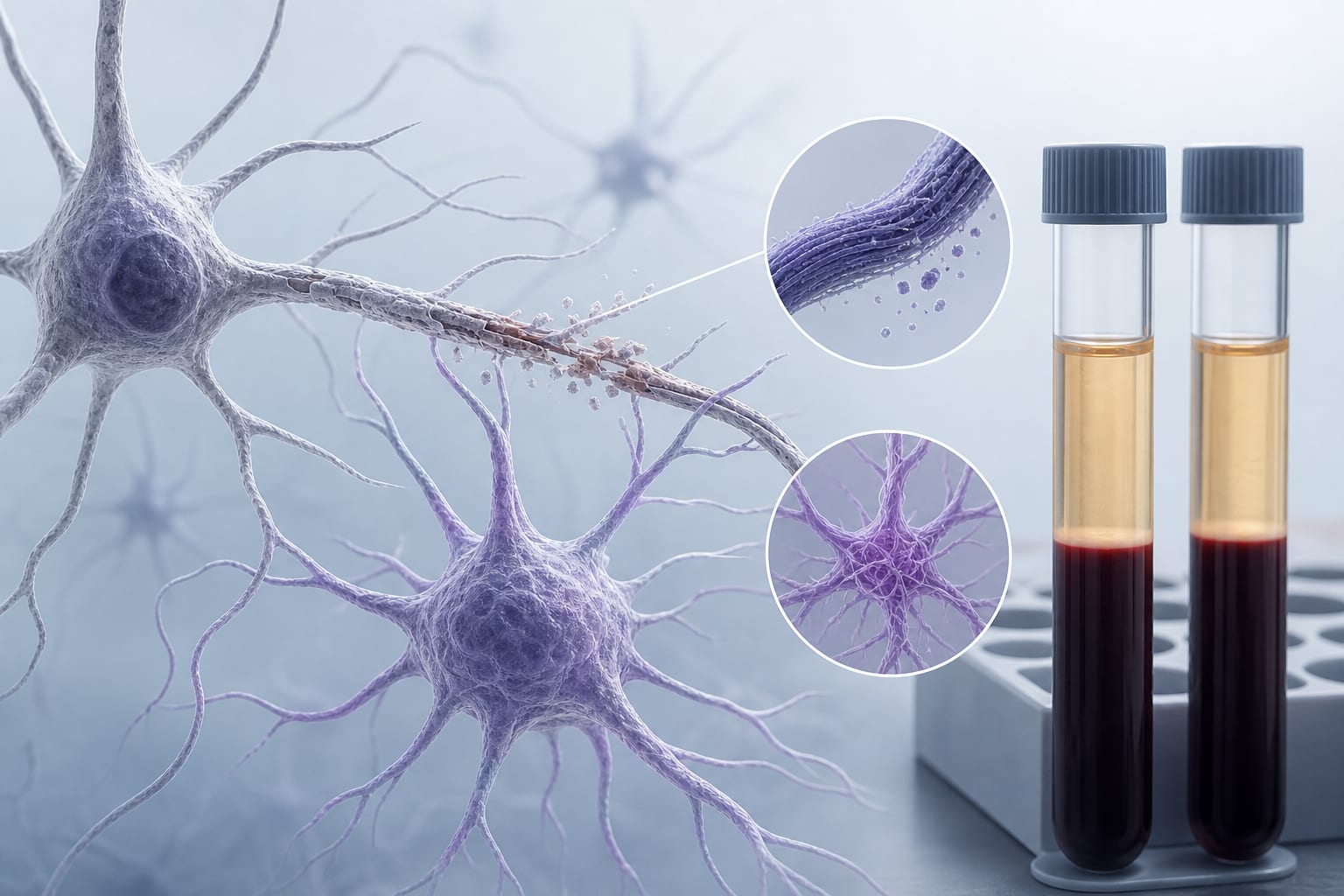
Neuromyelitis optica spectrum disorder (NMOSD) is a severe autoimmune condition affecting the central nervous system, often leading to significant disability. Reliable biomarkers for disease activity are crucial for managing NMOSD, especially in patients who do not respond to standard treatments. Recent studies have highlighted sNfL and sGFAP as potential biomarkers.
Data Highlights
Biomarker
Median Concentration (pg/mL)
IQR
sNfL
25.21
32.74
sGFAP
358.03
1954.06
Key Findings
The median concentration of sNfL was 25.21 pg/mL.
The median concentration of sGFAP was 358.03 pg/mL.
A positive correlation was found between sNfL concentrations and the Expanded Disability Status Scale (EDSS) (r = 0.41, p = 0.0149).
Increased sGFAP levels were linked to clinical relapses.
This case study provides longitudinal data on biomarkers in a severe NMOSD patient.
Clinical Implications
The findings suggest that sNfL may serve as an indicator of accumulated disability progression, while sGFAP may reflect disease activity more consistently. These biomarkers could aid in monitoring disease status in NMOSD patients, particularly those undergoing stem cell transplantation.
Conclusion
This study highlights the potential of sNfL and sGFAP as biomarkers in NMOSD, warranting further investigation to clarify their roles in clinical practice.
by Barbora Srpova, Eva Krasulova, Libuse Noskova, Michaela Cichrova, Marta Kalousova, Veronika Valkova, Marek Trneny, Vlastimil Kral, Eva Kubala Havrdova, Petra Nytrova